Week of Prayer for Christian Unity 18-25 January 2024
Bishops considered the report on the Irish Inter-Church Meeting of 19-20 October. This marked the 50th anniversary of the Ballymascanlan Talks in 1973, an event that led to the formation of the IICM, the mechanism through which the Irish Episcopal Conference dialogues with other Churches in Ireland.
In addition, bishops also received a report from the Council for Ecumenism on the annual Week of Prayer for Christian Unity which will place 18-15 January 2024, on the theme, ‘You shall love the Lord your God… and your neighbour as yourself’ (Lk 10:27). Resources for the Week of Prayer have been compiled by the Holy See Dicastery for Promoting Christian Unity and ecumenical bodies in Burkina Faso. These resources are being forwarded to dioceses and parishes and they are also available on ctbi.org.uk. Bishops encourage dioceses and parish communities to participate in this Week of Prayer.
Introduction
The parable of the Good Samaritan is one of the best-known passages of Scripture, yet one that never seems to lose its power to challenge indifference to suffering and to inspire solidarity. It is a story about crossing boundaries that calls our attention to the bonds that unite the whole human family.
In choosing this passage of Scripture for the Week of Prayer for Christian Unity, the churches of Burkina Faso have invited us to join them in a process of self-reflection as they consider what it means to love our neighbor amid a security crisis. Communities in the British-Irish context may be less vulnerable to acts of mass violence than in Burkina Faso, but there are still many living with the memory and/or the threat of serious violence, centered on issues of identity and belonging. There are also groups within communities, including people from ethnic minority backgrounds and people seeking asylum, who feel particularly vulnerable to violence or being displaced by the threat of violence.
December has arrived and frantic preparations for the great Festival of Christmas are already in full swing in our consumerist commercial society. Little or no meaningful mention is made of Advent or the real meaning behind Christmas. I will post downloadable resources over the coming days and weeks to assist teachers in making this time a true Christian experience for all.
Why Did God Become Human? Renewing our Understanding of the ‘Reason for the Season’ , is the subject of a talk by Fr Daniel P Horan OFM, PhD, this Saturday, 9 December from 10.30am – 4pm UK time at the Meditatio Centre in London and online.
The theme for this day invites us to reflect on the meaning of the Incarnation, of God’s choice not only to be ‘God For Us,’ but also ‘God With Us’ (Emmanuel) In keeping with the theme of Metanoia: Let our Minds be Remade, this presentation is an opportunity to develop a spirituality of ongoing conversion, especially during the season of Advent.
At a time when it can be difficult to see the light of Christ in our communities and world, a renewed understanding of the Incarnation offers us spiritual inspiration and hope.
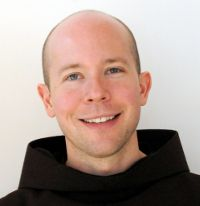
Fr Daniel is an American Franciscan friar, Catholic priest, theologian, and author. He is currently the director of the Center for Spirituality and a professor of Philosophy, Religious Studies, and Theology at Saint Mary’s College in Notre Dame, Indiana. He previously held the Duns Scotus Chair of Spirituality at Catholic Theological Union in Chicago.
Some thoughts for Advent ( Priests Association)
Advent invites a reassessment of where our ways are leading us. This annual reminder that the world as we know it will one day end sounds more appropriate in the northern Wintry season, when daylight is short and darkness seems to be winning over the light. But the positive side of this is that a new Spring day is dawning over the horizon when Christ will come again into our lives with the power to save us.
Do you ever watch people at airports, waiting for loved ones to arrive from a flight? They often seem excited, eager for the first appearance of the familiar face, ready with the broad smile of greeting to embrace the returning traveler. We too wait for the Lord’s coming with eagerness, because we long for his presence. The waiting is important because, during our life’s pilgrimage, we are incomplete. As Augustine once said, “You have made us for Yourself, o Lord, and our hearts are restless until they rest in You.” At some deep level of our personhood we are in need, a need that only God can fill.
This is a time to open our hearts and invite the Lord to bring us to completion. We begin Advent, yearning for his coming. Today’s first reading puts this yearning into an image, that “We have all withered like leaves… blown by the wind.” The whirling, withered leaves of autumn are a familiar scene these past few weeks. Isaiah proposes the dead leaves as symbols of all that is dried up and withered in our lives. But he also calls us to look for a better day. God is still in charge of creation, and our personal lives are under his loving care. We pray this Advent, “Come, Lord Jesus,” and make our own the words of the psalm, “Visit this vine and protect it, the vine your right hand has chosen.” It is a central plank of our faith that the Lord never abandons His people.
Back to the people at airports waiting for loved ones to arrive. It is an alert, active waiting – keeping an eye on the time. In today’s gospel Jesus says, “Be on your guard, stay awake.” He wants us to focus on our task here and now. We are to grow more mature in our relationship with others and with him, paying attention to prayer, and living with his message in our hearts. That’s what waiting for him should be like. And while we wait, we can enjoy his gifts, as promised, for as Paul assures us: “You will not be without any of the gifts of the Spirit while you are waiting for our Lord Jesus Christ.”
Joint Christmas 2023 message by the Archbishops of Armagh: “how fragile and precious peace really is”
Christmas Joint Message
‘Peace I leave with you; my peace I give to you, I do not give to you as the world gives. Do not let your hearts be troubled and do not let them be afraid.’ Saint John 14:27 Christmas is traditionally a time of joy and happiness as we celebrate the birth of Jesus Christ, the Saviour of the world. We decorate our homes and Christmas trees with bright shining lights to welcome the Prince of Peace. Yet this year our world has been overshadowed by the darkness of war in the very land where Jesus was born, and also in Ukraine, Sudan and so many other places. The news images that we have witnessed from troubled places around the world have reminded us of just how fragile and precious peace really is. This Christmas we keep all those who are suffering in our thoughts and prayers.
In the Christmas story the angels announcing the birth of Jesus proclaimed, ‘Glory to God in the highest, and on earth peace, good will toward all people’. People of faith are not just called to be peacekeepers, but to be peacemakers – to be instruments of Christ’s peace; to pray and to work constantly for peace, healing and reconciliation between nations, communities, families, and individuals. Jesus said, ‘Blessed are the peacemakers, for they will be called children of God’. Peace is much more than simply the absence of war and fighting. Peace is about recognising that we are all made in the image of God, that we are all God’s children – to be respected, listened to, and cared for – even though we may have very different opinions, aspirations, and dreams.
During 2023, we marked twenty-five years since the historic Belfast/Good Friday Agreement was signed and delivered. This year people from different parts of the community have been reflecting on this significant anniversary, often with mixed emotions. The signing of the Agreement was not the end of the journey to peace on this island but marked simply the first faltering steps down a very long road to a new, brighter, and shared future. Further progress along that road can be made if we show patience and a willingness to listen to one another when we differ and also recognise the need for greater understanding and reconciliation. The transformation that our peace process has helped to achieve on this island is talked about the world over and is often held up as an example of peacebuilding. Yet there is still much work to be done.
May we all continue to work for healing, reconciliation, mutual respect and understanding, as the basis of a lasting peace, here and in our troubled world. May the light of Christ shine in the darkness and may the peace of God which passes all understanding rest upon us all.
Archbishop Eamon Martin is Catholic Archbishop of Armagh, and Archbishop John McDowell is Church of Ireland Archbishop of Armagh.
Religious Education Coursework Workshop – Saturday 20th January 2024
Loyola Institute <loyolainstitute@tcd.ie>
Wed, 15 Nov at 13:40
Dear Religious Education Teachers,
We would like to draw your attention to a Religious Education Workshop – REVISION DAY that we are offering to Leaving Certificate Students (5th/6th Years) on Saturday 20th January 2024 here in the School of Religion, Theology, and Peace Studies, Trinity College. We have offered this workshop previously, with much success, partnering with Paul McAndrew, who will conduct the event.
It is designed for both Teachers and Students, and the workshop is tailored to guide you through the Religious Education Coursework from the 2024-2025 titles. There is a small charge of €29.99 per session which includes a set of notes, practical help during the workshop and after workshop support.
Could I also mention that if you are planning a field trip, why not consider popping into Trinity and attending one of our modules. If you are interested, just contact us and we will organise same for you.
Feel free to forward this email to any of your contacts who might be interested.
THEME 2024 Catholic Schools – Communities of Service
Catholic Schools Week will take place from Sunday 21 to Saturday 27 January 2024 on the theme of Catholic Schools as Communities of Service.
We hope to hold our own Armagh Diocesan Launch Liturgy the week before CSW 24 on Tuesday January 16th 2024 led by Bishop Micael Router . The launch celebration will be in The Church of the Holy Family Coalisland. More details later.
Christian service puts faith into action. In Catholic schools, as we study and look to Jesus Christ as our role model and Teacher, we come to a greater understanding of the depth of Christian service. Jesus served every person regardless of creed, background, faith, social status or age. He put faith into action by showing all those around him how our Heavenly Father is compassionate, courageous and forgiving. Jesus didn’t just talk about His faith; He lived it.
We are called by faith to go into the world to share the love of God with all those we meet. Each person, at every age, is called to become Christ for another by serving every person with a humble heart and with a generous spirit.
For Catholic Schools Week, we will contemplate our schools as communities of service under the following themes:
Service in Our Community of Friends
Service in Our School Community
Service in Our Family Community
Service in Our Local Community
Service in Our Faith Community
The resources will reflect on these features within the overarching theme and will make use of scriptural reflection on prayer, action, student voice, and concern for our common home.
In November We Remember
The following resources have been developed for November, for both primary and post-primary and are available in English and Irish.
Irish bishops praise Pope Francis’ new exhortation on environment
Oct 4th, 2023
Pope Francis in Phoenix Park, Dublin, before Mass on final day of World Meeting of Families. 08/18
Source: Irish Catholic Media Office
‘Pope Francis invites us in Laudate Deum to be reconciled with our Common Home and renew our ‘interconnectedness’ with the world of nature by way of a cultural change rooted in continuing changes to our personal lifestyle, alongside the challenge of major decisions which must be made at national and international levels.’
Today, on the Feast of Saint Francis of Assisi patron of the environment, bishops welcomed the publication by Pope Francis of his new Apostolic Exhortation, Laudate Deum (Praise God). The Bishops of Ireland are currently gathered in Saint Patrick’s College, Maynooth, for the final day of their Autumn General Meeting.
Laudate Deum (LD) complements the Holy Father’s 2015 ground-breaking encyclical letter Laudato Si’ – on Care for Our Common Home (LS), which was addressed to ‘every single person living on this planet’, and focused on care for the natural environment and all people, as well as broader questions of the integral relationship between God, humans, and the Earth.
Following this central theme of ‘interconnectedness’ in Laudato Si’, Pope Francis calls us in Laudate Deum (LD) to urgently attend to the climate crisis caused by our embrace of the concept of unlimited economic growth. Noting recent extreme weather patterns, the Holy Father warns of reaching a critical point due to this global reality of irreversible climate change. In today’s Apostolic Exhortation, Pope Francis cites scientific evidence to show that the recent acceleration in global warming can be attributed largely to our burning of fossil fuels in the name of economic progress to the detriment of our ecological richness.
In recognising that we are ‘a part of’ rather than ‘apart from’ our world, Pope Francis, drawing from Catholic Social Teaching, offers commitment to the ethic of the global common good as a way forward. It can counter the forces of marketing and false information as well as the policy of maximum profit for an elite powerful minority so as to ensure our legacy for our future generations. We cannot rely on the ‘technocratic paradigm underlying the current process of environmental decay’ (LD 20 / LS 101).
Pope Francis calls attention to the weakness of international politics, which has failed to ensure the common good, fundamental human rights and to act through solidarity to alleviate hunger and poverty. The emergence of this new global reality of climate change, according to Pope Francis, requires a different framework for effective international cooperation. We must allow the activism of alternative solutions to emerge and be heard.
In noting the efforts made by many people to reduce pollution and waste, and to consume with prudence, Pope Francis writes that the ‘mere fact that personal, family and community habits are changing is contributing to greater concern about the unfulfilled responsibilities of the political sectors and indignation at the lack of interest shown by the powerful’. Nonetheless, Pope Francis continues to express the view that such actions by people ‘are helping to bring about large processes of transformation rising from deep within society’ (LD 71).
Although he acknowledges the successes, he highlights the failure of recent COP events, noted for their multiple recommendations and weak instruments of implementation, where the richer nations adopt positions counter to the common good. Past failures of responsibility present a real challenge for the upcoming COP28, from 30 November to 12 December in Dubai, which, according to Pope Francis, must address the issue of energy transition to renewable sources. He states that the reliance upon technological solutions to energy transition is ‘like pushing a snowball down a hill’ (LD 57).
Noting that ‘a healthy ecology is also the result of interaction between human beings and the environment’, Pope Francis warns that ‘[w]e need lucidity and honesty in order to recognize in time that our power and the progress we are producing are turning against us’ (LD 27-28). Hence, he concludes, ‘when human beings claim to take God’s place, they become their own worst enemies’ (LD 73). From this comes the title of the Exhortation: ‘Praise God!’
In light of our faith, we are called by Pope Francis to an awareness of the ‘inexhaustible richness’ of God’s creation and to an appreciation of biodiversity so as to take up our responsibility for our Common Home.
In welcoming Laudate Deum, we invite all people to read it in the realisation that ‘the world sings of infinite Love’ (LD 65), and everyone has a duty to care for creation. In this important contribution by Pope Francis for the good of our natural environment, he invites us to be reconciled with our Common Home and renew our ‘interconnectedness with the world of nature by way of a cultural change, rooted in continuing changes to our personal lifestyle, alongside the challenge of major decisions which must be made at national and international levels.’
You may like to read the full text of Laudato Deum see the download in a printer/paper-friendly format
I am the NI Development Education Officer for Trócaire and I am hoping that schools in your Diocese might be interested in our Development Education programmes. If you are able to promote our programmes in any way to schools in Armagh, it would be much appreciated.
We are excited to announce that we are running two programmes for schools in 2023/24 – Game Changers and The Right Focus. Both programmes are now open for registration:
Game Changers is a competition for young people who want to change the world and believe games are a way to do this. Young people all over Ireland submit games based on one or more of the Sustainable Development Goals (SDGs). Games can be a board game, card game or video game, and submitted in one of three categories: Primary, Post Primary, or Youth.
Please feel free to get in touch if you have any questions or opportunities for us to collaborate on the promotion of these programmes. We also offer workshops to help teachers embed Development Education in their practice and use our resources with confidence.
Kind regards,
Deirbhile Deirbhile Craven Development Education Officer, NI
“Saint Patrick, intercede for Ireland!” – homily of Archbishop Eamon Martin during 7.30pm Evening Prayer to celebrate the 150th anniversary of the dedication of the Cathedral
Homily There’s a beautiful Latin hymn that is sometimes sung on the anniversary of the dedication of a church: Locus iste a Deo factus est: This place was made by God! Every time I visit this beautiful cathedral of Saint Patrick, look up at the splendid ceiling and see the colourful light spilling in through the stained glasses windows, I cannot help thinking: “This place was made by God”! People who come here – of various Christian traditions, other faiths, even people who profess no particular faith or belief – are touched by the beauty of this place, because the Cathedral points us to something beyond our senses: to the Transcendent God, ‘Three in One and One in Three’, who is Truth and Beauty itself. Visiting Saint Patrick’s Cathedral is not like entering a museum or art gallery. This is the Lord’s house; it is a living space of prayer which is deeply sacred. For a century and a half, people have come here to lift their hearts and minds to God: in praise and thanksgiving; in sorrow and petition and intercession. I think of all the baptisms, the first communion and confirmation ceremonies, the weddings and funerals that have taken place here. Imagine the millions of prayers that have been offered up here in times of joy and sadness; worry and happiness. I think of all the candles lit quietly in prayer, and faithful people asking God’s help with important relationships, decisions or exams; placing their hopes and fears before God. The foundation stone of the Cathedral was laid by Archbishop William Crolly on Saint Patrick’s Day, 1840. There is a plaque just here on the sanctuary steps which commemorates that joyful moment for the Catholics of Ireland. That was like a renaissance moment after Catholic Emancipation – to have our own Cathedral here in Armagh, the see of Saint Patrick, after centuries of discrimination and exclusion. No wonder twenty to thirty thousand people turned up for the occasion! But sadly, within a few years, the Great Famine hit Ireland and work on the new cathedral had to be suspended; the funds raised were distributed for the relief of the poor – Archbishop Crolly himself died of cholera in Drogheda on Good Friday in 1849. His body was taken back here to Armagh and he was laid to rest near this very spot in his unfinished cathedral. It wasn’t until six years later, at Easter 1854, that the construction recommenced under the leadership of Primate Joseph Dixon, with a new architect and a revised design. But Primate Dixon himself died unexpectedly before the work was finished and it fell to Archbishop Daniel McGettigan to complete the Cathedral. He declared Sunday 24 August 1873 as the day of opening and dedication. Massive crowds from all over Ireland, and beyond, gathered in Armagh for the occasion Our Cathedral that day would have looked very different to what we are used to today. The structure was the same of course, but much of the decoration and adornment had yet to be added. Subsequent years and decades would see the addition of the stained glass windows, the Stations of the Cross, the great Telford organ, the amazing mosaics, the painted ceiling, the marbles and carvings, the carillon of bells. Outside the Cathedral, here on Sandy Hill, the famous terraced steps, the sacristy, the synod hall and the gate lodge would all come later, as would the bishop’s residence and offices at Ara Coeli. It must have been very moving on that day of dedication to witness the anointing of the first altar of this Cathedral with Chrism: the altar, a symbol of Christ, the Anointed One, Christ the High Priest, who offered the sacrifice of his life on the cross for our salvation. The walls of the cathedral were also anointed with Holy Chrism during the dedication, at twelve places; the candles you see lit along the walls this evening mark the spots where Archbishop McGettigan anointed the building. Since 1873, the people of God in the Archdiocese have continued to restore, decorate, and maintain this beautiful cathedral. It has been rededicated on several occasions after major works in 1904; 1982, 2003. This weekend we thank God for the skills of the craftsmen and women who have worked on the Cathedral over the years, and for the generosity of countless people in Ireland and around the world who contributed during hard times, making great sacrifices to hand on this sacred space to us. Huge generosity came from the Irish diaspora, especially in America and Canada, and locally too from many of our Protestant neighbour Of course, no matter how splendid a Church building may be, we should always remember that the Church is made up of people – “living stones, making a spiritual house” (1Pet 2), and Christ is the cornerstone and sure foundation of the Church. One day this beautiful Cathedral will eventually fall into ruin or be replaced. What is really important is we keep alive the faith and hope that this place represents and hand on the faith to our children and grandchildren. Wouldn’t it be a shame if this beautiful Cathedral ceased to be a living house of prayer and ended up as simply another interesting tourist stop for visitors to Armagh. That depends on us – to be like our patron, Saint Patrick, who saw himself as an ambassador for Christ. Saint Patrick was a faithful and fearless witness who said he simply couldn’t be silent about God, and wanted to shout out aloud about all that God had done for him here in the land of his captivity. For Patrick, being a missionary was a ‘holy and wonderful work’, something for which he was prepared to suffer insults, falsehoods, opposition, imprisonment, and, if necessary, even willingly give up his life. During the past few weeks, at Masses on the top of Croagh Patrick, and on the Hill of Slane, I recalled the dream of Saint Patrick’s in which he heard the voice of the Irish people calling out: “We beg you, holy boy, to come and walk again among us.” Tonight, here in Saint Patrick’s Cathedral city of Armagh, I call out once more: Saint Patrick, intercede for Ireland! Come and walk once more among us. Inspire in us a determination to work for the renewal of faith, hope and love here in our land. In a few moments, I will bless and dedicate a new icon of Saint Patrick which has been prayerfully and lovingly written for the Cathedral by the Redemptoristine sisters of Drumcondra in Dublin. I ask that we all pray before the icon for the grace of God – the Three in One, and One in Three – to raise up strong ambassadors, witnesses and missionaries for Christ from among us. Our need is great, for sadly, many sons and daughters of Ireland are drifting away from the practice of the faith; some may even have abandoned God. Dear friends, now it is our turn to shout aloud the message of salvation and share with others the difference that a foundation of faith makes to our lives. The best way to win souls for Christ these days is to witness ‘heart to heart’, to speak the truth with love, and attract others to God by the example of our lives. Brothers and sisters, like Saint Patrick we cannot, and should not be silent about God’s love. We have work to do! The work of Saint Patrick – to rekindle the flame of faith in our own hearts, in our families, our diocese and across the whole of this island – north, south, east and west. Thanks be to God for our faith, for our hope in the Risen Christ, and for the love and charity that brings us all together this evening in this splendid Cathedral of which we are rightly so proud. Locus iste a Deo factus est. This is the Lord’s house. Thanks be to God.
Saint Patrick, pray for us.
Sister Angela reflects on new icon marking the 150th dedication of Saint Patrick’s Cathedral, Armagh:
Sister Angela explains her writing of the icon in the following way: “In writing this icon, continuous prayer was offered for a renewal of faith in the hearts of the people of Ireland, that all our lives may be filled with the light of Christ. Prayers of thanksgiving were also offered for all those who are ‘light bearers’ and ‘enlighteners’ in our lives and for those who have been missionaries to us in any way. Praying before the icon helps to open our hearts and minds ever more to Christ, especially in deep gratitude for those who, like Saint Patrick, show us the way to Chr
FR DECLAN REFLECTS ON HOW THIS HOLY ICON SPEAKS TO US
St Patrick an Icon
I was delighted to be invited to view and write a short appreciation of this commissioned Icon of St Patrick on the 150th Anniversary of the Armagh Cathedral that bears his name. Icons are a way that God uses to reach out and draw us into Himself Christians have venerated this unique presence by anointing icons with Holy Chrism and praying with and through them as sources of blessing and grace. Hence they are usually placed with a burning lamp or candle and incensed on special occasions.
To pray with an icon is to be united with God as Father Son and Holy Spirit. It is to venerate those millions of disciples who in faithfulness have shared God’s Love and the Gospel message we call the Good News. Patrick was a Christian disciple who during his years as a slave in captivity learned to relate at a very deep mystical level with God as Trinity during his time on Slemish Mountain and the surrounding landscape His isolation and silence taught him to turn to his God as the Desert Fathers and mothers practiced in their isolated hermitages in Syria and the Arabian deserts. Mysticism is the gift of the community we know as God.
Patrick became a deeply committed Trinitarian and this led him to priesthood and later ministry as a bishop; to the very people who had enslaved him and taken him to a foreign land. We know from his writings both his Confessions and letter to Coroticus that Patrick was indeed fully attuned to the similar path being at that time explored in the Middle East the cradle of the Church Filled with zeal for God like Patrick these souls lived austere lives praying the gospels and using disciplines like the Jesus Prayer as a means to enter the circle of life and love God enjoys as Father Son and Holy Spirit.
In this icon Patrick is shown holding the Cathedral a symbol of the See or Church of Armagh As its first bishop and founder it is appropriate he holds it in support and surrounds it with his prayer and protection. Patrick is wearing the pallium that special collar woven from the wool of lambs and kept by the tomb of Peter to be bestowed on every Archbishop reminding them and God’s holy people of our close link to the church of Peter and the Apostles. their mission or task was and is to share and live the Gospel as taught by and lived by Jesus our Saviour and Master
Above the main figure of Patrick we are shown two more important patron saints of the Armagh Church, St Brigid of Faughart ( Mhuire na nGael) baptized herself by Patrick and also St Malachy who in his turn reformed the whole Irish Church and united it with fresh vigor to the See of Peter in Rome. These patron saints together with St Oliver Plunkett are depicted on either side of Jesus on the present High Altar in the Cathedral,. In Patrick’s right hand, we find his great reputed teaching aid the sprig of green shamrock. With it’s three leaves but one stem. Three persons but one God.
The God of Christianity although in continuity with the Hebrew God is radically a Community of equal but distinct persons. “ The Father and I are one “ Unthinkable to Jews yet revealed by Jesus as the core of all life here and in heaven. The intimacy He shows with The Father is amazing and inspires Christians to pursue a similar bond by living daily the spirit of the Beatitudes. Those early desert-dwelling mothers and fathers thirsted for ways to live intimately in the love the Father shared with the Son and Holy Spirit. “To see Me is to have seen Him. “ This was the new Way. The Magi returned home in a new Way prefiguring a whole upturning in our knowledge of God. Jesus tells us He is “The Way, the Truth and the Life “ He lived this bond to the Father as easily as breathing air.
We know Patrick shared this desire to know and love God and he longed to share this with all he encountered. Patrick was familiar with the great teachers of prayer. Anthony of Egypt, John Cassian, and other greats of the desert shared their knowledge and teaching. We can sometimes be surprised at how fast the Good News was shared and how far it traveled. From Egypt and Syria to the Skelligs! This Trinitarian Faith spread all around the Mediterranean coastline moving ever farther through Italy, Gaul, and Spain and it was Patrick who was the main instrument the Father used to draw the Irish peoples of the time to a new radical vision of eternal life and its prospects. “Where I am you too will be “ What hope and what life these words offer to us. Today as then, Patrick calls us all to unite in praise for this Community of God whose living Heart yearns for each of us to step into their life of love. “ I bind unto myself today the strong Name of the Trinity, By invocation of the same, The Three in One and One in Three. “ Each of us today must embrace these words and live our Trinitarian Faith aware of and living the relationship they offer us daily. Each morning like Patrick let us step into their circle of love embracing and taking ownership of the space they have left us to complete so that when we step from this life we will behold their faces and share in their life of love I pray you may be indeed embraced by God as you gaze at and pray before this most holy Icon. St Patrick pray for us. Amen.
Religious Education Teachers may like to take this course as a renewal in Biblical Studies and for personal ongoing Spiritual Development – Declan
This ten-week short online course offers a creative engagement with a breadth of texts and methods in contemporary biblical studies.
The course which runs from Tuesday, 3 October 2023 – Tuesday, 5 December 2023 5.30-7pm is taught by a team of leading specialists in the fields of Hebrew Bible/Old Testament, Second Temple Judaism, and New Testament studies. Sessions will range across studies of the Pentateuch and Prophets, Wisdom literature, Gospels and Pauline literature, as well as less familiar texts, providing a snap-shot of the diversity of texts and approaches.
The course is open to all who are interested in enriching their knowledge of Scripture, with no prior study required.
The course will be recorded and related course information will be available on an online platform.
There is an early-bird discount if you sign up between now and 31st August.
Full Price £230
Discounted Price £200
If you require any further details please email Adele at: aa2451@mbit.cam.ac.uk
Timetable:
1st Lecture
3rd October: Dr Rosalie Moloney – The Women of Deuteronomy
2nd Lecture
10th October: Dr Karalina Matskevich – Wives, mothers and others: women in the patriarchal narratives in Genesis
3rd Lecture
17th October: Dr Ann Jeffers – Othering Ruth in biblical reception of the book of Ruth
4th Lecture
24th October: Dr Ela Lazarewicz-Wyrzykow – The Book of Amos: an ancient text with a contemporary message
5th Lecture
31st October: Dr Jennifer Dines – ‘Words of Amos’: From Hebrew to Greek
6th Lecture
7th November: Prof. Susan Docherty – ‘Rewriting the Biblical Narratives’: Pseudo-Philo’s Biblical Antiquities
7th Lecture
14th November: Prof. Catrin Williams – Women in the Gospel of John
8th Lecture:
21st November: Bisi Obamakin – Afropean hermeneutic and the Gospel of Luke
9th Lecture
28th November: Dr Grace Emmett – Paul and masculinity
10th Lecture
5th December: Prof. Nuria Calduch-Benages – The Book of Ben Sira: A gem of wisdom
I am writing to you from Drumalis Retreat and Conference Centre, Larne.
May I ask for your help in publicising the course below, with special emphasis on the teachers of the diocese. It might be of particular interest to teachers of religion, a form of on-going professional development or something which might nourish and support their work.
Growth in Prayer and Reflective Living: Ignatian Spirituality, is delivered over 20 Monday evenings via Zoom, September to March.
Below is a short video about GPRL as well as an even shorter reflection made by someone who has just completed it. Andy is a hospital chaplain.
Do you feel restless, do you sense there is a deeper meaning to life, that God is out there but you feel disconnected. The Growth in Prayer and Reflective Living Course may be for you. This 20 session course via Zoom between September and March is based on Ignatian spirituality. Further details available on the Drumalis website www.drumalis.co.uk
In addition to the impact on individuals’ own spiritual lives, participants have expressed appreciation of the ‘excellent’ resources provided during the course, which they have been able to use in their work lives in education, as chaplains, and as pastoral workers.