Season for Creation 2026

Resources for the Season of Creation

Laudato Si ‘animator John Woodhouse has sent these short parish newsletter items for the Season of Creation (September 1 to October 4 2026)

The season of Creation begins on Sept 1 the World Day of Prayer for the Care of Creation. The theme of the season is “Living water”. We learn of a river growing deeper and restoring barren land with reviving waters and sustaining flourishing ecosystems.

This vision invites human responsibility: recognising ecological damage and embracing interconnectedness. We are called to immerse ourselves in the water, actively safeguarding and working for the renewal of creation so that environmental healing and human well-being may flourish together.

For Sept 6 – 23rd Sunday year A

In the Gospel today Jesus tells us what to do if somebody does something wrong. “Where two or three meet in my name, I shall be there with them”.

The Season of Creation theme of “Living water” encourages us to immerse ourselves in the tears of creation, allowing our hearts to be touched by those suffering particularly from environmental degradation, as well as the suffering of all creation. We should all pray together for our common home.

For Sept 12th 24th Sunday Year A

In the Gospel today Peter asks how often must I forgive my brother if he wrongs me. Jesus answered “Not seven, I tell you, but seventy-seven times”. A parable follows but how much God has forgiven us and we must forgive our fellow servants in the same way.

It is important to be well-informed about what is actually happening. To find out what is happening in the UK seek out a showing of the People’s Emergency Briefing and respond to it by writing to your MP. On the theme of Season of creation for 2026 “Living water” we are facing a crisis with lack of water and drought from the heat waves. Much water is wasted and too much money goes into the pockets of shareholders and not towards fixing our ageing infrastructure.

For Sept 20th 25th Sunday Year A

In the Gospel today we learn that all are equal in the sight of God. All get the same pay. “I choose to pay the last-comer as much as I pay you”. But this is not the case in our world. The poor get poorer while the rich get richer. Pope Leo has written in Magnifica humanitas that all should receive a fair wage. The poor need justice. Find out what you can do to help.

For Sept 27th 26th Sunday Year A

In the first reading today from Ezekiel we are asked “Is what I do unjust? Is it not what you do that is unjust?”

Pope Leo’s encyclical Magnifica Humanitas on safeguarding the human person in the time of artificial intelligence and tying in this and the theme of water, perhaps you can now think about the cost of our Google searches and AI e.g.ChatGPT prompts. This is taken from earth.org and helps you to see the true cost: www.earthday.org/the-true-price-of-every-chatgpt-prompt/ “For instance, each time someone asks ChatGPT a question, the exchange feels nearly invisible: just text appearing on a screen. But behind that response lies a massive physical infrastructure drawing electricity, consuming water, and producing carbon emissions at an unprecedented scale. As generative artificial intelligence becomes embedded in everyday life, the environmental footprint of the system powering it is growing just as rapidly.”

Data centres rely on water-based cooling systems to prevent servers from overheating. This amounts to an astronomical level of water and is only increasing. Think about your own searches and settings, can you avoid using AI and unnecessarily storing data? For example, clear up your folders (some might remember this was an automatic step when the PC slowed down!). Maybe you can think about the small actions you take and consider the impact these have. As St Teresa of Calcutta taught us: “Do small things, with great love”.

Sunday Oct 4th St Francis of Assisi 800th anniversary of his death (end of the Season of creation)

The readings for the 27th Sunday Year A focus on the vineyard. St Francis is a much-loved saint who helps us to remember all the animals and birds and indeed the whole of creation on which we depend.

LINK

New readings for the Mass of care for creation: www.cbcew.org.uk/mass-for-the-care-of-creation/

Pope Leo publishes 2026 World Day of Prayer for the Care of Creation Message

  • Aug 27th, 2026

Source: Vatican Media

“They shall beat their swords into plowshares and their spears into pruning hooks” (Is 2:4) is the theme of Pope Leo XIV’s Message for the 11th World Day of Prayer for the Care of Creation, published by the Vatican today.

The World Day of Prayer for the Care of Creation will be on 1 September – beginning the Ecumenical Season of Creation, which will conclude on 4 October, the liturgical feast of Saint Francis of Assisi.

The Holy Father’s Message highlights the connection between armed conflict and environmental degradation. Such degradation constitutes both a serious violation of our duty to care for creation, as well as a long-term threat to the lives of hundreds of millions of people.

In his Message, the Holy Father explains that “the interaction between armed conflicts and environmental degradation often creates a vicious cycle, which destroys ecosystems, contaminates essential resources, such as air and water, and undermines food security. This fuels poverty, inequality, and new social tensions that can contribute to the emergence of further conflicts.”

“What is more,” the Pontiff continues, “war creates wounds that damage the whole fabric of life” and “reveals a deeper failure to live in God’s image and likeness, to respect life and to care for the earth entrusted to us.”

While underscoring political responsibility in the face of armed conflicts and environmental crises, Pope Leo XIV states that “the wounds of war and the degradation of the earth, then, are profoundly linked to the condition of the human heart,” and are therefore “an ethical and cultural crisis, including the loss of a sense of limits, the desire for domination, the pursuit of immediate profit, and the inability to recognize the God-given dignity of each human person.”

Thus, the Holy Father calls for “a deeper personal and collective conversion”-a renewal of hearts that opens up new possibilities, emphasising that “the prophetic call to ‘beat swords into plowshares (Is 2:4) is therefore not only a vision for nations, but a call to each person.” For every person, “is the path of authentic ecological conversion, where the effects of our encounter with Jesus Christ become evident in our relationship with the world around us.”

The Pope’s hope, therefore, is that “what has been used for destruction” may be “redirected toward life, toward the care of the poor, the nourishment of the hungry, and the safeguarding of creation.”

“If we take up this task with humility and faith,” the Holy Father concluded, “we will become collaborators in God’s work of renewal. We will move, slowly but surely, from desert to garden, from division to communion, and from violence to peace.”

Accordingly, Leo XIV extends this invitation to all of us: “Let us imagine a world in which the energies currently invested in war are directed toward integral human development, to overcoming poverty, protecting human dignity and reconciling divided peoples. Such a vision reflects faith in the coming of God’s Kingdom”.

LINK

Pope Leo XIV’s Message for the 11th World Day of Prayer for the Care of Creation
www.vatican.va/content/leo-xiv/en/messages/creation/documents/20260815-messaggio-giornata-curacreato.html

Pope Leo calls on humanity to support the gift of life
As we begin the Season of Creation 2026 tomorrow, Tuesday, 1 September, I wish to draw your attention to: the message of Pope Leo XIV for the 11th Day of Prayer for the Care of Creation 1; the 2026 Season of Creation liturgical resources, and, the celebration of Mass for Season of Creation to be broadcast on RTÉ 1 Television on Sunday 6 September 2026 at 11.00am, from the Cathedral of Saint Patrick and Saint Felim, Cavan in the Diocese of Kilmore. In his message for tomorrow, 1 September, Pope Leo calls us to appreciate the gift of life amid suffering that is itself a plea for healing and peace which we believe flows from the enduring love of Christ. 

Consistent in his advocacy for peace, Pope Leo alerts us to the terror of war arising from the contradictory desires within us.  Such internal turmoil results in social and ecological destruction to create wounds that require healing.  Pope Leo invites us to ‘transform harm into life’ in accordance with the prophetic call to “beat swords into ploughshares” (Is 2:4).  In the spirit of the Final Document of the Synod on Synodality 2, he guides us towards a path of conversion and with Laudato Si’ on Care for our Common Home 3 in mind, directs us to ecological conversion which can only happen in an encounter with Jesus Christ.  We rely therefore, on God, as proclaimed in the Gospel of next Sunday, 23rd Sunday in Ordinary Time, where Jesus reminds us, ‘for where two or three meet in my name, I shall be there with them’ (Mt.18:20).  Pope Leo concludes that its only with God’s help that we can courageously seek peace and the care of creation. 

Our Season of Creation resources for 2026 available on the Irish Catholic Bishops’ website at https://www.catholicbishops.ie/laudato-si/season-of-creation-2026/ include: liturgical materials for each Sunday of the Season of Creation; the text of Mass for the Care of Creation for weekdays, ad experimentum, which Pope Leo will celebrate tomorrow; and, the Season of Creation 2026 Prayer which lifts us to an appreciation of the gift of water in accord with the Season of Creation scriptural theme of ‘living water’ (Ez. 47:9,12). Also, the Season of Creation website, https://seasonofcreation.org/resources/ offers a varied multiplicity of scriptural, liturgical and reflective resources drawn together by the Ecumenical Season of Creation Steering Committee for use throughout the weeks ahead to conclude with the Feast of Saint Francis of Assisi on 4 October 2026.

Finally, the celebration of Mass for Season of Creation will to be broadcast on RTÉ 1 Television next Sunday, 6 September 2026 at 11.00am from the Cathedral of Saint Patrick and Saint Felim, Cavan.  Representatives of parishes from throughout Kilmore Diocese involved in Laudato Si’ projects including the 30% Return to Nature of church grounds by 2030 initiative and the Kilmore Care of Creation volunteers will participate in the liturgy.  The chief celebrant will be Bishop of Kilmore, Bishop Martin Hayes, Irish Catholic Bishops’ Laudato Si’ Coordinator. 

“The challenges identified in Laudato Si’ are in fact even more relevant today than they were ten years ago. These challenges are of a social and political nature, but first and foremost of a spiritual nature: they call for conversion.”4

ENDS Bishop Martin Hayes is Bishop of Kilmore and the Bishops’  Laudato Si’ Coordinator ——————————————————   1 Message of His Holiness, Pope Leo XIV for the 11th World Day of Prayer for the Care of Creation 2026, 1 September 2026.   2His Holiness, Pope Francis, ‘For a Synodal Church: Communion, Participation, Mission’ Final Document, XVI Ordinary General Assembly of the Synod of Bishops, Saint Pauls Publishing, 2025.  3Encyclical Letter of His Holiness, Pope Francis entitled Laudato Si’ on Care for our Common Home, 2015, para 21.  4Address of the Holy Father Leo XIV to the participants in the ‘Raising Hope’ Conference on the 10th Anniversary of the Encyclical Laudato Si’, Mariapolis Center, Castle Gandolfo, 1st October 2025.

Declan prays about Nature and caring for it using Psalm 8

Racism is a grave sin

Irish Primate: Racism is a grave sin – Christians must stand against it

  • Jun 14th, 2026 ICN reports.

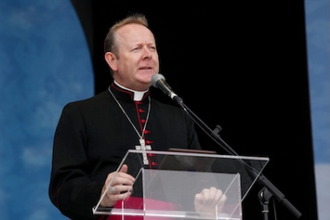
Archbishop Eamon Martin addressing IX World Meeting of Families, Dublin Aug 2018 CCO archive

Archbishop Eamon Martin addressing IX World Meeting of Families, Dublin Aug 2018 CCO archive

Archbishop Eamon Martin delivered this homily during the International Mass in Lurgan Parish, Dromore, today, 14 June, to celebrate the gifts of the parish’s diverse community – after a week of attacks on migrant communities in Northern Ireland.


Friends, I’m very happy to be with you for this international Mass to celebrate the richness and diversity of your parish community here in Lurgan.

I am very conscious of course of the fear and anxiety that many are feeling this week after the brutal knife attack on a man’s life in Belfast, which was followed by outrageous and orchestrated violence against the homes and businesses of migrant communities in our towns and cities. This morning’s Mass is an opportunity for us to pray together following such a traumatic week. On behalf of the many good people in our communities, I want to express our shock and horror at the hatred and violence that has been shown on our streets to friends and neighbours who have come from around the world to live, work and pray among us here in Ireland.

Ireland has long been known as a place of friendliness and welcome – céad míle fáilte – 100,000 welcomes, even. Perhaps that’s because migration has been a major feature of Irish history for generations; during the height of the famine years almost two million people left our shores, and migration has been a common and constant pattern in Irish life: with young people leaving to look for jobs and a fresh start in life, especially when times were tough. Even today, many of our talented young people still leave our island to seek new skills and experience and perhaps to earn enough money to return and put down a deposit on a home for their future.

Now we hear angry and hate-filled voices, especially on social media, calling for us “to close our borders and our hearts to the newcomer”. Ironically, that reminds us of the way that during some dark days, our own Irish emigrants abroad were suspected and unjustly targeted.

Pope Leo, and Pope Francis before him, have reminded us that ‘to welcome the migrant is to welcome Christ himself’, who ‘is present in the sister or brother in need of our help.’

We are also called to go beyond merely ‘welcoming’ newcomers. We are challenged by our faith to do everything we can to support and integrate new arrivals here and help them to become valued members of our communities who can participate in our parishes, and be our neighbours and friends.

We are well aware of the tremendous gifts that people from other countries are already bringing to our health and hospitality services, to our businesses and retail outlets, to our construction and technology sectors, and to the revitalisation of many areas and neighbourhoods which had become neglected and run down. Pope Francis used to talk about cultivating a “culture of encounter” with newcomers.

Pope Benedict XVI wrote in his encyclical, Caritas in Veritate: “every migrant is a human person who, as such, possesses fundamental, inalienable rights that must be respected by everyone and in every circumstance.”

In recent days, we have seen again how fear can be stirred up, how difference can be treated as threat, and how people can be targeted because of their race, background or identity. We do not gather here today in Saint Peter’s, Lurgan, to dwell in that darkness, but neither do we pretend it has not touched our communities.

This International Mass is a sign of another possibility and faith-filled vision – of people of many nations, languages and cultures standing together before the same Lord, sharing the same Eucharist, and recognising one another not as strangers, but as brothers and sisters in Christ. For as the psalmist put it, “cry out with joy to the Lord all the Earth, for we are his people the sheep of his flock!”

During the past week, Pope Leo XIV spoke in the Canary Islands of integration of migrants as a shared responsibility, which is rooted in human dignity, welcome and participation. The Church does not ask people to erase who they are, nor does she ask local communities to close themselves off in fear. What we seek is … a deeper encounter: the meeting of cultures, gifts, memories, prayers, music, food, stories and faith.

Those who come to our communities and parishes in Ireland bring great riches from their various traditions across the world. And we who receive them are called to share our story, our memories and traditions, with them.

In Christ, we are not set against each other. We are invited to build a home and community together, to learn from one another, to build and share the life of the local community, and to let the Holy Spirit form us into one body, rich in many gifts.

Pope Leo emphasises that, “Integration is a reciprocal journey: those who arrive learn to inhabit a new land, and those who welcome them learn to expand their own homes without diluting their identity or closing their hearts to the encounter.”

Pope Leo spoke directly to members of migrant communities, saying: “To you, dear migrant brothers and sisters, belongs a noble and necessary part of this journey: to open yourselves with trust to the community that welcomes you, to learn its language, to respect its laws, to get to know its customs, to participate in communal life and to offer your gifts with gratitude.”

Let me be very clear today: racism is a grave sin and Christians like us must stand strongly against it. The Irish bishops said recently, “Even if a crowd is shouting racist chants, we stand for the truth that God’s love is not restricted to the holders of any particular passports – we are all equal in his eyes.” Racism “seeks to divide and to exploit anxieties by spreading fear, often through misinformation.”

I am delighted that this parish has chosen to celebrate this International Mass today. It is an affirmation that we recognise the image of God and human dignity in every person.

We pray for migrants and refugees as Pope Francis did:

We are a pilgrim people,
journeying our way through this earth.

Though we live on earth,
our true citizenship is in heaven.

Do not let us become possessive
of the portion of the world
you have given us as a temporary home.

Help us to keep walking,
together with our migrant brothers and sisters,
toward the eternal dwelling you have prepared for us.

Open our eyes and our hearts
so that every encounter with those in need
becomes an encounter with Jesus, your Son and our Lord.
Amen.

(Pope Francis, Prayer for World Day of Prayer for Migrants and Refugees, 2024)

St Brigid February 1st

Archbishop Martin gave this homily at Mass in Faughart Co Louth:

Whenever Saint Brigid first chose to embrace the consecrated life, she was joined by seven other women.

The story is told that each of the women, after receiving the veil of religious life, chose one of the eight beatitudes of Jesus to be their motto – to represent the particular gift or ‘charism’ that they wanted to guide their life of dedication to God. It is a wonderful coincidence then that, as we celebrate the Feast of Saint Brigid this year on a Sunday, the set gospel reading from chapter five of Saint Matthew’s Gospel features those eight sayings of Jesus known as “the Beatitudes” which He spoke at the beginning of His famous ‘sermon on the mount’.

Jesus offered the ‘beatitudes’ to describe His way to holiness – the only pathway to true happiness. He tells us that “Happy” or “Blessed” are the poor in spirit; the gentle; those who mourn; and, those who hunger in thirst for what is right. He then singles out the merciful; the pure in heart; peacemakers; and, those who are persecuted in the cause of right.

If, like Saint Brigid and her companions, you were to select one of the beatitudes as your motto – to represent the kind of person you would like to be – which would you choose? To be Poor in spirit? Meek and gentle? Someone who weeps or mourns the sin and suffering in the world? Or, a person who hungers and thirsts for what is right? Would you desire to be always a merciful person? Or, to be pure in heart? A peacemaker? Or would you want to be known as someone willing to be persecuted in the cause of right?

Of course all eight of the beatitudes are inter-related. They are not describing eight different types of person, but one: the perfect Christian! They set out the essence of being the true follower of Christ. No wonder then that our late Holy Father, Pope Francis, liked to describe the Beatitudes as the Christian’s “passport” or “identity card” – our blueprint for holiness. If you are ever fortunate enough to meet someone who represents all eight beatitudes at once, then you have met a perfect Christian – you have met a saint!

The more I reflect on the life of Saint Brigid, the more I realise how much she represents a woman who brought the beatitudes to life! Interestingly, when she was reflecting on which beatitude would most inspire her life of consecration to God, she chose: “Happy are the merciful”; “Blessed are the merciful – they shall have mercy shown them”.

Saint Brigid clearly wanted to model a life of mercy towards the poor, the sick, the vulnerable, those people who struggled with diseases or disabilities, the weak, the sinner, the lost. Like Jesus, she wanted to promote their dignity at all times, to welcome them, to be with them, to accompany them.

They say she learned this beautiful quality from her Christian mother – remember, Saint Brigid lived at the very dawn of Christianity on this island; her mission was to call people away from empty paganism, from chasing after false and superficial gods and goddesses and instead to offer them Jesus, who is the Way, the Truth, and the Life. Apparently, her pagan father couldn’t stand Brigid’s complete generosity towards the poor and the vulnerable – he felt she was going to bankrupt him by her kindness and goodness!

Saint Brigid was driven by compassion and hospitality to those whom the world tends to forget, or brush aside; she wanted her convent to be a haven of mercy for the weak – not just the materially poor, but also the poor in spirit, those who were spiritually hungering for the real food that would sustain them in life: the Bread of Life, the Body of Christ, the Church of God.

She was truly “Saint Brigid of the Beatitudes”! She, and her companions, did not want to live just one of the beatitudes; they wanted to “action” them all, and to model their lives as followers of Christ: poor in spirit, gentle, pure in heart, peacemakers, merciful, able to weep for the suffering and sinners, determined to work for what is right and just in the world even if it meant being persecuted for doing so.

Saint Brigid challenged people not to cling to the superficial and empty promises of pagan gods and goddesses; she was pointing them instead to the true God, to the Holy Spirit, to Christ and the Kingdom of Heaven! Her clear message was to let your life be inspired by Jesus Christ and His beatitudes, and then you shall be truly satisfied: you shall inherit the earth; you shall be comforted; you shall have mercy shown you; you shall see God; you shall be called daughters and sons of God; yours will be the kingdom of heaven!

This is not an easy message. The beatitudes of Jesus are very challenging – they turn the values of this world on their head – by saying it is the poor, the persecuted, the gentle, the humble, the pure in heart who find true happiness, rather than the rich and powerful, the strong and aggressive. This world, often obsessed with money, power, individual freedoms and status, tries to convince us that it is those with the biggest armies, the most powerful weapons, the most money and access to celebrity, privilege and personal pleasure who are the greatest. Jesus and Saint Brigid represent an entirely different pathway. The way of the beatitudes; the promise of true perfection; the path to true happiness with God in eternal life.

Saint Brigid is often offered as a model for women in Ireland today. Saint Brigid is certainly an inspiring example of the indispensable contribution that women make to the daily life and mission of the Church, and society. Sadly, we live in a world where the personal dignity of women is too often threatened by violence, abuse, inequality, commercial surrogacy, pornography, and now by the manipulation of female images online, gender ideology, the false promise of abortion on demand and other forms of exploitation.

The voice of women – Saint Brigid’s voice – and the specific vocation and charism of women, is needed more than ever today, especially in the Church, for we struggle at times to navigate the complex, contradictory and misleading messages surrounding contemporary issues which, left unchecked, risk the “dehumanising” of human life and dignity.

Pope Saint John Paul II, in Christifideles Laici, (his Apostolic Exhortation on the vocation and mission of the lay faithful), emphasised that women exercise a special role in the mission of Christ because “women have the task of assuring the moral dimension of culture.” He reminded us that God actually entrusted the human being to women, “precisely because the woman in virtue of her special experience of motherhood is seen to have a specific sensitivity towards the human person and all that constitutes the individual’s true welfare, beginning with the fundamental value of life.”

Saint Brigid of the Beatitudes reminds us today of the importance of promoting the specific charisms and dignity that women can bring to the Church’s mission. I am thinking especially of dialogue with contemporary society; decision-making, governance and leadership; education, catechesis and evangelisation. The Church, and wider society, needs the particular insights and witness of women – inspired by Saint Brigid of the Beatitudes – in matters such the protection of human life; outreach to poor, vulnerable and marginalised people; the safeguarding of children, marriage and the family; quality education and spiritual formation in our schools and parishes; and best practice in care and support for those who are disabled, sick or dying.

For that reason, I wish to pay tribute today to women – pastoral and present – in Ireland and throughout the world who, like Saint Brigid, have consecrated their lives to God, and dedicated themselves generously to promoting mercy, dignity of the human person, compassion towards the poor and the sick, and many other religious gifts and charisms.

Tomorrow, the Feast of the Presentation of the Lord, is also the World Day of Prayer for Consecrated Life. Let us pray and give thanks for all women and men who have given up everything to serve God and the Church in such a selfless manner. We pray for more vocations to the religious life, and to the priesthood, as well as for a deep sense of vocation in all the baptised – inspired by the Beatitudes! We pray:

Saint Brigid,
You were a woman of peace.
You brought harmony where there was conflict.
You brought light to the darkness.
You brought hope to the downcast.
May the mantle of your peace
cover those who are troubled and anxious,
and may peace be firmly rooted in our hearts and in our world.
Inspire us to act justly and to reverence all God has made.
Brigid you were a voice for the wounded and the weary.
Strengthen what is weak within us.
Calm us into a quietness that heals and listens.
May we grow each day into greater
wholeness in mind, body and spirit.
Amen.

A Naomh Bríd a Mhuire na nGael,
scar orainn do bhrat,
A Naomh Bríd a chroí na féile,
stiúir sinn ar an mbóthar ceart,
A Naomh Bríd gheanúil ghrástúil,
ar ár namhaid cosain sinn,
A Naomh Bríd a bhean rialta álainn,
ar uair ár mbáis glaoigh orainn.

Sent from my iPhone
ADVENT & CHRISTMAS 2025

Greetings, will add materials for school use over the next weeks Declan

ICN has assembled a list of resources today, as we start Advent, as usual.

Advent Resources and Services 2025

  • Nov 28th, 2025

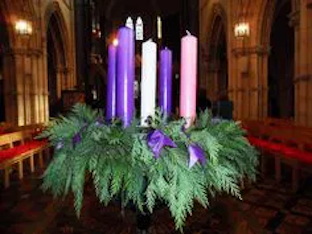
Wiki Image

Wiki Image

RESOURCES

CAFOD is offering Advent reflection emails, starting on 30 November, the first Sunday of Advent. They will share scripture reflections, stories of our global family, prayers and practical ideas for action, as we take time to prepare for the coming of Christ.
Advent prayer resources for parishes and schools is also available. See: https://cafod.org.uk/pray/advent-prayers

Catholic Union‘s Advent Calendar offers short daily thoughts from members and friends. https://catholicunion.org.uk/2025/11/catholic-union-advent-calendar-2025/

Embrace the Middle East invites signing up to receive free Advent Reflection emails and take part in our online Advent Vigils. Details to sign for the vigils come with the emails https://embraceme.org/advent-reflections?

The National Justice and Peace Network offers Advent resources on its website, with readings, reflections and prayers for each of the four weeks on the themes of Hope, Peace, Joy and Love plus a choice of 2 leaflets of services on these themes for parish use. They are produced by Anne O’Connor. You can download these resources from NJPN here:

REFLECTIONS FOR ADVENT HOPE PEACE JOY LOVE www.justice-and-peace.org.uk/resources/7447/attachment/reflections-for-advent-hope-peace-joy-love/

SERVICE FOR ADVENT HOPE PEACE JOY LOVE www.justice-and-peace.org.uk/resources/7447/attachment/service-for-advent-hope-peace-joy-love/. Or www.justice-and-peace.org.uk/category/advent/

The Jesuit Refugee Service resource invites opening our hearts and communities to refugees, recognising the unique value they bring. https://jrs.net/wp-content/uploads/2025/11/2025_EN_Advent-resource.pdf

Jesuits in Britain Advent Calendar brings together a rich variety of resources, events, and opportunities to help you prepare for the coming of Christ in a prayerful and meaningful way. Download the Advent Calendar and begin your journey. See: www.jesuit.org.uk/news/an-advent-of-encounter-the-jesuits-in-britain-advent-calendar-is-here

Missio offers new Advent resources for children downloadable from the Mission Together website. The resources include scripture, prayer, craft activities and a call to action. https://missiontogether.org.uk/advent-and-christmas/

The Archdiocese of Southwark is sending out a daily email reflection from Sunday 30 November, scheduled to arrive in your inbox on the morning of each day of Advent. www.rcsouthwark.co.uk/news-events/news/southwark-spirituality- commission-advent-reflections-2025/

THE TABLET is running a series of meditations for ADVENT See link below

Grace on the hoof

In the first of an Advent series about fitting prayer into busy lives, a mother of three primary-age children meditates next to the school janitor as he sneaks a cigarette

By Laura Keynes

SOME RESOURCES FOR LECTIO OR TAIZE PRAYER

CSW 2026 November Moment 2025

‘November Moment’ 2025

November 2025: The Month of the Holy Souls

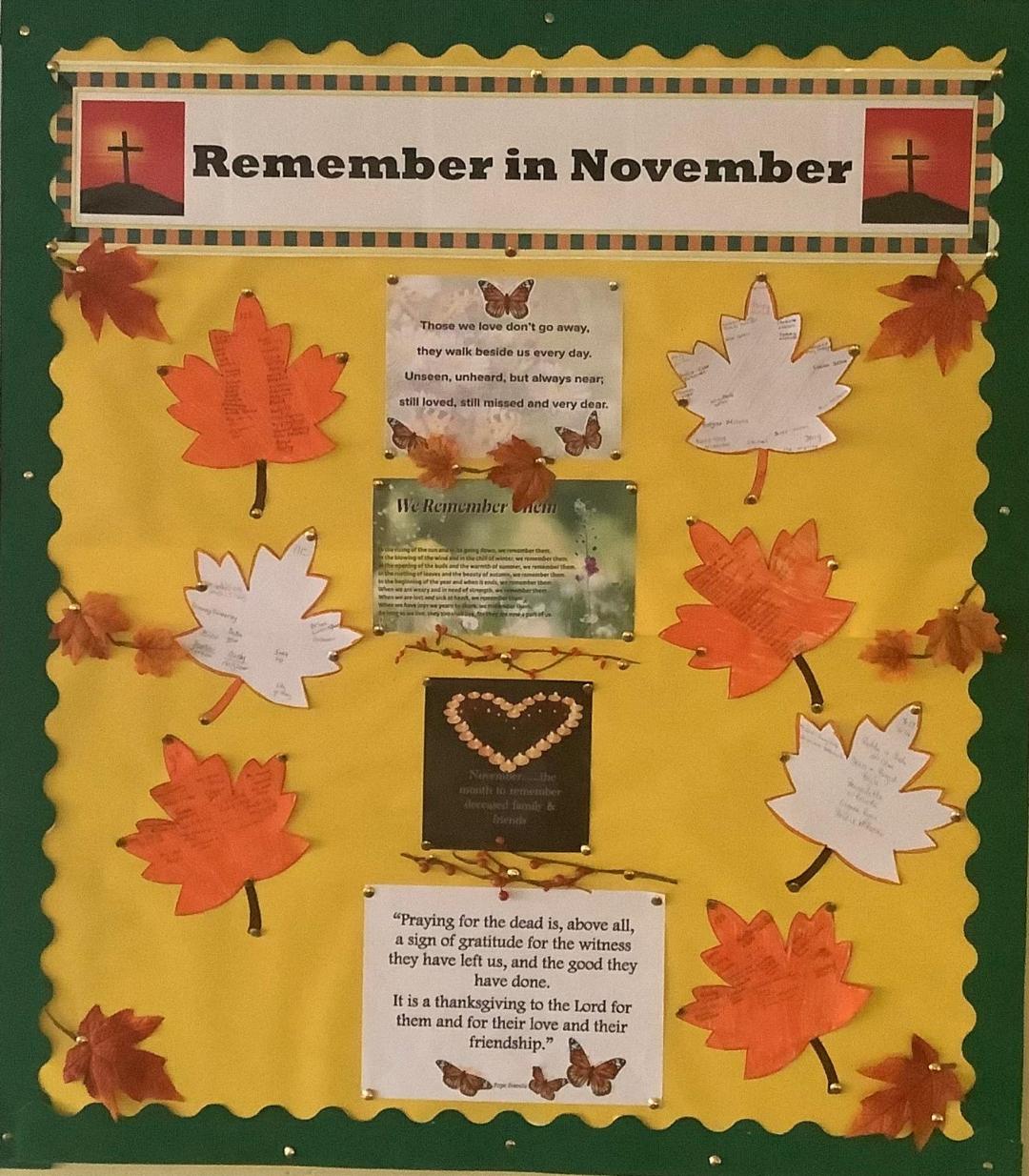
St Catherine’s College November Display Board Thanks Roisin !

‘Holiness does not mean performing extraordinary things, but doing ordinary things with love and faith.”
— Pope Francis on Blessed Carlo Acutis

As we look forward to celebrating Catholic Schools Week 2026, in the month of November we remember and pray, in a special way, for all those who have died and gone before us in the hope of the resurrection.

The theme for Catholic Schools Week in January 2026 is ‘Catholic Schools: Normal Lives, Called to Holiness’.
This ‘November Moment’, traditionally called the month of the Holy Souls, is a space in our year to recall those who have lived their lives before us and perhaps reflect on their holiness. It is a space to remember the normal, ordinary activities of their lives, carried out in love and faith, which made their holiness alive to us.

There may be sadness in remembering, but there can also be moments of joy and especially hope when we remember our loved ones who have died and pray that they live with God in heaven.

Our ‘November Moment’ pack is a resource that aims to assist and support schools with activities and lesson ideas for the month of the Holy Souls. The pack has a variety of resources to choose from – music, scripture readings, prayers and activities. It includes a worksheet and a suggested prayer service or ritual, or you can design a custom-made prayer service or ritual using some of these elements in whatever order suits your class or school situation.

The resources are available below:

Primary

Gaeilge
English

Post Primary

Gaeilge
English

.

CATHOLIC SCHOOLS WEEK 2026 (18th to the 24th January 2026)

Catholic Schools – Normal Lives, Called to Holiness

“Holiness does not mean performing extraordinary things, but doing ordinary things with love and faith.”

— Pope Francis on Blessed Carlo Acutis

Introduction

Catholic Schools Week 2026 celebrates the extraordinary call to holiness in the midst of ordinary life. Inspired by Pope Francis’s reflection on Blessed Carlo Acutis—soon to be canonised as the first millennial saint—this year’s theme invites pupils, teachers, families, and parishes to explore the call to holiness as something both universal and accessible. Holiness is not for a few, but for all; not reserved for religious professionals or mystics, but for every student, teacher, parent, (and grandparent!) living each day in friendship with Jesus Christ.

Catholic schools exist to form individuals who know that their lives have a purpose and a calling. This year’s theme, “Normal Lives, Called to Holiness,” resonates with the central conviction that education is a path not only to knowledge and maturity but to sainthood.

“Each of us is called to be holy by living our lives with love and by bearing witness in everything we do.”

— Gaudete et Exsultate, 14

Key Theme: Everyday Holiness

This theme offers a meaningful opportunity to speak to children and young people about how God calls each of us to holiness in the concrete circumstances of daily life. It allows us to:

  • Introduce students to modern saints like Blessed Carlo Acutis, who lived an ordinary teenage life with extraordinary faith.
  • Highlight saints who lived in families, went to school, worked in trades, or suffered illness.
  • Explore the meaning of holiness as a loving relationship with Jesus Christ, lived through prayer, service, courage, love, and joy.
  • Emphasise the role of the Eucharist, the Scriptures, and Christian friendship in forming a holy life.

As Pope Leo XIV recently affirmed:

“The saints show us that holiness is not about escape from the world, but deep engagement with it in the Spirit of Christ.”

Daily Themes

Each day of the week reflects a different dimension of our call to holiness:

Monday: Called to Holiness through Prayer
Holiness begins with a relationship with God. Children will learn that prayer is the lifeblood of that relationship—from silent moments to joyful praise, from formal prayers to personal words shared with Jesus.

Tuesday: Called to Holiness through Love and Friendship
Holiness is lived in love of neighbour, in kindness, forgiveness, and friendship. Inspired by the words of Jesus, “Love one another as I have loved you” (John 15:12).

Wednesday: Called to Holiness in Family Life – Grandparents’ Day
A cherished tradition, this day honours the vital role grandparents and elders play in passing on the faith and in showing how holiness can be lived over a lifetime. Pupils will be encouraged to show gratitude and celebrate their family roots.

Thursday: Called to Holiness through Service and Courage
Young people will explore how self-giving love and courage in the face of challenges form part of holiness. Stories of saints who served the poor, forgave their enemies, or stood up for what is right will be shared.

Friday: Called to Holiness through Joy and Mission
Holiness is not grim but joyful! The final day focuses on the joy of the Gospel and how young people are called to be missionary disciples who share Christ through action and word in the world.

Support Resources

Resources for Catholic Schools Week 2026 will include:

  • Daily classroom reflections and activities (Junior Infants to Leaving Cert).
  • Suggested Scripture passages and short prayers.
  • Profiles of saints (e.g. Carlo Acutis, St. Therese of Lisieux, St. Josephine Bakhita, Bl. Pier Giorgio Frassati).
  • Multimedia content developed in collaboration with CCO to support social media campaigns and classroom engagement.
  • A poster and theme logo for school display.

Pedagogical Integration

CSW 2026 aligns with the ethos of Catholic education and with current curriculum developments:

  • SPHE: exploring human dignity, resilience, and friendship through a Catholic lens.
  • Religious Education: drawing on themes of sainthood, sacramentality, and Scripture.
  • Wellbeing: understanding spiritual wellbeing as integral to personal flourishing.
  • Digital Literacy: engaging with Carlo Acutis’ story as a way of exploring positive online presence and ethical technology use.

Conclusion

Holiness is not an achievement but a gift—a gift that God offers to each of us in the ordinary rhythm of our days. During Catholic Schools Week 2026, let us joyfully proclaim with Pope Francis: “Do not be afraid to be saints!”

Catholic schools are communities where every pupil can discover that their life matters, that they are loved by God, and that they are called to be saints—not in some distant way, but right now, today, in the classroom, the playground, and at home.

“The measure of holiness stems from the stature that Christ achieves in us, to the extent that, by the power of the Holy Spirit, we model our whole life on his.”

— Gaudete et Exsultate, 21

October Month of the Holy Rosary

‘One million children praying the Rosary’ campaign

  • ICN Article Oct 6th, 2025

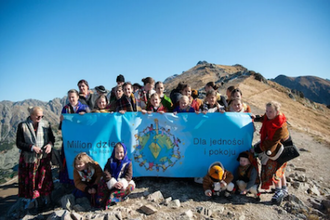
Children from Poland take part in ACN's One Million Children Praying the Rosary.

Children from Poland take part in ACN’s One Million Children Praying the Rosary.

Source: Aid to the Church in Need

October is traditionally the month of the Rosary, and this year it takes on a special significance with the Holy Father’s call to pray daily for peace. On October 11, as part of the Jubilee of Marian Spirituality, the Pope will lead the Rosary in St Peter’s Square.

Aid to the Church in Need (ACN) joins this great appeal through the initiative ‘One Million Children Praying the Rosary;. On October 7, the Feast of Our Lady of the Rosary, ACN is inviting children from around the world to gather in prayer in their parishes, schools, and families. So far, almost 100,000 have already registered to take part.

ACN International president Cardinal Mauro Piacenza’s appeal for prayer as a necessity in a “world wounded by division, conflict, and suffering” struck a particular chord with many of those who committed to participating in the event.

“We fully share your concern about the alarming increase in violence, hatred, and division across the world. In these troubling times, we truly believe that prayer, especially the Rosary, remains our most powerful spiritual weapon for peace, unity, and the protection of innocent lives,” writes the Diocese of Faisalabad, Pakistan, to ACN.

“Rest assured, we will actively promote this campaign throughout our diocese. Our schools, parishes, and catechetical centres will be invited to unite with children from across the world to raise their voices in prayer for peace and reconciliation,” he adds.

In neighbouring India, Bishop Theodore Mascarenhas of Daltonganj also says that in these times “this invitation to unite the voices of children in prayer is both prophetic and profoundly necessary. I wish to assure you that as a diocese, we fully support this initiative and will do all we can to make it a meaningful and well-participated moment across our parishes, schools, and mission stations”.

Children in Myanmar will also be taking part, with one response from the country saying “please be assured of our spiritual closeness. We will gladly ask our priests and religious to animate the children to join you, uniting our intentions with yours and with all who participate in this campaign. Truly, Our Lady must be smiling upon all the prayers and graces that have flowed from these 20 years of devotion.”

Responses also came in from South America, with Bishop Adalberto Jiménez from the Apostolic Vicariate of Aguarico saying that “from our jungles and rivers, our schools and chapels, from the green heart of the Ecuadorian Amazon, we come together with filial love to the Virgin Mary, and with hope for the future of the world, which we place in her hands”. The bishop is expecting at least 2,500 children and 7,000 adults to participate.

Bishop Leopoldo Ndakalako of Menongue, Angola, describes the campaign as “a great, unique and opportune initiative, especially at this time in history”. He adds that “the diocese will do everything it can so that our children, and indeed the whole diocesan community, takes part”.

While pledging the support of his diocese as well, Bishop Bruno Ateba of Maroua-Mokolo, Cameroon, says that “you are right to say that terrorism, war, violence, hatred and division are gaining ground, and the number of people in distress is increasing all the time. Our help is in the name of the Lord, who made heaven and earth.”

Fr Yakobus Warata, provincial of the Congregation of the Most Holy Redeemer, Indonesia, says that “in a time marked by growing violence, division, and suffering, your words are a timely and powerful reminder that our response must be grounded not only in action, but also in deep and united prayer,” adding that “we are convinced that the innocent prayer of children has a unique power to touch the heart of God and to call down peace upon our troubled world”.

This was also echoed by Fr Shelton Dias of the Archdiocese of Colombo, Sri Lanka, who expresses his firm belief “that the power of prayer, mainly the power of the Rosary can change the world. Nothing can overcome the power of prayer.”

As of now, there will be over 8,000 children praying the rosary for peace in Ireland this Tuesday. ACN in Ireland says: “This is a truly remarkable statistic and has only become possible due to the widespread cooperation of schools, so thank you to all of the teachers who have expressed interest in the event and will be devoting a portion of their Tuesday to praying the rosary with their young pupils.”

There is still time to download free resources at: www.acnireland.org/pray-the-rosary-campaign

This is the twentieth consecutive year of the prayer campaign, which began in 2005, as a small event in Venezuela. In 2023, for the first time, over one million children officially took part, and the same happened in 2024.

Parishes, movements, schools and families are asked to pray during October, but especially on 7 October, the Feast of Our Lady of the Rosary, which will send “a tidal wave of prayer around the world, sprung from the hearts of children and uttered in childlike trust”, according to Fr Anton Lässer, ecclesiastical assistant to ACN International.

Check out October in former posts for resources

Catholic Schools Week 2026 Catholic Schools – Normal Lives, Called to Holiness

Catholic Schools Week 2026 will run from 18th to the 24th January 2026

Catholic Schools – Normal Lives, Called to Holiness

“Holiness does not mean performing extraordinary things, but doing ordinary things with love and faith.”

— Pope Francis on Blessed Carlo Acutis

Introduction

Catholic Schools Week 2026 celebrates the extraordinary call to holiness in the midst of ordinary life. Inspired by Pope Francis’s reflection on Blessed Carlo Acutis—soon to be canonised as the first millennial saint—this year’s theme invites pupils, teachers, families, and parishes to explore the call to holiness as something both universal and accessible. Holiness is not for a few, but for all; not reserved for religious professionals or mystics, but for every student, teacher, parent, (and grandparent!) living each day in friendship with Jesus Christ.

Catholic schools exist to form individuals who know that their lives have a purpose and a calling. This year’s theme, “Normal Lives, Called to Holiness,” resonates with the central conviction that education is a path not only to knowledge and maturity but to sainthood.

“Each of us is called to be holy by living our lives with love and by bearing witness in everything we do.”

— Gaudete et Exsultate, 14

Key Theme: Everyday Holiness

This theme offers a meaningful opportunity to speak to children and young people about how God calls each of us to holiness in the concrete circumstances of daily life. It allows us to:

  • Introduce students to modern saints like Blessed Carlo Acutis, who lived an ordinary teenage life with extraordinary faith.
  • Highlight saints who lived in families, went to school, worked in trades, or suffered illness.
  • Explore the meaning of holiness as a loving relationship with Jesus Christ, lived through prayer, service, courage, love, and joy.
  • Emphasise the role of the Eucharist, the Scriptures, and Christian friendship in forming a holy life.

As Pope Leo XIV recently affirmed:

“The saints show us that holiness is not about escape from the world, but deep engagement with it in the Spirit of Christ.”

Daily Themes

Each day of the week reflects a different dimension of our call to holiness:

Monday: Called to Holiness through Prayer
Holiness begins with a relationship with God. Children will learn that prayer is the lifeblood of that relationship—from silent moments to joyful praise, from formal prayers to personal words shared with Jesus.

Tuesday: Called to Holiness through Love and Friendship
Holiness is lived in love of neighbour, in kindness, forgiveness, and friendship. Inspired by the words of Jesus, “Love one another as I have loved you” (John 15:12).

Wednesday: Called to Holiness in Family Life – Grandparents’ Day
A cherished tradition, this day honours the vital role grandparents and elders play in passing on the faith and in showing how holiness can be lived over a lifetime. Pupils will be encouraged to show gratitude and celebrate their family roots.

Thursday: Called to Holiness through Service and Courage
Young people will explore how self-giving love and courage in the face of challenges form part of holiness. Stories of saints who served the poor, forgave their enemies, or stood up for what is right will be shared.

Friday: Called to Holiness through Joy and Mission
Holiness is not grim but joyful! The final day focuses on the joy of the Gospel and how young people are called to be missionary disciples who share Christ through action and word in the world.

Support Resources

Resources for Catholic Schools Week 2026 will include:

  • Daily classroom reflections and activities (Junior Infants to Leaving Cert).
  • Suggested Scripture passages and short prayers.
  • Profiles of saints (e.g. Carlo Acutis, St. Therese of Lisieux, St. Josephine Bakhita, Bl. Pier Giorgio Frassati).
  • Multimedia content developed in collaboration with CCO to support social media campaigns and classroom engagement.
  • A poster and theme logo for school display.

Pedagogical Integration

CSW 2026 aligns with the ethos of Catholic education and with current curriculum developments:

  • SPHE: exploring human dignity, resilience, and friendship through a Catholic lens.
  • Religious Education: drawing on themes of sainthood, sacramentality, and Scripture.
  • Wellbeing: understanding spiritual wellbeing as integral to personal flourishing.
  • Digital Literacy: engaging with Carlo Acutis’ story as a way of exploring positive online presence and ethical technology use.

Conclusion

Holiness is not an achievement but a gift—a gift that God offers to each of us in the ordinary rhythm of our days. During Catholic Schools Week 2026, let us joyfully proclaim with Pope Francis: “Do not be afraid to be saints!”

Catholic schools are communities where every pupil can discover that their life matters, that they are loved by God, and that they are called to be saints—not in some distant way, but right now, today, in the classroom, the playground, and at home.

“The measure of holiness stems from the stature that Christ achieves in us, to the extent that, by the power of the Holy Spirit, we model our whole life on his.”

— Gaudete et Exsultate, 21

More information will be posted as available Declan

Ireland: Day of Prayer and Reflection for Gaza

Source: Irish Catholic Media Office

Parishes across Ireland are invited to unite once more in a Day of Prayer and Reflection for for the suffering people of Gaza on Sunday 24 August 2025.

Archbishop Eamon Martin, said: “The Catholic Bishops of Ireland dedicated the month of June to prayer for, and solidarity with, the suffering people of Gaza.

“Heartbreakingly, since then, the situation has deteriorated further. Innocent lives continue to be lost, many of them children and families while hunger, violence and devastation tighten their grip on a people caught in the crossfire.

“Across the parishes of Armagh and Dromore I have published a pastoral letter that echoes the urgent appeals of Pope Leo XIV, the Latin Patriarch of Jerusalem, Cardinal Pierbattista Pizzaballa and the Heads of Churches in the Holy Land, for an immediate ceasefire, the release of hostages and respect for international humanitarian law. As Pope Leo reminds us, “Every human being has an intrinsic dignity bestowed by God Himself.”

“Ireland’s Bishops have condemned, in the strongest terms, the genocidal acts being carried out with the sanction of the Israeli government, actions that have led to the deaths of tens of thousands of civilians. Such disproportionate violence is described as “unconscionable… and immoral for world leaders to stand by inactively.” The ongoing suffering of hostages held by Hamas and the cruel withholding of their remains from their families is also acknowledged and unequivocally condemned. In the face of such darkness, this call to prayer is a call to hope,” Archbishop Martin said.

How Can We Respond?

On Sunday, all are invited to take part in 24 hours of prayer and reflection. Whether as a parish or in the quiet of your own home, please consider:

– Attending Mass and offering it for peace in Gaza
– Spending time in Adoration before the Blessed Sacrament
– Praying the Rosary for peace and justice
– Lighting a candle at home or in your parish church
– Making a small personal sacrifice or act of penance
– Reaching out to your political representatives to advocate for justice and humanitarian aid
– Supporting trusted aid organisations bringing relief to Gaza

Archbishop Martin concluded: “This is a moment for our nation to radiate the light of Christ into the darkness, a light of peace, of justice and of hope for our world. Let us stand together, as one body in Christ, for the people of Gaza and for all who long for a just and lasting peace in the Holy Land.”

Archbishop Eamon Martin is Archbishop of Armagh, Apostolic Administrator of Dromore and Primate of All Ireland.

LINKS

Pastoral Letter: www.armagharchdiocese.org/day-of-prayer-and-reflection-for-gaza-sunday-24-august-2025/

Youtube Message from Archbishop Martin: www.armagharchdiocese.org/day-of-prayer-and-reflection-for-gaza-sunday-24-august-2025/

JUBILEE YEAR OF HOPE

Archbishop Eamon recently spoke of the Jubilee Year of Hope: ” There couldn’t be a better time for a Jubilee Year of Hope! We live in a world where anxiety, doubt, and sometimes even despair often appear to have the upper hand. It is sad that so many people go through life without realizing in a personal way that God loves them as they are. Others find it difficult to believe in hope and love because of the present state of the world – surrounded as we are by so much war, violence, exploitation and displacement of people, human trafficking, and attacks on human dignity and life. All the more reason, however, for us who believe – especially clergy and religious – to be fearless ambassadors of faith and hope; energetic peacemakers and supporters of the cause of all human life; carers for the sick and those with disabilities; consolers of the lonely and the bereaved; faithful stewards and protectors of the environment and all God’s creation; generous helpers of the poor, the homeless and the marginalized; and welcoming friends for migrants and refugees.

When Pope Francis announced the Jubilee Year for 2025, he invited us to become ‘pilgrims of hope’. He reminded us of the words of Saint Paul who said, “hope (in Christ) does not disappoint”.

I pray that during this Jubilee Year 2025 there will be many graced opportunities for you personally, and for all the people of the Archdiocese of Armagh, to grow in their personal friendship with Jesus Christ who is our reason for living and our reason for hoping.

READ THE PASTORAL LETTER BELOW

Archbishop Eamon Martin concelebrated a special Mass to launch Jubilee Year 2025 for the Archdiocese of Armagh.  A Jubilee Year is celebrated every twenty-five years by the worldwide Church during which Catholics come together to rejoice in the faith.  Over the Jubilee Year we will be encouraged to show mercy, forgive past wrongs, relieve debt, to spiritually rejuvenate, and be offered an opportunity to recieve a plenary indulgence.

The Mass brought together clergy, families, and young people from parishes across the Archdiocese, as well as His Excellency Archbishop Luis Mariano Montemayor, the Apostolic Nuncio to Ireland.  In his homily Archbishop Martin, who presided over the Mass alongside auxiliary Bishop Michael Router, emphasised the importance of hope.  Archbishop Martin said, “There couldn’t be a better time for a Jubilee Year of Hope.  We live in a world where anxiety, doubt and despair often appear to have an upper hand.”  The Primate reflected on the words of Pope Francis, who calls on all believers to be “fearless ambassadors of faith and hope.”

Jubilee Year 2025 will be marked by numerous spiritual events and activities at parish, diocesan, and national levels, including:
– Pilgrimages to local and national shrines;
– Monthly parish initiatives promoting prayer and reflection; and,
– Celebrations of key anniversaries, including the 400th anniversary of Saint Oliver Plunkett’s birth, and the centenary of Venerable Matt Talbot’s death.

In addition to the Jubilee 2025 celebrations, Archbishop Martin announced that year-long preparationswill begin for a Diocesan Congress on Youth and Family Ministry, scheduled for March 2026.  This Congress will focus on fostering vibrant youth and family ministry at local levels, engaging parishes, schools, and third level institutions in this important journey of reflection.

Bishop Router spoke about the significance of the Congress, which will build on insights from the Archdiocese’s synodal journey over the last three-years.  He said, “Over the coming months, parishes and schools will select delegates to represent them, ensuring broad participation in order to shape the future of youth and family ministry in the Archdiocese of Armagh.”

Archbishop Martin concluded, “As the Jubilee Year’s theme suggests, during 2025 we are all invited to be pilgrims of hope in our daily lives, renewing our commitment to faith, love, and service.  Let us journey together in prayer and action, united by the hope we find in Christ.”

Some great school resources about the Jubilee Year are available from CAFOD

Follow this link https://cafod.org.uk/jubilee-schools/jubilee-info-and-faqs

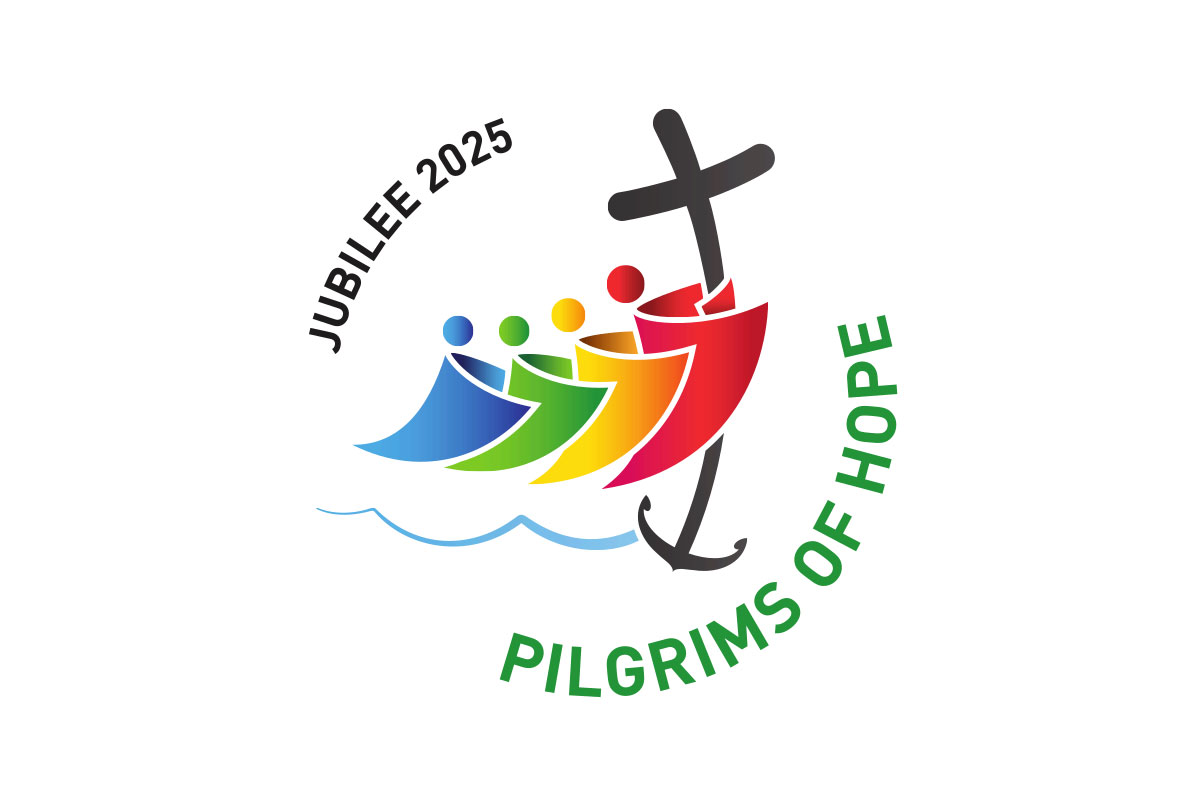
The Jubilee Logo

The logo shows four stylized figures, representing all of humanity, coming from the earth’s four corners. They embrace each other to indicate the solidarity and fraternity which should unite all peoples. The figure at the front is holding onto the cross. It is not only the sign of faith that this lead figure embraces, but also of hope, which can never be abandoned, because we are always in need of hope, especially in our moments of greatest need. There are rough waves under the figures, symbolizing the fact that life’s pilgrimage does not always go smoothly in calm waters. Often the circumstances of daily life and events in the wider world require a greater call to hope. That’s why we should pay special attention to the lower part of the cross which has been elongated and turned into the shape of an anchor which is let down into the waves. The anchor is well-known as a symbol of hope. In maritime jargon, the ‘anchor of hope’ refers to the reserve anchor used by vessels involved in emergency maneuvers to stabilize the ship during storms. It is worth noting that the image illustrates the pilgrim’s journey not as an individual undertaking, but rather as something communal, marked by an increasing dynamism leading one ever closer to the cross. The cross in the logo is by no means static, but it is also dynamic. It bends down towards humanity, not leaving human beings alone, but stretching out to them to offer the certainty of its presence and the security of hope. At the bottom of the logo is the motto of the 2025 Jubilee Year: Peregrinantes in Spem (Pilgrims in Hope), represented in green letters.

YEAR OF PRAYER RESOURCES

Subject: Teach us to pray

Teach Us How to Pray – school programme launched

  • Jan 29th, 2023 Taken for ICN Today

Source: CJM Music

After months of writing, film and editing, CJM has rolled out the first part of the first module of Teach us to Pray – a series of video courses on different aspects of prayer and liturgy in the context of a Catholic school.

This accessible and practical resource draws on more than 25 years of experience working with young people to bring the liturgy to life, while staying deeply rooted in the tradition of the Church.

Jo Boyce writes: “We hope it will help give confidence and inspiration to RE Leads and Lay Chaplains especially, but have designed it to be accessible for all staff who want to contribute meaningfully to the prayer and liturgical life of their schools.

“It’s very much a work in progress, of course. But most of module one is available right now and you get instant access to that when you sign-up at: www.cjmmusic.com/teachustopray

If you’re not directly involved in the life of a Catholic school yourself, it is very likely that you know someone who is. So please pass this information on if you can. And please keep this project in your prayers. It’s a BIG vision, which is calling on A LOT of time and resources.

For more information and to see a video about the programme see: https://cjmmusic.mykajabi.com/teachustopray