Greetings, will add materials for school use over the next weeks Declan
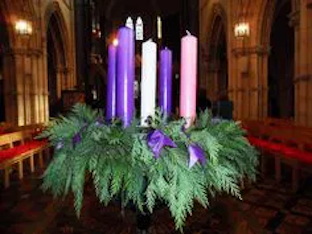
ICN has assembled a list of resources today, as we start Advent, as usual.
Advent Resources and Services 2025
Nov 28th, 2025
Wiki Image
RESOURCES
CAFOD is offering Advent reflection emails, starting on 30 November, the first Sunday of Advent. They will share scripture reflections, stories of our global family, prayers and practical ideas for action, as we take time to prepare for the coming of Christ. Advent prayer resources for parishes and schools is also available. See: https://cafod.org.uk/pray/advent-prayers
Embrace the Middle East invites signing up to receive free Advent Reflection emails and take part in our online Advent Vigils. Details to sign for the vigils come with the emails https://embraceme.org/advent-reflections?
The National Justice and Peace Network offers Advent resources on its website, with readings, reflections and prayers for each of the four weeks on the themes of Hope, Peace, Joy and Love plus a choice of 2 leaflets of services on these themes for parish use. They are produced by Anne O’Connor. You can download these resources from NJPN here:
Missio offers new Advent resources for children downloadable from the Mission Together website. The resources include scripture, prayer, craft activities and a call to action. https://missiontogether.org.uk/advent-and-christmas/
The Archdiocese of Southwark is sending out a daily email reflection from Sunday 30 November, scheduled to arrive in your inbox on the morning of each day of Advent. www.rcsouthwark.co.uk/news-events/news/southwark-spirituality- commission-advent-reflections-2025/
THE TABLET is running a series of meditations for ADVENT See link below
Grace on the hoof
In the first of an Advent series about fitting prayer into busy lives, a mother of three primary-age children meditates next to the school janitor as he sneaks a cigarette
‘Holiness does not mean performing extraordinary things, but doing ordinary things with love and faith.” — Pope Francis on Blessed Carlo Acutis
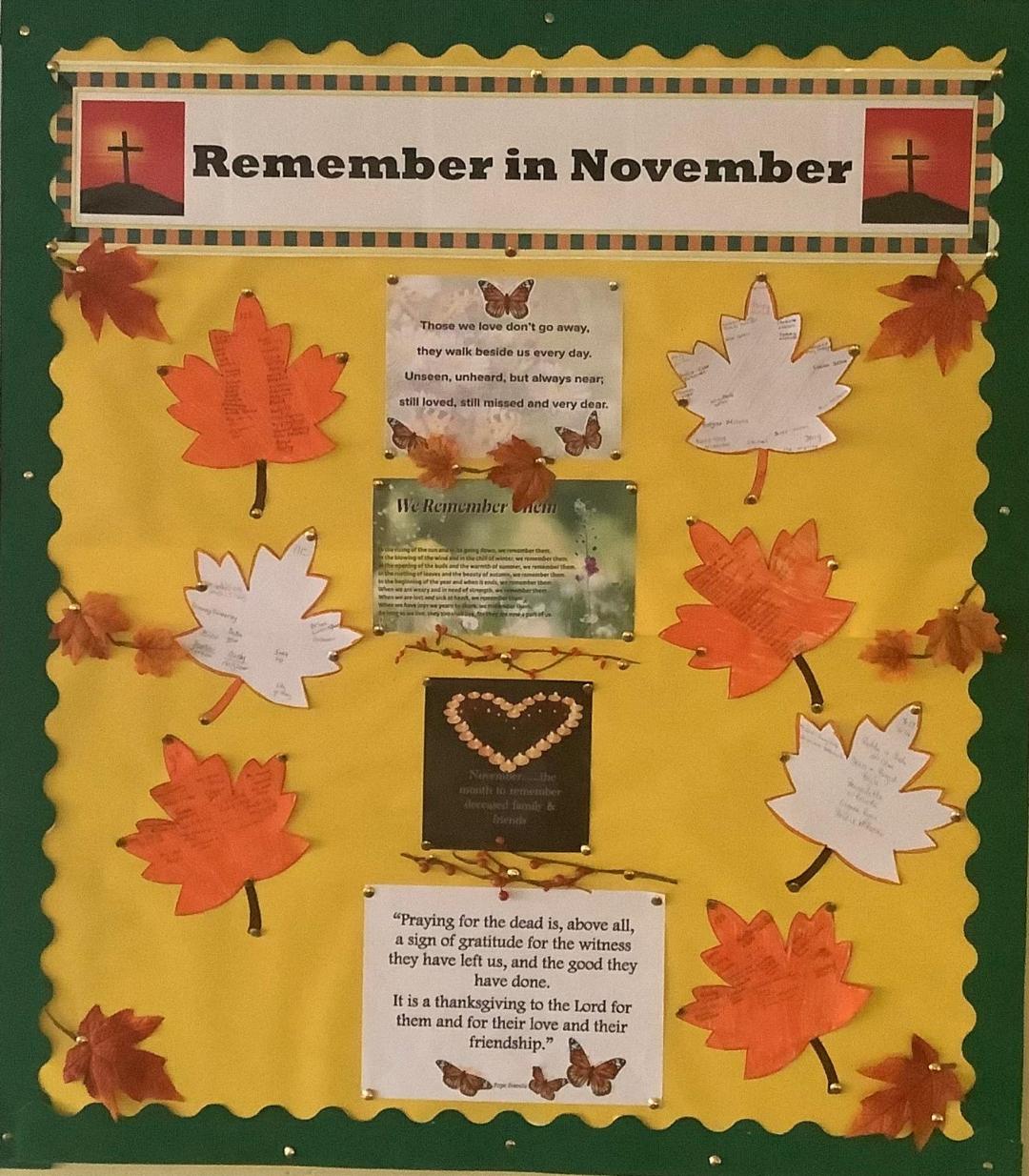
As we look forward to celebrating Catholic Schools Week 2026, in the month of November we remember and pray, in a special way, for all those who have died and gone before us in the hope of the resurrection.
The theme for Catholic Schools Week in January 2026 is ‘Catholic Schools: Normal Lives, Called to Holiness’. This ‘November Moment’, traditionally called the month of the Holy Souls, is a space in our year to recall those who have lived their lives before us and perhaps reflect on their holiness. It is a space to remember the normal, ordinary activities of their lives, carried out in love and faith, which made their holiness alive to us.
There may be sadness in remembering, but there can also be moments of joy and especially hope when we remember our loved ones who have died and pray that they live with God in heaven.
Our ‘November Moment’ pack is a resource that aims to assist and support schools with activities and lesson ideas for the month of the Holy Souls. The pack has a variety of resources to choose from – music, scripture readings, prayers and activities. It includes a worksheet and a suggested prayer service or ritual, or you can design a custom-made prayer service or ritual using some of these elements in whatever order suits your class or school situation.
CATHOLIC SCHOOLS WEEK 2026 (18th to the 24th January 2026)
Catholic Schools – Normal Lives, Called to Holiness
“Holiness does not mean performing extraordinary things, but doing ordinary things with love and faith.”
— Pope Francis on Blessed Carlo Acutis
Introduction
Catholic Schools Week 2026 celebrates the extraordinary call to holiness in the midst of ordinary life. Inspired by Pope Francis’s reflection on Blessed Carlo Acutis—soon to be canonised as the first millennial saint—this year’s theme invites pupils, teachers, families, and parishes to explore the call to holiness as something both universal and accessible. Holiness is not for a few, but for all; not reserved for religious professionals or mystics, but for every student, teacher, parent, (and grandparent!) living each day in friendship with Jesus Christ.
Catholic schools exist to form individuals who know that their lives have a purpose and a calling. This year’s theme, “Normal Lives, Called to Holiness,” resonates with the central conviction that education is a path not only to knowledge and maturity but to sainthood.
“Each of us is called to be holy by living our lives with love and by bearing witness in everything we do.”
— Gaudete et Exsultate, 14
Key Theme: Everyday Holiness
This theme offers a meaningful opportunity to speak to children and young people about how God calls each of us to holiness in the concrete circumstances of daily life. It allows us to:
Introduce students to modern saints like Blessed Carlo Acutis, who lived an ordinary teenage life with extraordinary faith.
Highlight saints who lived in families, went to school, worked in trades, or suffered illness.
Explore the meaning of holiness as a loving relationship with Jesus Christ, lived through prayer, service, courage, love, and joy.
Emphasise the role of the Eucharist, the Scriptures, and Christian friendship in forming a holy life.
As Pope Leo XIV recently affirmed:
“The saints show us that holiness is not about escape from the world, but deep engagement with it in the Spirit of Christ.”
Daily Themes
Each day of the week reflects a different dimension of our call to holiness:
Monday: Called to Holiness through Prayer Holiness begins with a relationship with God. Children will learn that prayer is the lifeblood of that relationship—from silent moments to joyful praise, from formal prayers to personal words shared with Jesus.
Tuesday: Called to Holiness through Love and Friendship Holiness is lived in love of neighbour, in kindness, forgiveness, and friendship. Inspired by the words of Jesus, “Love one another as I have loved you” (John 15:12).
Wednesday: Called to Holiness in Family Life – Grandparents’ Day A cherished tradition, this day honours the vital role grandparents and elders play in passing on the faith and in showing how holiness can be lived over a lifetime. Pupils will be encouraged to show gratitude and celebrate their family roots.
Thursday: Called to Holiness through Service and Courage Young people will explore how self-giving love and courage in the face of challenges form part of holiness. Stories of saints who served the poor, forgave their enemies, or stood up for what is right will be shared.
Friday: Called to Holiness through Joy and Mission Holiness is not grim but joyful! The final day focuses on the joy of the Gospel and how young people are called to be missionary disciples who share Christ through action and word in the world.
Support Resources
Resources for Catholic Schools Week 2026 will include:
Daily classroom reflections and activities (Junior Infants to Leaving Cert).
Suggested Scripture passages and short prayers.
Profiles of saints (e.g. Carlo Acutis, St. Therese of Lisieux, St. Josephine Bakhita, Bl. Pier Giorgio Frassati).
Multimedia content developed in collaboration with CCO to support social media campaigns and classroom engagement.
A poster and theme logo for school display.
Pedagogical Integration
CSW 2026 aligns with the ethos of Catholic education and with current curriculum developments:
SPHE: exploring human dignity, resilience, and friendship through a Catholic lens.
Religious Education: drawing on themes of sainthood, sacramentality, and Scripture.
Wellbeing: understanding spiritual wellbeing as integral to personal flourishing.
Digital Literacy: engaging with Carlo Acutis’ story as a way of exploring positive online presence and ethical technology use.
Conclusion
Holiness is not an achievement but a gift—a gift that God offers to each of us in the ordinary rhythm of our days. During Catholic Schools Week 2026, let us joyfully proclaim with Pope Francis: “Do not be afraid to be saints!”
Catholic schools are communities where every pupil can discover that their life matters, that they are loved by God, and that they are called to be saints—not in some distant way, but right now, today, in the classroom, the playground, and at home.
“The measure of holiness stems from the stature that Christ achieves in us, to the extent that, by the power of the Holy Spirit, we model our whole life on his.”
‘One million children praying the Rosary’ campaign
ICN Article Oct 6th, 2025
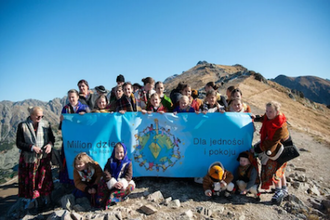
Children from Poland take part in ACN’s One Million Children Praying the Rosary.
Source: Aid to the Church in Need
October is traditionally the month of the Rosary, and this year it takes on a special significance with the Holy Father’s call to pray daily for peace. On October 11, as part of the Jubilee of Marian Spirituality, the Pope will lead the Rosary in St Peter’s Square.
Aid to the Church in Need (ACN) joins this great appeal through the initiative ‘One Million Children Praying the Rosary;. On October 7, the Feast of Our Lady of the Rosary, ACN is inviting children from around the world to gather in prayer in their parishes, schools, and families. So far, almost 100,000 have already registered to take part.
ACN International president Cardinal Mauro Piacenza’s appeal for prayer as a necessity in a “world wounded by division, conflict, and suffering” struck a particular chord with many of those who committed to participating in the event.
“We fully share your concern about the alarming increase in violence, hatred, and division across the world. In these troubling times, we truly believe that prayer, especially the Rosary, remains our most powerful spiritual weapon for peace, unity, and the protection of innocent lives,” writes the Diocese of Faisalabad, Pakistan, to ACN.
“Rest assured, we will actively promote this campaign throughout our diocese. Our schools, parishes, and catechetical centres will be invited to unite with children from across the world to raise their voices in prayer for peace and reconciliation,” he adds.
In neighbouring India, Bishop Theodore Mascarenhas of Daltonganj also says that in these times “this invitation to unite the voices of children in prayer is both prophetic and profoundly necessary. I wish to assure you that as a diocese, we fully support this initiative and will do all we can to make it a meaningful and well-participated moment across our parishes, schools, and mission stations”.
Children in Myanmar will also be taking part, with one response from the country saying “please be assured of our spiritual closeness. We will gladly ask our priests and religious to animate the children to join you, uniting our intentions with yours and with all who participate in this campaign. Truly, Our Lady must be smiling upon all the prayers and graces that have flowed from these 20 years of devotion.”
Responses also came in from South America, with Bishop Adalberto Jiménez from the Apostolic Vicariate of Aguarico saying that “from our jungles and rivers, our schools and chapels, from the green heart of the Ecuadorian Amazon, we come together with filial love to the Virgin Mary, and with hope for the future of the world, which we place in her hands”. The bishop is expecting at least 2,500 children and 7,000 adults to participate.
Bishop Leopoldo Ndakalako of Menongue, Angola, describes the campaign as “a great, unique and opportune initiative, especially at this time in history”. He adds that “the diocese will do everything it can so that our children, and indeed the whole diocesan community, takes part”.
While pledging the support of his diocese as well, Bishop Bruno Ateba of Maroua-Mokolo, Cameroon, says that “you are right to say that terrorism, war, violence, hatred and division are gaining ground, and the number of people in distress is increasing all the time. Our help is in the name of the Lord, who made heaven and earth.”
Fr Yakobus Warata, provincial of the Congregation of the Most Holy Redeemer, Indonesia, says that “in a time marked by growing violence, division, and suffering, your words are a timely and powerful reminder that our response must be grounded not only in action, but also in deep and united prayer,” adding that “we are convinced that the innocent prayer of children has a unique power to touch the heart of God and to call down peace upon our troubled world”.
This was also echoed by Fr Shelton Dias of the Archdiocese of Colombo, Sri Lanka, who expresses his firm belief “that the power of prayer, mainly the power of the Rosary can change the world. Nothing can overcome the power of prayer.”
As of now, there will be over 8,000 children praying the rosary for peace in Ireland this Tuesday. ACN in Ireland says: “This is a truly remarkable statistic and has only become possible due to the widespread cooperation of schools, so thank you to all of the teachers who have expressed interest in the event and will be devoting a portion of their Tuesday to praying the rosary with their young pupils.”
This is the twentieth consecutive year of the prayer campaign, which began in 2005, as a small event in Venezuela. In 2023, for the first time, over one million children officially took part, and the same happened in 2024.
Parishes, movements, schools and families are asked to pray during October, but especially on 7 October, the Feast of Our Lady of the Rosary, which will send “a tidal wave of prayer around the world, sprung from the hearts of children and uttered in childlike trust”, according to Fr Anton Lässer, ecclesiastical assistant to ACN International.
Catholic Schools Week 2026 will run from 18th to the 24th January 2026
Catholic Schools – Normal Lives, Called to Holiness
“Holiness does not mean performing extraordinary things, but doing ordinary things with love and faith.”
— Pope Francis on Blessed Carlo Acutis
Introduction
Catholic Schools Week 2026 celebrates the extraordinary call to holiness in the midst of ordinary life. Inspired by Pope Francis’s reflection on Blessed Carlo Acutis—soon to be canonised as the first millennial saint—this year’s theme invites pupils, teachers, families, and parishes to explore the call to holiness as something both universal and accessible. Holiness is not for a few, but for all; not reserved for religious professionals or mystics, but for every student, teacher, parent, (and grandparent!) living each day in friendship with Jesus Christ.
Catholic schools exist to form individuals who know that their lives have a purpose and a calling. This year’s theme, “Normal Lives, Called to Holiness,” resonates with the central conviction that education is a path not only to knowledge and maturity but to sainthood.
“Each of us is called to be holy by living our lives with love and by bearing witness in everything we do.”
— Gaudete et Exsultate, 14
Key Theme: Everyday Holiness
This theme offers a meaningful opportunity to speak to children and young people about how God calls each of us to holiness in the concrete circumstances of daily life. It allows us to:
Introduce students to modern saints like Blessed Carlo Acutis, who lived an ordinary teenage life with extraordinary faith.
Highlight saints who lived in families, went to school, worked in trades, or suffered illness.
Explore the meaning of holiness as a loving relationship with Jesus Christ, lived through prayer, service, courage, love, and joy.
Emphasise the role of the Eucharist, the Scriptures, and Christian friendship in forming a holy life.
As Pope Leo XIV recently affirmed:
“The saints show us that holiness is not about escape from the world, but deep engagement with it in the Spirit of Christ.”
Daily Themes
Each day of the week reflects a different dimension of our call to holiness:
Monday: Called to Holiness through Prayer Holiness begins with a relationship with God. Children will learn that prayer is the lifeblood of that relationship—from silent moments to joyful praise, from formal prayers to personal words shared with Jesus.
Tuesday: Called to Holiness through Love and Friendship Holiness is lived in love of neighbour, in kindness, forgiveness, and friendship. Inspired by the words of Jesus, “Love one another as I have loved you” (John 15:12).
Wednesday: Called to Holiness in Family Life – Grandparents’ Day A cherished tradition, this day honours the vital role grandparents and elders play in passing on the faith and in showing how holiness can be lived over a lifetime. Pupils will be encouraged to show gratitude and celebrate their family roots.
Thursday: Called to Holiness through Service and Courage Young people will explore how self-giving love and courage in the face of challenges form part of holiness. Stories of saints who served the poor, forgave their enemies, or stood up for what is right will be shared.
Friday: Called to Holiness through Joy and Mission Holiness is not grim but joyful! The final day focuses on the joy of the Gospel and how young people are called to be missionary disciples who share Christ through action and word in the world.
Support Resources
Resources for Catholic Schools Week 2026 will include:
Daily classroom reflections and activities (Junior Infants to Leaving Cert).
Suggested Scripture passages and short prayers.
Profiles of saints (e.g. Carlo Acutis, St. Therese of Lisieux, St. Josephine Bakhita, Bl. Pier Giorgio Frassati).
Multimedia content developed in collaboration with CCO to support social media campaigns and classroom engagement.
A poster and theme logo for school display.
Pedagogical Integration
CSW 2026 aligns with the ethos of Catholic education and with current curriculum developments:
SPHE: exploring human dignity, resilience, and friendship through a Catholic lens.
Religious Education: drawing on themes of sainthood, sacramentality, and Scripture.
Wellbeing: understanding spiritual wellbeing as integral to personal flourishing.
Digital Literacy: engaging with Carlo Acutis’ story as a way of exploring positive online presence and ethical technology use.
Conclusion
Holiness is not an achievement but a gift—a gift that God offers to each of us in the ordinary rhythm of our days. During Catholic Schools Week 2026, let us joyfully proclaim with Pope Francis: “Do not be afraid to be saints!”
Catholic schools are communities where every pupil can discover that their life matters, that they are loved by God, and that they are called to be saints—not in some distant way, but right now, today, in the classroom, the playground, and at home.
“The measure of holiness stems from the stature that Christ achieves in us, to the extent that, by the power of the Holy Spirit, we model our whole life on his.”
— Gaudete et Exsultate, 21
More information will be posted as available Declan
Parishes across Ireland are invited to unite once more in a Day of Prayer and Reflection for for the suffering people of Gaza on Sunday 24 August 2025.
Archbishop Eamon Martin, said: “The Catholic Bishops of Ireland dedicated the month of June to prayer for, and solidarity with, the suffering people of Gaza.
“Heartbreakingly, since then, the situation has deteriorated further. Innocent lives continue to be lost, many of them children and families while hunger, violence and devastation tighten their grip on a people caught in the crossfire.
“Across the parishes of Armagh and Dromore I have published a pastoral letter that echoes the urgent appeals of Pope Leo XIV, the Latin Patriarch of Jerusalem, Cardinal Pierbattista Pizzaballa and the Heads of Churches in the Holy Land, for an immediate ceasefire, the release of hostages and respect for international humanitarian law. As Pope Leo reminds us, “Every human being has an intrinsic dignity bestowed by God Himself.”
“Ireland’s Bishops have condemned, in the strongest terms, the genocidal acts being carried out with the sanction of the Israeli government, actions that have led to the deaths of tens of thousands of civilians. Such disproportionate violence is described as “unconscionable… and immoral for world leaders to stand by inactively.” The ongoing suffering of hostages held by Hamas and the cruel withholding of their remains from their families is also acknowledged and unequivocally condemned. In the face of such darkness, this call to prayer is a call to hope,” Archbishop Martin said.
How Can We Respond?
On Sunday, all are invited to take part in 24 hours of prayer and reflection. Whether as a parish or in the quiet of your own home, please consider:
– Attending Mass and offering it for peace in Gaza – Spending time in Adoration before the Blessed Sacrament – Praying the Rosary for peace and justice – Lighting a candle at home or in your parish church – Making a small personal sacrifice or act of penance – Reaching out to your political representatives to advocate for justice and humanitarian aid – Supporting trusted aid organisations bringing relief to Gaza
Archbishop Martin concluded: “This is a moment for our nation to radiate the light of Christ into the darkness, a light of peace, of justice and of hope for our world. Let us stand together, as one body in Christ, for the people of Gaza and for all who long for a just and lasting peace in the Holy Land.”
Archbishop Eamon Martin is Archbishop of Armagh, Apostolic Administrator of Dromore and Primate of All Ireland.
Archbishop Eamon recently spoke of the Jubilee Year of Hope: ” There couldn’t be a better time for a Jubilee Year of Hope! We live in a world where anxiety, doubt, and sometimes even despair often appear to have the upper hand. It is sad that so many people go through life without realizing in a personal way that God loves them as they are. Others find it difficult to believe in hope and love because of the present state of the world – surrounded as we are by so much war, violence, exploitation and displacement of people, human trafficking, and attacks on human dignity and life. All the more reason, however, for us who believe – especially clergy and religious – to be fearless ambassadors of faith and hope; energetic peacemakers and supporters of the cause of all human life; carers for the sick and those with disabilities; consolers of the lonely and the bereaved; faithful stewards and protectors of the environment and all God’s creation; generous helpers of the poor, the homeless and the marginalized; and welcoming friends for migrants and refugees.
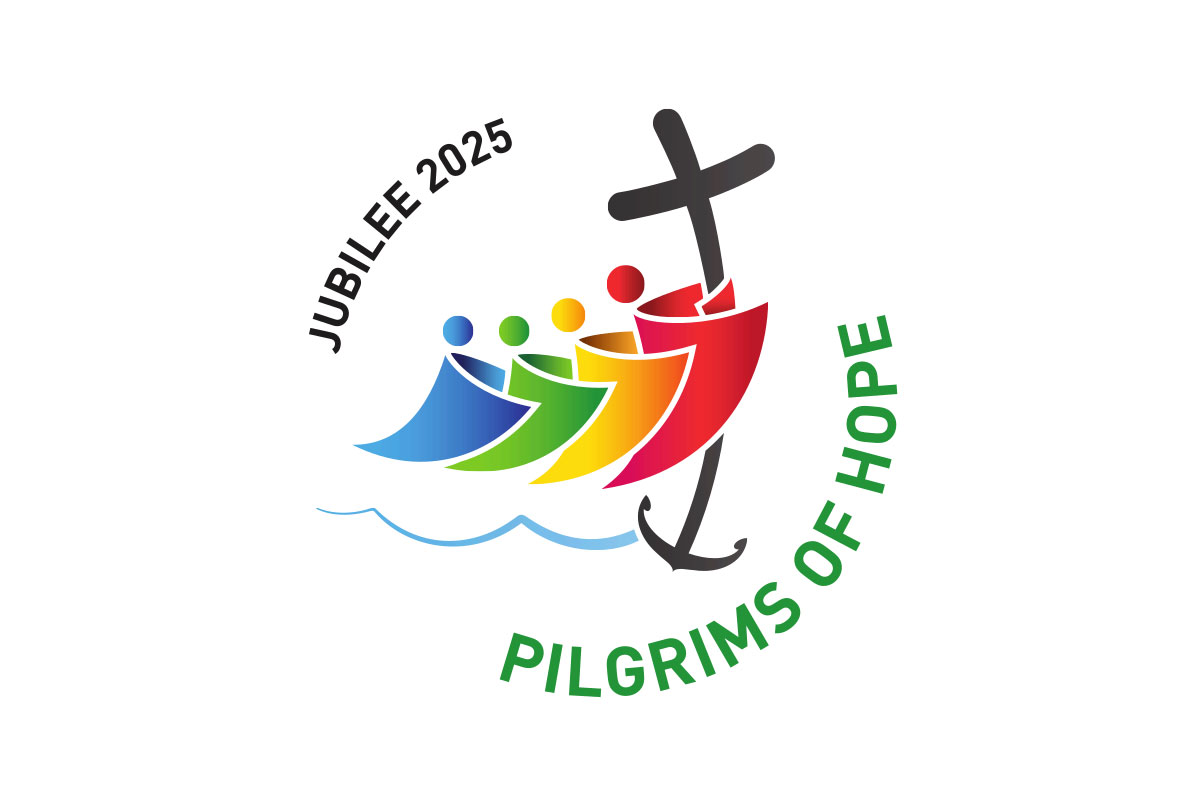
When Pope Francis announced the Jubilee Year for 2025, he invited us to become ‘pilgrims of hope’. He reminded us of the words of Saint Paul who said, “hope (in Christ) does not disappoint”.
I pray that during this Jubilee Year 2025 there will be many graced opportunities for you personally, and for all the people of the Archdiocese of Armagh, to grow in their personal friendship with Jesus Christ who is our reason for living and our reason for hoping.
Archbishop Eamon Martin concelebrated a special Mass to launch Jubilee Year 2025 for the Archdiocese of Armagh. A Jubilee Year is celebrated every twenty-five years by the worldwide Church during which Catholics come together to rejoice in the faith. Over the Jubilee Year we will be encouraged to show mercy, forgive past wrongs, relieve debt, to spiritually rejuvenate, and be offered an opportunity to recieve a plenary indulgence.
The Mass brought together clergy, families, and young people from parishes across the Archdiocese, as well as His Excellency Archbishop Luis Mariano Montemayor, the Apostolic Nuncio to Ireland. In his homily Archbishop Martin, who presided over the Mass alongside auxiliary Bishop Michael Router, emphasised the importance of hope. Archbishop Martin said, “There couldn’t be a better time for a Jubilee Year of Hope. We live in a world where anxiety, doubt and despair often appear to have an upper hand.” The Primate reflected on the words of Pope Francis, who calls on all believers to be “fearless ambassadors of faith and hope.”
Jubilee Year 2025 will be marked by numerous spiritual events and activities at parish, diocesan, and national levels, including: – Pilgrimages to local and national shrines; – Monthly parish initiatives promoting prayer and reflection; and, – Celebrations of key anniversaries, including the 400th anniversary of Saint Oliver Plunkett’s birth, and the centenary of Venerable Matt Talbot’s death.
In addition to the Jubilee 2025 celebrations, Archbishop Martin announced that year-long preparationswill begin for a Diocesan Congress on Youth and Family Ministry, scheduled for March 2026. This Congress will focus on fostering vibrant youth and family ministry at local levels, engaging parishes, schools, and third level institutions in this important journey of reflection.
Bishop Router spoke about the significance of the Congress, which will build on insights from the Archdiocese’s synodal journey over the last three-years. He said, “Over the coming months, parishes and schools will select delegates to represent them, ensuring broad participation in order to shape the future of youth and family ministry in the Archdiocese of Armagh.”
Archbishop Martin concluded, “As the Jubilee Year’s theme suggests, during 2025 we are all invited to be pilgrims of hope in our daily lives, renewing our commitment to faith, love, and service. Let us journey together in prayer and action, united by the hope we find in Christ.”
Some great school resources about the Jubilee Year are available from CAFOD
The logo shows four stylized figures, representing all of humanity, coming from the earth’s four corners. They embrace each other to indicate the solidarity and fraternity which should unite all peoples. The figure at the front is holding onto the cross. It is not only the sign of faith that this lead figure embraces, but also of hope, which can never be abandoned, because we are always in need of hope, especially in our moments of greatest need. There are rough waves under the figures, symbolizing the fact that life’s pilgrimage does not always go smoothly in calm waters. Often the circumstances of daily life and events in the wider world require a greater call to hope. That’s why we should pay special attention to the lower part of the cross which has been elongated and turned into the shape of an anchor which is let down into the waves. The anchor is well-known as a symbol of hope. In maritime jargon, the ‘anchor of hope’ refers to the reserve anchor used by vessels involved in emergency maneuvers to stabilize the ship during storms. It is worth noting that the image illustrates the pilgrim’s journey not as an individual undertaking, but rather as something communal, marked by an increasing dynamism leading one ever closer to the cross. The cross in the logo is by no means static, but it is also dynamic. It bends down towards humanity, not leaving human beings alone, but stretching out to them to offer the certainty of its presence and the security of hope. At the bottom of the logo is the motto of the 2025 Jubilee Year: Peregrinantes in Spem (Pilgrims in Hope), represented in green letters.
After months of writing, film and editing, CJM has rolled out the first part of the first module of Teach us to Pray – a series of video courses on different aspects of prayer and liturgy in the context of a Catholic school.
This accessible and practical resource draws on more than 25 years of experience working with young people to bring the liturgy to life, while staying deeply rooted in the tradition of the Church.
Jo Boyce writes: “We hope it will help give confidence and inspiration to RE Leads and Lay Chaplains especially, but have designed it to be accessible for all staff who want to contribute meaningfully to the prayer and liturgical life of their schools.
“It’s very much a work in progress, of course. But most of module one is available right now and you get instant access to that when you sign-up at: www.cjmmusic.com/teachustopray
If you’re not directly involved in the life of a Catholic school yourself, it is very likely that you know someone who is. So please pass this information on if you can. And please keep this project in your prayers. It’s a BIG vision, which is calling on A LOT of time and resources.
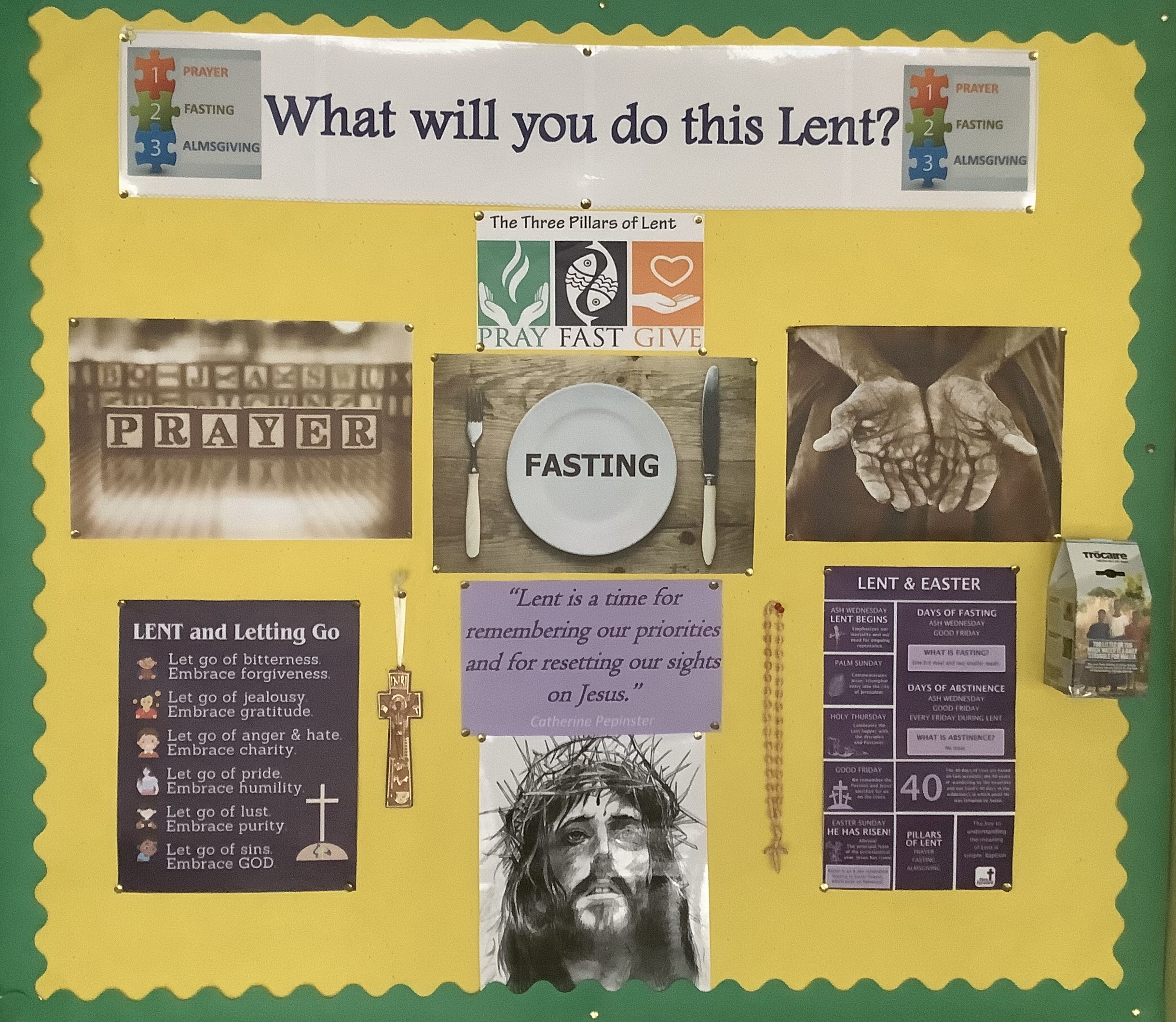
Hard to believe we are coming close to Ash Wednesday and Lent 24 !! I will attach resources for teacher and student use in the days ahead. Do share anything you find or write yourself and I will share it with the RE community out there! If you check back to earlier years there are many very good reusable resources on the blog already. I posted and delivered copies of the “Catechist February Edition” and a copy of “Celebrate Lent” and also “Lent Extra” both from Redemptorist Publications to our schools last week. Will drop to Dundalk Schools this week.
Here’s a link to St Vincent’s Dundalk liturgy for Lent… we recorded it and students watched in classroom Hope you enjoy! Conor
ICN Newsletter today has this analysis of the Message of Pope Francis for this Lent 2024.
Lent is a time of conversion and freedom
Feb 5th, 2024
Source: Vatican News
In his message for Lent 2024, Pope Francis invites the faithful to “pause” for prayer and to assist our brothers and sisters in need, in order to change our own lives and the lives of our communities.
“When our God reveals Himself, His message is always one of freedom,” Pope Francis says in the opening of his Message to the faithful for Lent 2024.
Recalling the Exodus of the Hebrew people from Egypt, the Holy Father explains that our journey through the desert can be a season of grace – not an abstract journey, but a concrete path that involves seeing the world as it is and hearing the cries of our oppressed brothers and sisters.
The Pope insisted on the need to counter a “globalization of indifference.” “Our Lenten journey will be concrete if… we realize that even today we remain under the rule of Pharoah. A rule that makes us weary and indifferent. A model of growth that divides us and robs us of our future.”
At the same time, Pope Francis reminded us that it is God who takes the initiative. Too often, he said, there remains within us “an inexplicable longing for slavery,” a desire to cling to idols that paralyze us, as Israel was paralyzed in the desert.
Lent, however, is a “season of grace, a time of conversion,” where the desert can become “a place where our freedom can mature in a personal decision not to fall back into slavery,” where “we find new criteria of justice and a community with which we can press forward on a road not yet taken.”
He added that the Lenten journey involves a struggle. It is a time for action, the Pope said, but also a time “to pause” – to pause in prayer and to pause “in the presence of a wounded brother or sister.”
“Love of God and love of neighbour are one love,” Pope Francis continued, explaining that “the contemplative dimension” of Lent can help us “release new energies,” to be “more sensitive to one another: in the place of threats and enemies, we discover companions and fellow travelers.”
Pope Francis concluded his Lenten message on a hopeful note: “To the extent that this Lent becomes a time of conversion, an anxious humanity will notice a burst of creativity, a flash of new hope.”
Calling on the faithful to “be ready to take risks,” he invited them “to find the courage to see our world, not as in its death throes, but in a process of giving birth; not at the end, but at the beginning of a great new chapter of history.”
“Faith and charity,” he said, “take hope, this small child, by the hand. They teach her to walk, and at the same time, she leads them forward.”
The Holy Father’s full text (on two printable pages) is attached. Senior Classes might read and discuss his message applying it to their own lives.
Ash Wednesday is fast approaching and CAFOD would like to invite you to join them as we all seek to make space and time to draw closer to God and our global family through reflection and prayer this Lent.
This year, as part of their reflections on one of the readings of the day, CAFOD will be sharing the stories of people from a fishing community in Liberia, as well as a daily prayer and suggested action you might like to take.
Join this journey by signing up for CAFOD’s daily Lent emails.
United Methodist Ed Foundation offers a Lent resource to download and use.
Lent is an important time in the Christian calendar to prepare our hearts and minds for Jesus. The 40 days of Lent 2024 (not counting Sundays) begin on February 14, Ash Wednesday, and end on March 30, the Saturday before Easter. This time represents the forty days Jesus suffered in the wilderness, enduring temptations and remaining close to God through fasting and prayer. This unimaginable time of trials and suffering is what prepared Jesus to carry out His ministry.
Am sharing Lectio & Taize Prayer Resources for the Sundays of Lent. Senior Students might enjoy a 40-minute Lunch Taize Prayer with a Chant and opening prayer followed by reading the Sunday Gospel and concluding with the Lord’s Prayer and another chant. See below.
Seasonal Articles From the Jesuit Spirituality Website
Preparation for Lent By Becky Eldredge Before Lent begins, turn to Jesus and ask, “What is the grace you desire to deepen within me over these next 40 days?”
How to Prepare for Lent By Vinita Hampton Wright How do you prepare for Lent? How have you prepared in the past? What are your ideas about what should happen during Lent?
Letting This Lent Be God’s By Marina McCoy What if this Lent we didn’t approach the practices of prayer, almsgiving, and fasting with an eye to what we can do to transform ourselves, but rather with an eye to what God wants to do in order to transform us?
Discernment in Making Lenten Plans By Vinita Hampton Wright How can we choose our activities or practices for this Lenten season? We can apply some Ignatian wisdom by asking several questions.
A Blessing and a Curse By Andy Otto Otto posits that Lent is a chance to grapple with the paradox of the cross as blessing and curse.
Walking Through Lent with the Risen Christ By Rebecca Ruiz If we invite the risen Christ into our journey through Lent, we might have an even deeper experience of the season.
A Time to Experience Emotion with Jesus By Gretchen Crowder Crowder wonders what it would look like if we considered Lent to be a time to experience emotion with Jesus.
Humility in Lent By Marina Berzins McCoy How can we try to make humility a practice this Lent?
Tilling the Soil of My Heart By Rebecca Ruiz Ruiz is gardening in the garden of her heart this Lent and invites readers to till the soil of their hearts too.
The Consequences of Seeing By Loretta Pehanich This story is inspired by John 9:1–41, the healing of the man born blind, and Mark 10:46–52, the healing of Bartimaeus.
Connecting with the Stations of the Cross By Kerry Weber Weber shares how she connected with the Stations of the Cross in this excerpt from her book, Mercy in the City.
Unlock the Stations of the Cross, Examen-Style By Gary Jansen Jansen shares steps derived from the Examen to help unlock the Stations of the Cross in a practical, contemplative, and reflective way.
The Language of the Cross By Joseph A. Tetlow, SJ Tetlow explores the idea that Jesus’ Passion brings us to embrace the world as it really is.
Come as You Are to Jesus By Rebecca Ruiz Jesus doesn’t demand perfection and is waiting for you this Lent.
A Patient Lent By Marina McCoy Lent invites exercising patience. We can bring to God the troubled parts of life and our tendencies that are less than holy, and ask God to tend to them.
The Anima Christi During Holy Week By Marina McCoy Many of the lines of the “Soul of Christ” prayer resonate with Passion Week, as the poem reflects on Christ’s body and spirit.