Catholic education is faith-filled, inspiring students to believe in themselves

Address by Archbishop Eamon Martin at the graduation ceremony in College Chapel of Saint Patrick’s Pontifical University, Maynooth

  •  “I am immensely grateful for the huge contribution that so many people continue to make to faith-based education in this country” 
  • “A faith-based educational community is not an “I” or a “me”, but an “us” and a “we”, where State and Church seek “to converge” in order to provide the very best opportunities for our young people, serving the common good.”
  • “The Catholic Church does not wish to have any type of monopoly on education, and we encourage all those eligible to participate in the Department of Education survey.  At the same time we value highly the contribution of faith-based education.  We agree with Pope Leo that Catholic education is an act of hope, and a labour of love, handed down from generation to generation.  It is one of the highest expressions of Christian charity, and something which draws new maps of hope for the world at this troubled time.”

Address by Archbishop Martin 
Last week in Rome, Pope Leo XIV marked the Jubilee of the World of Education. He was joined by many thousands of students and educators from all around the world. A special bonus for those who had travelled was to witness Pope Leo conferring the title of “Doctor of the Church,” on Saint John Henry Newman, and naming him as co-patron of Catholic education and educators, alongside Saint Thomas Aquinas.

Some of my most uplifting pastoral moments recently have been connected with the world of Catholic education.  I am immensely grateful for the huge contribution that so many people continue to make to faith-based education in this country: from parents, teachers and special needs assistants in our nursery, primary and secondary schools, to the distinguished professors and lecturers who contribute to Catholic education at third level communities such as this Pontifical University – not forgetting, of course, the huge number of others who contribute to what Pope Leo calls the “constellation of education“.

Pope Leo uses that beautiful image in a new document about education, written specially for this Jubilee Year, with the wonderful title: Drawing new maps of Hope.

Catholic education is a living network, a faith-filled family of schools, colleges, universities and institutes of higher education – each one a ‘star’ in the constellation of education.  Together, Pope Leo says, we in Catholic education ‘chart a course’; we draw “new maps of Hope” for young people in our troubled world.

I have seen this in my recent visits, for example to the brand-new Saint Ronan’s College for 1750 young people in Lurgan, Co Armagh.  I was invited to bless and dedicate the chapel to be the beating heart of their school community.  And, just two days ago, I met with Religious Education coordinators from our primary schools in Dundalk.  They amazed me with their enthusiasm, not only to impart knowledge and understanding of religion, but also to help guide the spiritual and faith development of their young pupils.

A real highlight for me recently was the opening of the Year Mass in Saint Patrick’s Cathedral, Armagh, for the entire school community of Saint Catherine’s College – we reflected on how, in the midst of this frenetic and complicated world, it is essential to find spaces and moments for silence, for reflection, meditation and prayer, to raise our gaze to the transcendent God who created us in love.

I had a similar experience in September right here in this magnificent College Chapel when we conferred an honorary doctorate on Sister Orla Tracey, an Irish Loreto sister who has established a very successful faith-based school in South Sudan.  In the midst of so much violence, destruction, suspicion and recrimination, Sister Orla highlights the dignity and vocation of every person – especially that of girls and women.  Her school in Rumbeck is a beacon of hope.  Her work is prophetic, inspiring students to believe in themselves, to dream, to heal divisions and to give back to their communities. In essence, that is what Catholic education is all about.

However, one of the most moving experiences I have had of education recently was unexpected.  I was tidying my parents grave last week at Saint Patrick’s Church, Iskaheen, in Co Donegal, getting it ready for the month of the Holy Souls.  I noticed a grandmother showing three young children around the graveyard.  They were stopping at various headstones: likely granny was telling them about relatives, friends or neighbours, now at their rest.  The children were praying with her and asking questions, ‘nanny’ was gently linking them with past, present and future; with faith, family, community and culture.  It struck me that this is what the Second Vatican Council meant when it described ‘Family’ and the ‘Home’ as the “first school of humanity”.

Pope Leo said last week, at the Jubilee, that education forms “the very fabric of evangelisation“, and education is “a collective endeavour”; “no one educates alone”.  A faith-based educational community is therefore not an “I” or a “me”, but an “us” and a “we”, where everyone: parents and grandparents, community, teachers, students, administrators, support staff, chaplains and members of Boards of Management are “in it together”; and, where State and Church seek “to converge” in order to provide the very best learning, teaching, and formation opportunities to our young people, thereby serving the common good.

I realise that this reflection on Catholic education coincides with the current survey by the Department of Education about the type of primary schools that people in Ireland wish to choose for their children.  The Catholic Church does not wish to have a monopoly on education, and we encourage all those eligible to participate in the survey to do so.
 
At the same time, a faith-based education can be highly valuable for young people today.  That is why those parents, who value their current school ethos, should be sure to fill-in this short survey.  Otherwise, the choice of future school provision will be made for them.
 
Pope Leo describes Catholic education as an act of hope, and a labour of love, that is handed down from generation to generation.  It is one of the highest expressions of Christian charity, and something which draws new maps of hope for the world at this troubled time.

I am conscious that many of us here today have benefited from the full cycle of education – from home, to primary school, to second and third level – and even beyond.  A special congratulations to our 28 graduates who have achieved Doctoral, Licentiate or Masters level.  For some of you this will be the end of your formal academic studies; for others, it may simply be a gateway to the next step, another chapter on your itinerary of intellectual, human and spiritual development.

Thankfully, here on the island of Ireland, around half of all people under the age of 65 have received a third level education, and a large proportion of these have been educated through a faith based education system.  It is worth reminding ourselves that access to this gift, this privilege, is not shared by our brothers and sisters in many parts of the world.  But, as Jesus once said, “Of everyone to whom much is given, much will be required”.
 
You, our graduates, are called to be especially bright stars in the “constellation of education.”  You are called and gifted to lead the way in drawing new maps of Hope for our country and our world, to accept the challenges Pope Leo presented last week – to defend the common good; not to remain silent about the divisions and violence in our world.  Our learning, teaching and formation, he said, must translate into action for social justice and environmental justice; we are called to promote sustainable lifestyles, to avoid waste, and form consciences capable of choosing not merely what is convenient, but what is just.

Catholic education, Pope Leo adds, must therefore nurture the inner life, be judicious in the use of technology and AI – always placing the person before the algorithm – and educate for peace, nonviolence and reconciliation; it must build bridges – not walls.

Dear graduates: as we celebrate and give thanks for your great achievements, I invite you to be mindful of the many people who have helped you along the way, from that first ‘school of humanity’ in your family home, to the teachers and others who inspired you at school, to the lecturers and tutors, supervisors and mentors, friends and loved ones who encouraged you here in Maynooth to achieve your full potential.

Allow me also to acknowledge today the positive progress the Pontifical University has made this past year towards achieving Listed Awarding Body status, following a rigorous evaluation by Quality and Qualifications Ireland.  I am also encouraged by the increase in student numbers – now surpassing the 1,000 mark – and to learn that more young adults are choosing to study Theology with Arts.  
 
Congratulations to you, Rev Dr Michael Shortall, our acting President, and to your whole team.  The achievements we recognise and celebrate today demonstrate your ongoing commitment to remaining a vibrant part of the “constellation” of Catholic education and formation here in Ireland, a unique third level community, where lay people, religious and clerics are formed alongside each other to participate in mission and ministry in Church and society here in Ireland.  May this Pontifical University – linked to the wider world of Catholic education – continue to draw “new maps of Hope” for Ireland and beyond.

“Go mbronna an Tiarna grásta orainne dóchas a athaimsiú, dóchas a fhógairt agus dóchas a thógáil.” Amen.

Comhghairdeas libh go leir.
 
ENDS

  • Archbishop Eamon Martin of Armagh is Chancellor of the Pontifical University at Saint Patrick’s College, Maynooth.

Leo from Chicago’ – The Documentary

  • Nov 10th, 2025 ICN

Vatican Media have launched a documentary today: ‘Leo from Chicago’ about the background of Robert Francis Prevost in his native United States.

The film begins with his childhood in Dolton, through the memories of his brothers Louis and John, and continues among schools and universities, communities and parishes, featuring the voices of confreres, teachers, classmates, and longtime friends.

Produced by journalists Deborah Castellano Lubov, Salvatore Cernuzio, and Felipe Herrera-Espaliat from the Vatican Dicastery for Communication, in collaboration with the Archdiocese of Chicago and theApostolate El Sembrador Nueva Evangelización, the film can be seen on the official Vatican Media website and the Vatican Youtube channel at following link: www.youtube.com/watch?v=nYzssRwE7Gg&t=16s

CSW 2026 November Moment 2025

‘November Moment’ 2025

November 2025: The Month of the Holy Souls

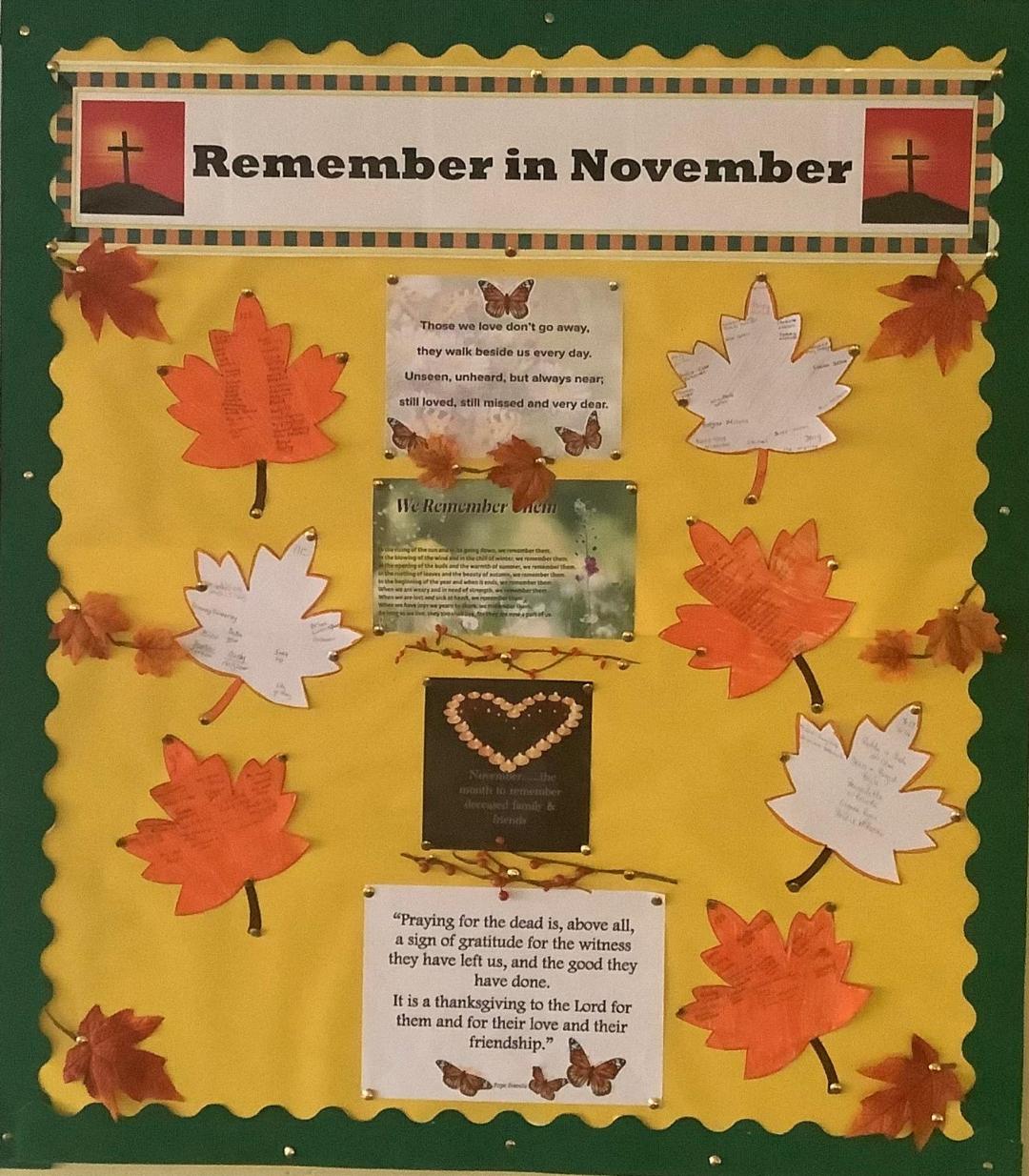
St Catherine’s College November Display Board Thanks Roisin !

‘Holiness does not mean performing extraordinary things, but doing ordinary things with love and faith.”
— Pope Francis on Blessed Carlo Acutis

As we look forward to celebrating Catholic Schools Week 2026, in the month of November we remember and pray, in a special way, for all those who have died and gone before us in the hope of the resurrection.

The theme for Catholic Schools Week in January 2026 is ‘Catholic Schools: Normal Lives, Called to Holiness’.
This ‘November Moment’, traditionally called the month of the Holy Souls, is a space in our year to recall those who have lived their lives before us and perhaps reflect on their holiness. It is a space to remember the normal, ordinary activities of their lives, carried out in love and faith, which made their holiness alive to us.

There may be sadness in remembering, but there can also be moments of joy and especially hope when we remember our loved ones who have died and pray that they live with God in heaven.

Our ‘November Moment’ pack is a resource that aims to assist and support schools with activities and lesson ideas for the month of the Holy Souls. The pack has a variety of resources to choose from – music, scripture readings, prayers and activities. It includes a worksheet and a suggested prayer service or ritual, or you can design a custom-made prayer service or ritual using some of these elements in whatever order suits your class or school situation.

The resources are available below:

Primary

Gaeilge
English

Post Primary

Gaeilge
English

.

CATHOLIC SCHOOLS WEEK 2026 (18th to the 24th January 2026)

Catholic Schools – Normal Lives, Called to Holiness

“Holiness does not mean performing extraordinary things, but doing ordinary things with love and faith.”

— Pope Francis on Blessed Carlo Acutis

Introduction

Catholic Schools Week 2026 celebrates the extraordinary call to holiness in the midst of ordinary life. Inspired by Pope Francis’s reflection on Blessed Carlo Acutis—soon to be canonised as the first millennial saint—this year’s theme invites pupils, teachers, families, and parishes to explore the call to holiness as something both universal and accessible. Holiness is not for a few, but for all; not reserved for religious professionals or mystics, but for every student, teacher, parent, (and grandparent!) living each day in friendship with Jesus Christ.

Catholic schools exist to form individuals who know that their lives have a purpose and a calling. This year’s theme, “Normal Lives, Called to Holiness,” resonates with the central conviction that education is a path not only to knowledge and maturity but to sainthood.

“Each of us is called to be holy by living our lives with love and by bearing witness in everything we do.”

— Gaudete et Exsultate, 14

Key Theme: Everyday Holiness

This theme offers a meaningful opportunity to speak to children and young people about how God calls each of us to holiness in the concrete circumstances of daily life. It allows us to:

  • Introduce students to modern saints like Blessed Carlo Acutis, who lived an ordinary teenage life with extraordinary faith.
  • Highlight saints who lived in families, went to school, worked in trades, or suffered illness.
  • Explore the meaning of holiness as a loving relationship with Jesus Christ, lived through prayer, service, courage, love, and joy.
  • Emphasise the role of the Eucharist, the Scriptures, and Christian friendship in forming a holy life.

As Pope Leo XIV recently affirmed:

“The saints show us that holiness is not about escape from the world, but deep engagement with it in the Spirit of Christ.”

Daily Themes

Each day of the week reflects a different dimension of our call to holiness:

Monday: Called to Holiness through Prayer
Holiness begins with a relationship with God. Children will learn that prayer is the lifeblood of that relationship—from silent moments to joyful praise, from formal prayers to personal words shared with Jesus.

Tuesday: Called to Holiness through Love and Friendship
Holiness is lived in love of neighbour, in kindness, forgiveness, and friendship. Inspired by the words of Jesus, “Love one another as I have loved you” (John 15:12).

Wednesday: Called to Holiness in Family Life – Grandparents’ Day
A cherished tradition, this day honours the vital role grandparents and elders play in passing on the faith and in showing how holiness can be lived over a lifetime. Pupils will be encouraged to show gratitude and celebrate their family roots.

Thursday: Called to Holiness through Service and Courage
Young people will explore how self-giving love and courage in the face of challenges form part of holiness. Stories of saints who served the poor, forgave their enemies, or stood up for what is right will be shared.

Friday: Called to Holiness through Joy and Mission
Holiness is not grim but joyful! The final day focuses on the joy of the Gospel and how young people are called to be missionary disciples who share Christ through action and word in the world.

Support Resources

Resources for Catholic Schools Week 2026 will include:

  • Daily classroom reflections and activities (Junior Infants to Leaving Cert).
  • Suggested Scripture passages and short prayers.
  • Profiles of saints (e.g. Carlo Acutis, St. Therese of Lisieux, St. Josephine Bakhita, Bl. Pier Giorgio Frassati).
  • Multimedia content developed in collaboration with CCO to support social media campaigns and classroom engagement.
  • A poster and theme logo for school display.

Pedagogical Integration

CSW 2026 aligns with the ethos of Catholic education and with current curriculum developments:

  • SPHE: exploring human dignity, resilience, and friendship through a Catholic lens.
  • Religious Education: drawing on themes of sainthood, sacramentality, and Scripture.
  • Wellbeing: understanding spiritual wellbeing as integral to personal flourishing.
  • Digital Literacy: engaging with Carlo Acutis’ story as a way of exploring positive online presence and ethical technology use.

Conclusion

Holiness is not an achievement but a gift—a gift that God offers to each of us in the ordinary rhythm of our days. During Catholic Schools Week 2026, let us joyfully proclaim with Pope Francis: “Do not be afraid to be saints!”

Catholic schools are communities where every pupil can discover that their life matters, that they are loved by God, and that they are called to be saints—not in some distant way, but right now, today, in the classroom, the playground, and at home.

“The measure of holiness stems from the stature that Christ achieves in us, to the extent that, by the power of the Holy Spirit, we model our whole life on his.”

— Gaudete et Exsultate, 21

Catholic Schools Week 2026 Catholic Schools – Normal Lives, Called to Holiness

Catholic Schools Week 2026 will run from 18th to the 24th January 2026

Catholic Schools – Normal Lives, Called to Holiness

“Holiness does not mean performing extraordinary things, but doing ordinary things with love and faith.”

— Pope Francis on Blessed Carlo Acutis

Introduction

Catholic Schools Week 2026 celebrates the extraordinary call to holiness in the midst of ordinary life. Inspired by Pope Francis’s reflection on Blessed Carlo Acutis—soon to be canonised as the first millennial saint—this year’s theme invites pupils, teachers, families, and parishes to explore the call to holiness as something both universal and accessible. Holiness is not for a few, but for all; not reserved for religious professionals or mystics, but for every student, teacher, parent, (and grandparent!) living each day in friendship with Jesus Christ.

Catholic schools exist to form individuals who know that their lives have a purpose and a calling. This year’s theme, “Normal Lives, Called to Holiness,” resonates with the central conviction that education is a path not only to knowledge and maturity but to sainthood.

“Each of us is called to be holy by living our lives with love and by bearing witness in everything we do.”

— Gaudete et Exsultate, 14

Key Theme: Everyday Holiness

This theme offers a meaningful opportunity to speak to children and young people about how God calls each of us to holiness in the concrete circumstances of daily life. It allows us to:

  • Introduce students to modern saints like Blessed Carlo Acutis, who lived an ordinary teenage life with extraordinary faith.
  • Highlight saints who lived in families, went to school, worked in trades, or suffered illness.
  • Explore the meaning of holiness as a loving relationship with Jesus Christ, lived through prayer, service, courage, love, and joy.
  • Emphasise the role of the Eucharist, the Scriptures, and Christian friendship in forming a holy life.

As Pope Leo XIV recently affirmed:

“The saints show us that holiness is not about escape from the world, but deep engagement with it in the Spirit of Christ.”

Daily Themes

Each day of the week reflects a different dimension of our call to holiness:

Monday: Called to Holiness through Prayer
Holiness begins with a relationship with God. Children will learn that prayer is the lifeblood of that relationship—from silent moments to joyful praise, from formal prayers to personal words shared with Jesus.

Tuesday: Called to Holiness through Love and Friendship
Holiness is lived in love of neighbour, in kindness, forgiveness, and friendship. Inspired by the words of Jesus, “Love one another as I have loved you” (John 15:12).

Wednesday: Called to Holiness in Family Life – Grandparents’ Day
A cherished tradition, this day honours the vital role grandparents and elders play in passing on the faith and in showing how holiness can be lived over a lifetime. Pupils will be encouraged to show gratitude and celebrate their family roots.

Thursday: Called to Holiness through Service and Courage
Young people will explore how self-giving love and courage in the face of challenges form part of holiness. Stories of saints who served the poor, forgave their enemies, or stood up for what is right will be shared.

Friday: Called to Holiness through Joy and Mission
Holiness is not grim but joyful! The final day focuses on the joy of the Gospel and how young people are called to be missionary disciples who share Christ through action and word in the world.

Support Resources

Resources for Catholic Schools Week 2026 will include:

  • Daily classroom reflections and activities (Junior Infants to Leaving Cert).
  • Suggested Scripture passages and short prayers.
  • Profiles of saints (e.g. Carlo Acutis, St. Therese of Lisieux, St. Josephine Bakhita, Bl. Pier Giorgio Frassati).
  • Multimedia content developed in collaboration with CCO to support social media campaigns and classroom engagement.
  • A poster and theme logo for school display.

Pedagogical Integration

CSW 2026 aligns with the ethos of Catholic education and with current curriculum developments:

  • SPHE: exploring human dignity, resilience, and friendship through a Catholic lens.
  • Religious Education: drawing on themes of sainthood, sacramentality, and Scripture.
  • Wellbeing: understanding spiritual wellbeing as integral to personal flourishing.
  • Digital Literacy: engaging with Carlo Acutis’ story as a way of exploring positive online presence and ethical technology use.

Conclusion

Holiness is not an achievement but a gift—a gift that God offers to each of us in the ordinary rhythm of our days. During Catholic Schools Week 2026, let us joyfully proclaim with Pope Francis: “Do not be afraid to be saints!”

Catholic schools are communities where every pupil can discover that their life matters, that they are loved by God, and that they are called to be saints—not in some distant way, but right now, today, in the classroom, the playground, and at home.

“The measure of holiness stems from the stature that Christ achieves in us, to the extent that, by the power of the Holy Spirit, we model our whole life on his.”

— Gaudete et Exsultate, 21

More information will be posted as available Declan

Ireland: Day of Prayer and Reflection for Gaza

Source: Irish Catholic Media Office

Parishes across Ireland are invited to unite once more in a Day of Prayer and Reflection for for the suffering people of Gaza on Sunday 24 August 2025.

Archbishop Eamon Martin, said: “The Catholic Bishops of Ireland dedicated the month of June to prayer for, and solidarity with, the suffering people of Gaza.

“Heartbreakingly, since then, the situation has deteriorated further. Innocent lives continue to be lost, many of them children and families while hunger, violence and devastation tighten their grip on a people caught in the crossfire.

“Across the parishes of Armagh and Dromore I have published a pastoral letter that echoes the urgent appeals of Pope Leo XIV, the Latin Patriarch of Jerusalem, Cardinal Pierbattista Pizzaballa and the Heads of Churches in the Holy Land, for an immediate ceasefire, the release of hostages and respect for international humanitarian law. As Pope Leo reminds us, “Every human being has an intrinsic dignity bestowed by God Himself.”

“Ireland’s Bishops have condemned, in the strongest terms, the genocidal acts being carried out with the sanction of the Israeli government, actions that have led to the deaths of tens of thousands of civilians. Such disproportionate violence is described as “unconscionable… and immoral for world leaders to stand by inactively.” The ongoing suffering of hostages held by Hamas and the cruel withholding of their remains from their families is also acknowledged and unequivocally condemned. In the face of such darkness, this call to prayer is a call to hope,” Archbishop Martin said.

How Can We Respond?

On Sunday, all are invited to take part in 24 hours of prayer and reflection. Whether as a parish or in the quiet of your own home, please consider:

– Attending Mass and offering it for peace in Gaza
– Spending time in Adoration before the Blessed Sacrament
– Praying the Rosary for peace and justice
– Lighting a candle at home or in your parish church
– Making a small personal sacrifice or act of penance
– Reaching out to your political representatives to advocate for justice and humanitarian aid
– Supporting trusted aid organisations bringing relief to Gaza

Archbishop Martin concluded: “This is a moment for our nation to radiate the light of Christ into the darkness, a light of peace, of justice and of hope for our world. Let us stand together, as one body in Christ, for the people of Gaza and for all who long for a just and lasting peace in the Holy Land.”

Archbishop Eamon Martin is Archbishop of Armagh, Apostolic Administrator of Dromore and Primate of All Ireland.

LINKS

Pastoral Letter: www.armagharchdiocese.org/day-of-prayer-and-reflection-for-gaza-sunday-24-august-2025/

Youtube Message from Archbishop Martin: www.armagharchdiocese.org/day-of-prayer-and-reflection-for-gaza-sunday-24-august-2025/

We welcome our New Pope Leo XIV

Source: Vatican Media/ICN

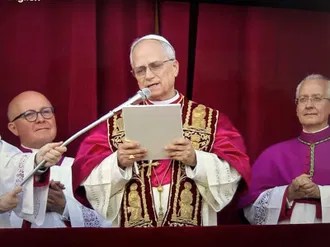
“Peace be with all of you!” – the first words of Pope Leo XIV. The Conclave has elected Robert Francis Cardinal Prevost as the 267th Bishop of Rome.

The new pope was announced to the waiting crowds by Cardinal Protodeacon Dominique Mamberti from the central loggia of Saint Peter’s Basilica:

‘Annuntio vobis gaudium: HABEMUS PAPAM Eminentissimum ac reverendissimum Dominum Robertum Franciscum Sanctae Romane Ecclesiae Cardinalem Prevost qui sibi nomen imposuit Leo XIV.’

Pope Leo XIV greeted the city of Rome and the world with these words at his first appearance as the Successor of Peter from the Central Loggia of St Peter’s Basilica:

Peace be with you! Dearest brothers and sisters, this was the first greeting of the risen Christ, the good shepherd who gave His life for the flock of God. I, too, would like this greeting of peace to enter your hearts, to reach your families and all people, wherever they are; and all the peoples, and all the earth: Peace be with you.

This is the peace of the Risen Christ, a disarming and humble and preserving peace. It comes from God. God, who loves all of us, without any limits or conditions. Let us keep in our ears the weak but always brave voice of Pope Francis, who blessed Rome – the Pope who blessed Rome and the world that day on the morning of Easter.

Allow me to continue that same blessing. God loves us, all of us, evil will not prevail. We are all in the hands of God. Without fear, united, hand in hand with God and among ourselves, we will go forward. We are disciples of Christ, Christ goes before us, and the world needs His light. Humanity needs Him like a bridge to reach God and His love. You help us to build bridges with dialogue and encounter so we can all be one people always in peace.

Thank you Pope Francis!

Thank you to my Cardinal brothers who chose me to be the Successor of Peter and to walk together with you as a united Church searching all together for peace and justice, working together as women and men, faithful to Jesus Christ without fear, proclaiming Christ, to be missionaries, faithful to the gospel.

I am a son of Saint Augustine, an Augustinian. He said, “With you I am a Christian, for you a bishop.” So may we all walk together towards that homeland that God has prepared for us.

To the Church of Rome, a special greeting:

We have to look together how to be a missionary Church, building bridges, dialogue, always open to receiving with open arms for everyone, like this square, open to all, to all who need our charity, our presence, dialogue, love.

Hello to all and especially to those of my diocese of Chiclayo in Peru, a loyal, faithful people accompanying the bishop and helping the bishop.

To all you brothers and sisters of Rome, Italy, of all the world, we want to be a synodal church, walking and always seeking peace, charity, closeness, especially to those who are suffering.

Today is the day of the Supplicatio [Plea] to Our Lady of Pompei.

Our blessed mother Mary always wants to walk with us, be close to us, she always wants to help us with her intercession and her love. So let us pray together for this mission, and for all of the Church, and for peace in the world.

We ask for this special grace from Mary, our Mother.

Hail Mary… [accompanied by the crowds in St Peter’s Square and around the world.]

Biography

Cardinal Robert Francis Prevost, OSA, Prefect of the Dicastery for Bishops, Archbishop-Bishop emeritus of Chiclayo, was born on 14 September 1955 in Chicago (Illinois, United States). IN 1977 he entered the novitiate of the Order of Saint Augustine (OSA) in the province of Our Lady of Good Counsel, in Saint Louis. On 29 August 1981 he gave his solemn vows. He studied at the Catholic Theological Union of Chicago, receiving a diploma in theology.

At the age of 27 he was sent by the Order to Rome to study canon law at the Pontifical Saint Thomas Aquinas University (Angelicum). He received priestly ordination on 19 June 1982. He received his licentiate in 1984, and was then sent to work in the mission of Chulucanas, in Piura, Peru (1985-1986).

In 1987 he was awarded a doctorate with the thesis: “The role of the local prior in the Order of Saint Augustine”. In the same year he was elected director of vocations and director of the missions of the Augustinian province of “Mother of Good Counsel” of Olympia Fields, Illinois, United States of America. In 1988 he was sent to the mission of Trujillo as director of the joint formation project for Augustinian aspirants in the Vicariates of Chulucanas, Iquitos and Apurímac. There he served as community prior (1988-1992), director of formation (1988-1998) and teacher of the professed (1992-1998). In the archdiocese of Trujillo he was judicial vicar (1989-1998), and professor of canon, patristic and moral law in the “San Carlos e San Marcelo” Major Seminary.

In 1999 he was elected provincial prior of the “Mother of Good Counsel” province, Chicago. After two and a half years, the ordinary general Chapter elected him prior general, a ministry again entrusted to him in the 2007 ordinary general Chapter. In October 2013 he returned to his province (Chicago) to serve as teacher of the professed and provincial vicar, roles he held 3 November 2014, when Pope Francis appointed him apostolic administrator of the diocese of Chiclayo, Peru, elevating him to the dignity of bishop and assigning him the titular diocese of Sufar. On 7 November he took canonical possession of the diocese in the presence of the apostolic nuncio James Patrick Green; he was ordained a bishop on 12 December, Feast of Our Lady of Guadalupe, in the cathedral of his diocese. He served as bishop of Chiclayo from 26 November 2015. In March 2018 he became second vice president of the Peruvian Episcopal Conference. Pope Francis appointed him a member of the Congregation for the Clergy in 2019, and member of the Congregation for Bishops in 2020.

On 15 April 2020, the Pope appointed him apostolic administrator of the diocese of Callao.

On 30 January 2023 Pope Francis appointed Cardinal Prevost as prefect of the Dicastery for Bishops and presidet of the Pontifical Commission for Latin America.

Created and proclaimed Cardinal by Pope Francis in the Consistory of 30 September 2023, of the Deaconry of Santa Monica.

He was a member of: The Dicasteries for: Evangelization, Section for first evangelization and the new particular Churches; the Doctrine of the Faith; the Eastern Churches; the Clergy; the Institutes of Consecrated Life and the Societies of Apostolic Life; Culture and Education; Legislative Texts; The Pontifical Commission for Vatican City State.

.

Archbishop Eamon Martin welcomes Pope Leo ( ICN)

With great joy, I welcome our new Pope Leo XIV. At the end of February I and the other Irish archbishops – Dermot Farrell, Kieran O’Reilly, Francis Duffy – met with him, and he came across as a humble and respectful listener, wanting to learn as much as possible about the Church in Ireland. He is a calm, affable and approachable person. He is a friend of Ireland and no doubt the Augustinian communities at home will be delighted with the news.

Pope Leo is a missionary at heart with a breadth of international experience and background – having ministered in three continents. His opening words about peace and ‘building bridges’ indicate that he wishes to work for reconciliation and unity in the Church and in the world.

Pope Leo’s choice of name suggests that a commitment to Catholic social teaching will be a hallmark of his papacy. Please pray for him. Saint Peter intercede for him. Our Lady of Grace watch over him.

I pray: God bless Pope Leo XIV. Pour out your Holy Spirit upon him with all the graces he needs to be a courageous and gentle shepherd. Fill him with faith, hope and love. May he govern with wisdom and fidelity to Christ and the Gospel. May he be an inspiring missionary of peace, healing and reconciliation in the world. Give him health and strength to do all that you ask of him. Amen.

Tomorrow morning, (Friday, 9 May), at the grotto in Lourdes, France I will use the name of Pope Leo XIV for the first time at Mass and pray for our new pope. I’m here on the Archdiocese pilgrimage and Mass is at 7.30am Irish time available on the Lourdes website: www.lourdes-france.org live at the grotto.

For students to look about Pope Leo’s family and life follow this link

https://abcnews.go.com/International/destined-pope-brother-leo-xiv-wanted-priest/story?id=121617183

YEAR OF PRAYER RESOURCES

Subject: Teach us to pray

Teach Us How to Pray – school programme launched

  • Jan 29th, 2023 Taken for ICN Today

Source: CJM Music

After months of writing, film and editing, CJM has rolled out the first part of the first module of Teach us to Pray – a series of video courses on different aspects of prayer and liturgy in the context of a Catholic school.

This accessible and practical resource draws on more than 25 years of experience working with young people to bring the liturgy to life, while staying deeply rooted in the tradition of the Church.

Jo Boyce writes: “We hope it will help give confidence and inspiration to RE Leads and Lay Chaplains especially, but have designed it to be accessible for all staff who want to contribute meaningfully to the prayer and liturgical life of their schools.

“It’s very much a work in progress, of course. But most of module one is available right now and you get instant access to that when you sign-up at: www.cjmmusic.com/teachustopray

If you’re not directly involved in the life of a Catholic school yourself, it is very likely that you know someone who is. So please pass this information on if you can. And please keep this project in your prayers. It’s a BIG vision, which is calling on A LOT of time and resources.

For more information and to see a video about the programme see: https://cjmmusic.mykajabi.com/teachustopray

Church Unity Week 18 -25 January 24

  • Week of Prayer for Christian Unity 18-25 January 2024

Bishops considered the report on the Irish Inter-Church Meeting of 19-20 October.  This marked the 50th anniversary of the Ballymascanlan Talks in 1973, an event that led to the formation of the IICM, the mechanism through which the Irish Episcopal Conference dialogues with other Churches in Ireland.
 

In addition, bishops also received a report from the Council for Ecumenism on the annual Week of Prayer for Christian Unity which will place 18-15 January 2024, on the theme, ‘You shall love the Lord your God… and your neighbour as yourself’ (Lk 10:27).  Resources for the Week of Prayer have been compiled by the Holy See Dicastery for Promoting Christian Unity and ecumenical bodies in Burkina Faso.  These resources are being forwarded to dioceses and parishes and they are also available on ctbi.org.uk.  Bishops encourage dioceses and parish communities to participate in this Week of Prayer.

Introduction

The parable of the Good Samaritan is one of the best-known passages of Scripture, yet one that never seems to lose its power to challenge indifference to suffering and to inspire solidarity. It is a story about crossing boundaries that calls our attention to the bonds that unite the whole human family.

In choosing this passage of Scripture for the Week of Prayer for Christian Unity, the churches of Burkina Faso have invited us to join them in a process of self-reflection as they consider what it means to love our neighbor amid a security crisis. Communities in the British-Irish context may be less vulnerable to acts of mass violence than in Burkina Faso, but there are still many living with the memory and/or the threat of serious violence, centered on issues of identity and belonging. There are also groups within communities, including people from ethnic minority backgrounds and people seeking asylum, who feel particularly vulnerable to violence or being displaced by the threat of violence.

Download the service below.