We work in the area of religious education offering support and teaching resources to post primary school RE teachers. We specifically help with the faith development of the Catholic school communities in our support areas.
December has arrived and frantic preparations for the great Festival of Christmas are already in full swing in our consumerist commercial society. Little or no meaningful mention is made of Advent or the real meaning behind Christmas. I will post downloadable resources over the coming days and weeks to assist teachers in making this time a true Christian experience for all.
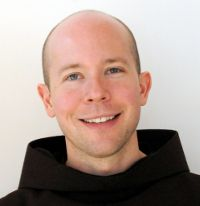
Why Did God Become Human? Renewing our Understanding of the ‘Reason for the Season’ , is the subject of a talk by Fr Daniel P Horan OFM, PhD, this Saturday, 9 December from 10.30am – 4pm UK time at the Meditatio Centre in London and online.
The theme for this day invites us to reflect on the meaning of the Incarnation, of God’s choice not only to be ‘God For Us,’ but also ‘God With Us’ (Emmanuel) In keeping with the theme of Metanoia: Let our Minds be Remade, this presentation is an opportunity to develop a spirituality of ongoing conversion, especially during the season of Advent.
At a time when it can be difficult to see the light of Christ in our communities and world, a renewed understanding of the Incarnation offers us spiritual inspiration and hope.
Fr Daniel is an American Franciscan friar, Catholic priest, theologian, and author. He is currently the director of the Center for Spirituality and a professor of Philosophy, Religious Studies, and Theology at Saint Mary’s College in Notre Dame, Indiana. He previously held the Duns Scotus Chair of Spirituality at Catholic Theological Union in Chicago.
Some thoughts for Advent ( Priests Association)
Advent invites a reassessment of where our ways are leading us. This annual reminder that the world as we know it will one day end sounds more appropriate in the northern Wintry season, when daylight is short and darkness seems to be winning over the light. But the positive side of this is that a new Spring day is dawning over the horizon when Christ will come again into our lives with the power to save us.
Do you ever watch people at airports, waiting for loved ones to arrive from a flight? They often seem excited, eager for the first appearance of the familiar face, ready with the broad smile of greeting to embrace the returning traveler. We too wait for the Lord’s coming with eagerness, because we long for his presence. The waiting is important because, during our life’s pilgrimage, we are incomplete. As Augustine once said, “You have made us for Yourself, o Lord, and our hearts are restless until they rest in You.” At some deep level of our personhood we are in need, a need that only God can fill.
This is a time to open our hearts and invite the Lord to bring us to completion. We begin Advent, yearning for his coming. Today’s first reading puts this yearning into an image, that “We have all withered like leaves… blown by the wind.” The whirling, withered leaves of autumn are a familiar scene these past few weeks. Isaiah proposes the dead leaves as symbols of all that is dried up and withered in our lives. But he also calls us to look for a better day. God is still in charge of creation, and our personal lives are under his loving care. We pray this Advent, “Come, Lord Jesus,” and make our own the words of the psalm, “Visit this vine and protect it, the vine your right hand has chosen.” It is a central plank of our faith that the Lord never abandons His people.
Back to the people at airports waiting for loved ones to arrive. It is an alert, active waiting – keeping an eye on the time. In today’s gospel Jesus says, “Be on your guard, stay awake.” He wants us to focus on our task here and now. We are to grow more mature in our relationship with others and with him, paying attention to prayer, and living with his message in our hearts. That’s what waiting for him should be like. And while we wait, we can enjoy his gifts, as promised, for as Paul assures us: “You will not be without any of the gifts of the Spirit while you are waiting for our Lord Jesus Christ.”
Joint Christmas 2023 message by the Archbishops of Armagh: “how fragile and precious peace really is”
Christmas Joint Message
‘Peace I leave with you; my peace I give to you, I do not give to you as the world gives. Do not let your hearts be troubled and do not let them be afraid.’ Saint John 14:27 Christmas is traditionally a time of joy and happiness as we celebrate the birth of Jesus Christ, the Saviour of the world. We decorate our homes and Christmas trees with bright shining lights to welcome the Prince of Peace. Yet this year our world has been overshadowed by the darkness of war in the very land where Jesus was born, and also in Ukraine, Sudan and so many other places. The news images that we have witnessed from troubled places around the world have reminded us of just how fragile and precious peace really is. This Christmas we keep all those who are suffering in our thoughts and prayers.
In the Christmas story the angels announcing the birth of Jesus proclaimed, ‘Glory to God in the highest, and on earth peace, good will toward all people’. People of faith are not just called to be peacekeepers, but to be peacemakers – to be instruments of Christ’s peace; to pray and to work constantly for peace, healing and reconciliation between nations, communities, families, and individuals. Jesus said, ‘Blessed are the peacemakers, for they will be called children of God’. Peace is much more than simply the absence of war and fighting. Peace is about recognising that we are all made in the image of God, that we are all God’s children – to be respected, listened to, and cared for – even though we may have very different opinions, aspirations, and dreams.
During 2023, we marked twenty-five years since the historic Belfast/Good Friday Agreement was signed and delivered. This year people from different parts of the community have been reflecting on this significant anniversary, often with mixed emotions. The signing of the Agreement was not the end of the journey to peace on this island but marked simply the first faltering steps down a very long road to a new, brighter, and shared future. Further progress along that road can be made if we show patience and a willingness to listen to one another when we differ and also recognise the need for greater understanding and reconciliation. The transformation that our peace process has helped to achieve on this island is talked about the world over and is often held up as an example of peacebuilding. Yet there is still much work to be done.
May we all continue to work for healing, reconciliation, mutual respect and understanding, as the basis of a lasting peace, here and in our troubled world. May the light of Christ shine in the darkness and may the peace of God which passes all understanding rest upon us all.
Archbishop Eamon Martin is Catholic Archbishop of Armagh, and Archbishop John McDowell is Church of Ireland Archbishop of Armagh.
Religious Education Coursework Workshop – Saturday 20th January 2024
Loyola Institute <loyolainstitute@tcd.ie>
Wed, 15 Nov at 13:40
Dear Religious Education Teachers,
We would like to draw your attention to a Religious Education Workshop – REVISION DAY that we are offering to Leaving Certificate Students (5th/6th Years) on Saturday 20th January 2024 here in the School of Religion, Theology, and Peace Studies, Trinity College. We have offered this workshop previously, with much success, partnering with Paul McAndrew, who will conduct the event.
It is designed for both Teachers and Students, and the workshop is tailored to guide you through the Religious Education Coursework from the 2024-2025 titles. There is a small charge of €29.99 per session which includes a set of notes, practical help during the workshop and after workshop support.
Could I also mention that if you are planning a field trip, why not consider popping into Trinity and attending one of our modules. If you are interested, just contact us and we will organise same for you.
Feel free to forward this email to any of your contacts who might be interested.
THEME 2024 Catholic Schools – Communities of Service
Catholic Schools Week will take place from Sunday 21 to Saturday 27 January 2024 on the theme of Catholic Schools as Communities of Service.
We hope to hold our own Armagh Diocesan Launch Liturgy the week before CSW 24 on Tuesday January 16th 2024 led by Bishop Micael Router . The launch celebration will be in The Church of the Holy Family Coalisland. More details later.
Christian service puts faith into action. In Catholic schools, as we study and look to Jesus Christ as our role model and Teacher, we come to a greater understanding of the depth of Christian service. Jesus served every person regardless of creed, background, faith, social status or age. He put faith into action by showing all those around him how our Heavenly Father is compassionate, courageous and forgiving. Jesus didn’t just talk about His faith; He lived it.
We are called by faith to go into the world to share the love of God with all those we meet. Each person, at every age, is called to become Christ for another by serving every person with a humble heart and with a generous spirit.
For Catholic Schools Week, we will contemplate our schools as communities of service under the following themes:
Service in Our Community of Friends
Service in Our School Community
Service in Our Family Community
Service in Our Local Community
Service in Our Faith Community
The resources will reflect on these features within the overarching theme and will make use of scriptural reflection on prayer, action, student voice, and concern for our common home.
In November We Remember
The following resources have been developed for November, for both primary and post-primary and are available in English and Irish.
Irish bishops praise Pope Francis’ new exhortation on environment
Oct 4th, 2023
Pope Francis in Phoenix Park, Dublin, before Mass on final day of World Meeting of Families. 08/18
Source: Irish Catholic Media Office
‘Pope Francis invites us in Laudate Deum to be reconciled with our Common Home and renew our ‘interconnectedness’ with the world of nature by way of a cultural change rooted in continuing changes to our personal lifestyle, alongside the challenge of major decisions which must be made at national and international levels.’
Today, on the Feast of Saint Francis of Assisi patron of the environment, bishops welcomed the publication by Pope Francis of his new Apostolic Exhortation, Laudate Deum (Praise God). The Bishops of Ireland are currently gathered in Saint Patrick’s College, Maynooth, for the final day of their Autumn General Meeting.
Laudate Deum (LD) complements the Holy Father’s 2015 ground-breaking encyclical letter Laudato Si’ – on Care for Our Common Home (LS), which was addressed to ‘every single person living on this planet’, and focused on care for the natural environment and all people, as well as broader questions of the integral relationship between God, humans, and the Earth.
Following this central theme of ‘interconnectedness’ in Laudato Si’, Pope Francis calls us in Laudate Deum (LD) to urgently attend to the climate crisis caused by our embrace of the concept of unlimited economic growth. Noting recent extreme weather patterns, the Holy Father warns of reaching a critical point due to this global reality of irreversible climate change. In today’s Apostolic Exhortation, Pope Francis cites scientific evidence to show that the recent acceleration in global warming can be attributed largely to our burning of fossil fuels in the name of economic progress to the detriment of our ecological richness.
In recognising that we are ‘a part of’ rather than ‘apart from’ our world, Pope Francis, drawing from Catholic Social Teaching, offers commitment to the ethic of the global common good as a way forward. It can counter the forces of marketing and false information as well as the policy of maximum profit for an elite powerful minority so as to ensure our legacy for our future generations. We cannot rely on the ‘technocratic paradigm underlying the current process of environmental decay’ (LD 20 / LS 101).
Pope Francis calls attention to the weakness of international politics, which has failed to ensure the common good, fundamental human rights and to act through solidarity to alleviate hunger and poverty. The emergence of this new global reality of climate change, according to Pope Francis, requires a different framework for effective international cooperation. We must allow the activism of alternative solutions to emerge and be heard.
In noting the efforts made by many people to reduce pollution and waste, and to consume with prudence, Pope Francis writes that the ‘mere fact that personal, family and community habits are changing is contributing to greater concern about the unfulfilled responsibilities of the political sectors and indignation at the lack of interest shown by the powerful’. Nonetheless, Pope Francis continues to express the view that such actions by people ‘are helping to bring about large processes of transformation rising from deep within society’ (LD 71).
Although he acknowledges the successes, he highlights the failure of recent COP events, noted for their multiple recommendations and weak instruments of implementation, where the richer nations adopt positions counter to the common good. Past failures of responsibility present a real challenge for the upcoming COP28, from 30 November to 12 December in Dubai, which, according to Pope Francis, must address the issue of energy transition to renewable sources. He states that the reliance upon technological solutions to energy transition is ‘like pushing a snowball down a hill’ (LD 57).
Noting that ‘a healthy ecology is also the result of interaction between human beings and the environment’, Pope Francis warns that ‘[w]e need lucidity and honesty in order to recognize in time that our power and the progress we are producing are turning against us’ (LD 27-28). Hence, he concludes, ‘when human beings claim to take God’s place, they become their own worst enemies’ (LD 73). From this comes the title of the Exhortation: ‘Praise God!’
In light of our faith, we are called by Pope Francis to an awareness of the ‘inexhaustible richness’ of God’s creation and to an appreciation of biodiversity so as to take up our responsibility for our Common Home.
In welcoming Laudate Deum, we invite all people to read it in the realisation that ‘the world sings of infinite Love’ (LD 65), and everyone has a duty to care for creation. In this important contribution by Pope Francis for the good of our natural environment, he invites us to be reconciled with our Common Home and renew our ‘interconnectedness with the world of nature by way of a cultural change, rooted in continuing changes to our personal lifestyle, alongside the challenge of major decisions which must be made at national and international levels.’
You may like to read the full text of Laudato Deum see the download in a printer/paper-friendly format
I am the NI Development Education Officer for Trócaire and I am hoping that schools in your Diocese might be interested in our Development Education programmes. If you are able to promote our programmes in any way to schools in Armagh, it would be much appreciated.
We are excited to announce that we are running two programmes for schools in 2023/24 – Game Changers and The Right Focus. Both programmes are now open for registration:
Game Changers is a competition for young people who want to change the world and believe games are a way to do this. Young people all over Ireland submit games based on one or more of the Sustainable Development Goals (SDGs). Games can be a board game, card game or video game, and submitted in one of three categories: Primary, Post Primary, or Youth.
Please feel free to get in touch if you have any questions or opportunities for us to collaborate on the promotion of these programmes. We also offer workshops to help teachers embed Development Education in their practice and use our resources with confidence.
Kind regards,
Deirbhile Deirbhile Craven Development Education Officer, NI
“Saint Patrick, intercede for Ireland!” – homily of Archbishop Eamon Martin during 7.30pm Evening Prayer to celebrate the 150th anniversary of the dedication of the Cathedral
Homily There’s a beautiful Latin hymn that is sometimes sung on the anniversary of the dedication of a church: Locus iste a Deo factus est: This place was made by God! Every time I visit this beautiful cathedral of Saint Patrick, look up at the splendid ceiling and see the colourful light spilling in through the stained glasses windows, I cannot help thinking: “This place was made by God”! People who come here – of various Christian traditions, other faiths, even people who profess no particular faith or belief – are touched by the beauty of this place, because the Cathedral points us to something beyond our senses: to the Transcendent God, ‘Three in One and One in Three’, who is Truth and Beauty itself. Visiting Saint Patrick’s Cathedral is not like entering a museum or art gallery. This is the Lord’s house; it is a living space of prayer which is deeply sacred. For a century and a half, people have come here to lift their hearts and minds to God: in praise and thanksgiving; in sorrow and petition and intercession. I think of all the baptisms, the first communion and confirmation ceremonies, the weddings and funerals that have taken place here. Imagine the millions of prayers that have been offered up here in times of joy and sadness; worry and happiness. I think of all the candles lit quietly in prayer, and faithful people asking God’s help with important relationships, decisions or exams; placing their hopes and fears before God. The foundation stone of the Cathedral was laid by Archbishop William Crolly on Saint Patrick’s Day, 1840. There is a plaque just here on the sanctuary steps which commemorates that joyful moment for the Catholics of Ireland. That was like a renaissance moment after Catholic Emancipation – to have our own Cathedral here in Armagh, the see of Saint Patrick, after centuries of discrimination and exclusion. No wonder twenty to thirty thousand people turned up for the occasion! But sadly, within a few years, the Great Famine hit Ireland and work on the new cathedral had to be suspended; the funds raised were distributed for the relief of the poor – Archbishop Crolly himself died of cholera in Drogheda on Good Friday in 1849. His body was taken back here to Armagh and he was laid to rest near this very spot in his unfinished cathedral. It wasn’t until six years later, at Easter 1854, that the construction recommenced under the leadership of Primate Joseph Dixon, with a new architect and a revised design. But Primate Dixon himself died unexpectedly before the work was finished and it fell to Archbishop Daniel McGettigan to complete the Cathedral. He declared Sunday 24 August 1873 as the day of opening and dedication. Massive crowds from all over Ireland, and beyond, gathered in Armagh for the occasion Our Cathedral that day would have looked very different to what we are used to today. The structure was the same of course, but much of the decoration and adornment had yet to be added. Subsequent years and decades would see the addition of the stained glass windows, the Stations of the Cross, the great Telford organ, the amazing mosaics, the painted ceiling, the marbles and carvings, the carillon of bells. Outside the Cathedral, here on Sandy Hill, the famous terraced steps, the sacristy, the synod hall and the gate lodge would all come later, as would the bishop’s residence and offices at Ara Coeli. It must have been very moving on that day of dedication to witness the anointing of the first altar of this Cathedral with Chrism: the altar, a symbol of Christ, the Anointed One, Christ the High Priest, who offered the sacrifice of his life on the cross for our salvation. The walls of the cathedral were also anointed with Holy Chrism during the dedication, at twelve places; the candles you see lit along the walls this evening mark the spots where Archbishop McGettigan anointed the building. Since 1873, the people of God in the Archdiocese have continued to restore, decorate, and maintain this beautiful cathedral. It has been rededicated on several occasions after major works in 1904; 1982, 2003. This weekend we thank God for the skills of the craftsmen and women who have worked on the Cathedral over the years, and for the generosity of countless people in Ireland and around the world who contributed during hard times, making great sacrifices to hand on this sacred space to us. Huge generosity came from the Irish diaspora, especially in America and Canada, and locally too from many of our Protestant neighbour Of course, no matter how splendid a Church building may be, we should always remember that the Church is made up of people – “living stones, making a spiritual house” (1Pet 2), and Christ is the cornerstone and sure foundation of the Church. One day this beautiful Cathedral will eventually fall into ruin or be replaced. What is really important is we keep alive the faith and hope that this place represents and hand on the faith to our children and grandchildren. Wouldn’t it be a shame if this beautiful Cathedral ceased to be a living house of prayer and ended up as simply another interesting tourist stop for visitors to Armagh. That depends on us – to be like our patron, Saint Patrick, who saw himself as an ambassador for Christ. Saint Patrick was a faithful and fearless witness who said he simply couldn’t be silent about God, and wanted to shout out aloud about all that God had done for him here in the land of his captivity. For Patrick, being a missionary was a ‘holy and wonderful work’, something for which he was prepared to suffer insults, falsehoods, opposition, imprisonment, and, if necessary, even willingly give up his life. During the past few weeks, at Masses on the top of Croagh Patrick, and on the Hill of Slane, I recalled the dream of Saint Patrick’s in which he heard the voice of the Irish people calling out: “We beg you, holy boy, to come and walk again among us.” Tonight, here in Saint Patrick’s Cathedral city of Armagh, I call out once more: Saint Patrick, intercede for Ireland! Come and walk once more among us. Inspire in us a determination to work for the renewal of faith, hope and love here in our land. In a few moments, I will bless and dedicate a new icon of Saint Patrick which has been prayerfully and lovingly written for the Cathedral by the Redemptoristine sisters of Drumcondra in Dublin. I ask that we all pray before the icon for the grace of God – the Three in One, and One in Three – to raise up strong ambassadors, witnesses and missionaries for Christ from among us. Our need is great, for sadly, many sons and daughters of Ireland are drifting away from the practice of the faith; some may even have abandoned God. Dear friends, now it is our turn to shout aloud the message of salvation and share with others the difference that a foundation of faith makes to our lives. The best way to win souls for Christ these days is to witness ‘heart to heart’, to speak the truth with love, and attract others to God by the example of our lives. Brothers and sisters, like Saint Patrick we cannot, and should not be silent about God’s love. We have work to do! The work of Saint Patrick – to rekindle the flame of faith in our own hearts, in our families, our diocese and across the whole of this island – north, south, east and west. Thanks be to God for our faith, for our hope in the Risen Christ, and for the love and charity that brings us all together this evening in this splendid Cathedral of which we are rightly so proud. Locus iste a Deo factus est. This is the Lord’s house. Thanks be to God.
Saint Patrick, pray for us.
Sister Angela reflects on new icon marking the 150th dedication of Saint Patrick’s Cathedral, Armagh:
Sister Angela explains her writing of the icon in the following way: “In writing this icon, continuous prayer was offered for a renewal of faith in the hearts of the people of Ireland, that all our lives may be filled with the light of Christ. Prayers of thanksgiving were also offered for all those who are ‘light bearers’ and ‘enlighteners’ in our lives and for those who have been missionaries to us in any way. Praying before the icon helps to open our hearts and minds ever more to Christ, especially in deep gratitude for those who, like Saint Patrick, show us the way to Chr
FR DECLAN REFLECTS ON HOW THIS HOLY ICON SPEAKS TO US
St Patrick an Icon
I was delighted to be invited to view and write a short appreciation of this commissioned Icon of St Patrick on the 150th Anniversary of the Armagh Cathedral that bears his name. Icons are a way that God uses to reach out and draw us into Himself Christians have venerated this unique presence by anointing icons with Holy Chrism and praying with and through them as sources of blessing and grace. Hence they are usually placed with a burning lamp or candle and incensed on special occasions.
To pray with an icon is to be united with God as Father Son and Holy Spirit. It is to venerate those millions of disciples who in faithfulness have shared God’s Love and the Gospel message we call the Good News. Patrick was a Christian disciple who during his years as a slave in captivity learned to relate at a very deep mystical level with God as Trinity during his time on Slemish Mountain and the surrounding landscape His isolation and silence taught him to turn to his God as the Desert Fathers and mothers practiced in their isolated hermitages in Syria and the Arabian deserts. Mysticism is the gift of the community we know as God.
Patrick became a deeply committed Trinitarian and this led him to priesthood and later ministry as a bishop; to the very people who had enslaved him and taken him to a foreign land. We know from his writings both his Confessions and letter to Coroticus that Patrick was indeed fully attuned to the similar path being at that time explored in the Middle East the cradle of the Church Filled with zeal for God like Patrick these souls lived austere lives praying the gospels and using disciplines like the Jesus Prayer as a means to enter the circle of life and love God enjoys as Father Son and Holy Spirit.
In this icon Patrick is shown holding the Cathedral a symbol of the See or Church of Armagh As its first bishop and founder it is appropriate he holds it in support and surrounds it with his prayer and protection. Patrick is wearing the pallium that special collar woven from the wool of lambs and kept by the tomb of Peter to be bestowed on every Archbishop reminding them and God’s holy people of our close link to the church of Peter and the Apostles. their mission or task was and is to share and live the Gospel as taught by and lived by Jesus our Saviour and Master
Above the main figure of Patrick we are shown two more important patron saints of the Armagh Church, St Brigid of Faughart ( Mhuire na nGael) baptized herself by Patrick and also St Malachy who in his turn reformed the whole Irish Church and united it with fresh vigor to the See of Peter in Rome. These patron saints together with St Oliver Plunkett are depicted on either side of Jesus on the present High Altar in the Cathedral,. In Patrick’s right hand, we find his great reputed teaching aid the sprig of green shamrock. With it’s three leaves but one stem. Three persons but one God.
The God of Christianity although in continuity with the Hebrew God is radically a Community of equal but distinct persons. “ The Father and I are one “ Unthinkable to Jews yet revealed by Jesus as the core of all life here and in heaven. The intimacy He shows with The Father is amazing and inspires Christians to pursue a similar bond by living daily the spirit of the Beatitudes. Those early desert-dwelling mothers and fathers thirsted for ways to live intimately in the love the Father shared with the Son and Holy Spirit. “To see Me is to have seen Him. “ This was the new Way. The Magi returned home in a new Way prefiguring a whole upturning in our knowledge of God. Jesus tells us He is “The Way, the Truth and the Life “ He lived this bond to the Father as easily as breathing air.
We know Patrick shared this desire to know and love God and he longed to share this with all he encountered. Patrick was familiar with the great teachers of prayer. Anthony of Egypt, John Cassian, and other greats of the desert shared their knowledge and teaching. We can sometimes be surprised at how fast the Good News was shared and how far it traveled. From Egypt and Syria to the Skelligs! This Trinitarian Faith spread all around the Mediterranean coastline moving ever farther through Italy, Gaul, and Spain and it was Patrick who was the main instrument the Father used to draw the Irish peoples of the time to a new radical vision of eternal life and its prospects. “Where I am you too will be “ What hope and what life these words offer to us. Today as then, Patrick calls us all to unite in praise for this Community of God whose living Heart yearns for each of us to step into their life of love. “ I bind unto myself today the strong Name of the Trinity, By invocation of the same, The Three in One and One in Three. “ Each of us today must embrace these words and live our Trinitarian Faith aware of and living the relationship they offer us daily. Each morning like Patrick let us step into their circle of love embracing and taking ownership of the space they have left us to complete so that when we step from this life we will behold their faces and share in their life of love I pray you may be indeed embraced by God as you gaze at and pray before this most holy Icon. St Patrick pray for us. Amen.
Religious Education Teachers may like to take this course as a renewal in Biblical Studies and for personal ongoing Spiritual Development – Declan
This ten-week short online course offers a creative engagement with a breadth of texts and methods in contemporary biblical studies.
The course which runs from Tuesday, 3 October 2023 – Tuesday, 5 December 2023 5.30-7pm is taught by a team of leading specialists in the fields of Hebrew Bible/Old Testament, Second Temple Judaism, and New Testament studies. Sessions will range across studies of the Pentateuch and Prophets, Wisdom literature, Gospels and Pauline literature, as well as less familiar texts, providing a snap-shot of the diversity of texts and approaches.
The course is open to all who are interested in enriching their knowledge of Scripture, with no prior study required.
The course will be recorded and related course information will be available on an online platform.
There is an early-bird discount if you sign up between now and 31st August.
Full Price £230
Discounted Price £200
If you require any further details please email Adele at: aa2451@mbit.cam.ac.uk
Timetable:
1st Lecture
3rd October: Dr Rosalie Moloney – The Women of Deuteronomy
2nd Lecture
10th October: Dr Karalina Matskevich – Wives, mothers and others: women in the patriarchal narratives in Genesis
3rd Lecture
17th October: Dr Ann Jeffers – Othering Ruth in biblical reception of the book of Ruth
4th Lecture
24th October: Dr Ela Lazarewicz-Wyrzykow – The Book of Amos: an ancient text with a contemporary message
5th Lecture
31st October: Dr Jennifer Dines – ‘Words of Amos’: From Hebrew to Greek
6th Lecture
7th November: Prof. Susan Docherty – ‘Rewriting the Biblical Narratives’: Pseudo-Philo’s Biblical Antiquities
7th Lecture
14th November: Prof. Catrin Williams – Women in the Gospel of John
8th Lecture:
21st November: Bisi Obamakin – Afropean hermeneutic and the Gospel of Luke
9th Lecture
28th November: Dr Grace Emmett – Paul and masculinity
10th Lecture
5th December: Prof. Nuria Calduch-Benages – The Book of Ben Sira: A gem of wisdom
I am writing to you from Drumalis Retreat and Conference Centre, Larne.
May I ask for your help in publicising the course below, with special emphasis on the teachers of the diocese. It might be of particular interest to teachers of religion, a form of on-going professional development or something which might nourish and support their work.
Growth in Prayer and Reflective Living: Ignatian Spirituality, is delivered over 20 Monday evenings via Zoom, September to March.
Below is a short video about GPRL as well as an even shorter reflection made by someone who has just completed it. Andy is a hospital chaplain.
Do you feel restless, do you sense there is a deeper meaning to life, that God is out there but you feel disconnected. The Growth in Prayer and Reflective Living Course may be for you. This 20 session course via Zoom between September and March is based on Ignatian spirituality. Further details available on the Drumalis website www.drumalis.co.uk
In addition to the impact on individuals’ own spiritual lives, participants have expressed appreciation of the ‘excellent’ resources provided during the course, which they have been able to use in their work lives in education, as chaplains, and as pastoral workers.
The Season of Creation has a special significance for the Catholic Church, particularly since Pope Francis established 1 September as an annual World Day of Prayer for the Care of Creation. The Season of Creation is marked throughout the Christian world from 1 September to 4 October (Feast of Saint Francis of Assisi) and celebrates the joy of creation as well as encouraging awareness-raising initiatives to protect the natural environment.
This year’s theme is “Let Justice and Peace Flow” taking inspiration from the Prophet Amos who declares: “Let justice roll on like a river, righteousness like a never-failing stream!” (Amos 5: 24). And so we are called to join the river of justice and peace, to take up climate and ecological justice, and to speak out with and for communities most impacted by climate injustice and the loss of biodiversity. As the people of God, we must work together on behalf of all Creation, as part of that mighty river of peace and justice.
We hope that the following resources will help you and your parish community to celebrate the Season of Creation 2023. These resources are compiled by the Laudato Si’ Working Group of the Irish Bishop’s Conference. You can find further resources on the international website: www.seasonofcreation.org
Sunday Liturgy Notes for Season of Creation 2023: This resource includes homily notes for each Sunday, prayers of the faithful, music suggestions, reflections and mass parts which highlight the call to “Let Justice and Peace Flow”.
A River Ritual: This is a resource for a ritual to be celebrated by a river or stream. Given the theme of this year’s Season of Creation, and the reality that every Irish diocese has a river or sea access point – it seemed very appropriate to offer a ritual prayer that we could celebrate near a riverbank. We hope that this opportunity to gather out of doors in “the cathedral of nature” will be a support and inspiration for all involved.
Season of Creation Biodiversity Leaflet: A colourful resource with many practical tips and reflections on how to “Let Justice and Peace Flow like a Mighty River” for Biodiversity this Season of Creation. This is an A5 Leaflet from the JPIC committee in the Diocese of Kerry and the Laudato Si’ Working Group. For printing purposes please use this version.
Creation Walk Moments: adapted from the booklet by Fr. Brian Grogan SJ, Creation Walk: The Amazing Story of a Small Blue Planet. You might use this resource in your parish community by setting up moments around the church, or around your parish, to convey the different stages of the story of our Universe. This resource will provide people with an opportunity to experience the wonder and awe of God’s creation and to become familiar with the story of our Universe.
Video Reflection of Pope Francis’ Message for Season of Creation 2023: “When we “seek first the kingdom of God” (Mt 6:33), maintaining a right relationship with God, humanity and nature, then justice and peace can flow like a never-failing stream of pure water, nourishing humanity and all creatures.” This video reflection can be used as part of liturgies, parish meetings during the Season or linked to your parish website and social media pages. With thanks to Finbarr Keaveney, Laudato Si’ Animator.
Brother River Meditation: A three-minute reflection of nature sounds and visuals. This could be used at the start of a liturgy or a meeting to help people reflect on this year’s theme: “Let Justice and Peace Flow”.
Tree Planting Resource: Engage your parish or diocese in Tree Planting initiatives this year. Thanks to ‘Easy Treesie’ we have all the tips you need and prayers for a tree planting service.
A Blessing for Animals: On the Feast of St. Francis of Assisi (October 4) parishes might like to invite people to bring their pets for a special blessing. This resource will help support this activity. “Praise be to you my Lord, with all your creatures.” (Canticle of Creation).
The Season of Creation which runs from today, Friday, 1 September to Wednesday, 4 October, the Feast of Saint Francis of Assisi is dedicated to prayer and actions to care for our common home on the theme: ‘Let Justice and Peace Flow’. On the final day, Pope Francis will be releasing his eagerly awaited follow up to Laudato si.
All are invited to the opening Global Ecumenical Prayer Service, organised by the Laudato Movement, which takes place at 2pm UK time today. Join the service here: www.youtube.com/watch?v=pv3kExaSMmI
Cardinal Czerny urges concrete action for our common home ICN REPORT
Aug 6th, 2023
Source: Vatican News
The Prefect of the Dicastery for Promoting Integral Human Development, Cardinal Michael Czerny, spoke at the 4th International Congress on the Care of Creation held in Lisbon, Portugal. He underscored the urgent need for “transitioning from a fossil-fuel economy to a clean-energy economy.”
‘Youth commitment to integral ecology – Lifestyles for a new humanity’ was theme of the 4th International Congress on the Care of Creation which took place on 31 July at Lisbon’s Universidade Católica Portuguesa. The one-day conference on the eve of the 38th World Youth Day.
The conference marked an opportunity to meet and hear from various experts on five areas regarding human life: economics, education and family life, natural resources, politics, and technology. A new element of this meeting compared to past encounters was the presence of virtual spaces using the immersive technology of the metaverse. The work concluded with a final document signed by the young people participating, consisting of the outcome of the discussions and a groundwork for further future action and reflection.
Integral ecology at the service of all
Several organisations collaborated in the organisation of the congress, including the John Paul II Foundation for Youth; the Dicastery for Laity, Family and Life; the World Youth Day Lisbon 2023 Foundation; the Universidade Católica Portuguesa; the Università Cattolica del Sacro Cuore and its ‘Alta Scuola per l’Ambiente;’ the Laudato Si’ Movement; The Economy of Francesco and the Magis Foundation. The congress had the patronage of the General Secretariat of the Synod; the Embassies of Portugal and the Principality of Monaco to the Holy See.
On behalf of and representing the Dicastery for Promoting Integral Human Development, co-organiser of the conference, the event was attended by Tebaldo Vinciguerra, coordinator of the panel on natural resources, and Cardinal Michael Czerny, Prefect, who gave an address entitled, ‘The Theological Significance of Integral Ecology that is at the Service of every Person, particularly the most vulnerable.’
A new geological epoch
Cardinal Czerny first looked at the new geological epoch of today, called the Anthropocene, which has brought about “a staggering turning point in the history of our planet.” Human beings, Cardinal Czerny recalled, have significantly altered all planetary systems: the atmosphere, oceans, continents and ecosystems. What is unprecedented in our time is the combination of various crises, including the ecological crisis, cultural wars, the plight of hundreds of millions of poor people and refugees, and the digital age, with its opportunities and pitfalls.
The Prefect went on to emphasise that in Pope Francis’ encyclical Laudato Si’, he urges us to take into account all aspects of the global crisis linked to climate change and to reflect, in particular, on the cornerstones of an “integral ecology for a new humanity.”
Young people demand change
Cardinal Czerny said: “Pope Francis tells us, simply and forcefully, that humanity has to change, and even more so, to convert.” In the document, he added, the Pope also examines the role of the new generations: “Young people demand change. They wonder how anyone can claim to be building a better future without thinking of the environmental crisis and the sufferings of the excluded.”
We must also pay more and more attention to the interconnections between the different elements that make up the world, he noted, and on which depends the “delicate balance that makes our survival and that of all living species possible.” This model capable of balancing these interconnections is inspired by Laudato Si’ which “affirms the irreplaceable human role in the care of the common home.”
A new economy
Cardinal Czerny also offered some concrete actions to authentically promote an integral ecology. The main objective is to achieve, through a sustainable transition, the goal of zero emissions by the middle of this century. There must be a rapid transition from “a fossil-fuel economy to a clean-energy economy.” To achieve this goal, the Cardinal explained we must stop deforestation, “especially in watersheds of global importance like the Amazon and the Congo.” One must “protect ocean shorelines from erosion,” “protect biodiversity,” and “halt ecosystem degradation.”
The economy and finance must also not be driven by “a frantic pursuit of profit.” And, above all, “a new way of thinking about human beings, life, society” must be promoted. “Integral ecology”, as the encyclical Laudato si’ states, requires “willingness to contemplate the Creator who lives among us and surrounds us” and “to honestly examine our commitments and lifestyle, to develop a serene harmony with creation.”
Following in the path of Saint Francis
To promote an integral ecology, Cardinal Czerny finally pointed to a guide, a role model mentioned often by Pope Francis: “Saint Francis is the example par excellence of care for the vulnerable and of an integral ecology lived out joyfully and authentically.” The Saint of Assisi shows us “how inseparable the bond is between concern for nature, justice for the poor, commitment to society, and interior peace.”
European Bishops joint statement on Season of Creation
Aug 26th, 2023
Image ICN/JS
The presidents of the Council of European Bishops’ Conferences (CCEE) and the Conference of European Churches (CEC) have issued the following statement on the eve of the Season of Creation.
Before becoming a prophet, Amos had a piece of land, a family, and work. Suddenly, he knew poverty by confronting exile and becoming a refugee, feeling the pain of remembering the past and living the uncertainty of his own future.
Amos saw the injustice that hurt his own people, the painful contrast between the rich and the poor. He endured drought and the loss of the fruits of the earth. From this experience he learnt what poverty and uncertainty meant. Unexpectedly, he heard the voice of God and found within his own heart the strength to preach with grace to the poor, speaking words of hope with untiring readiness.
In this compelling spiritual experience of the prophet Amos, whose name means “burden- bearer”, we have found the inspiration for the oecumenical celebration of this year’s Season of Creation, “Let justice and peace flow”, that echoes the words from the Book of Amos: “let justice surge like water, and goodness like an unfailing stream” (cf. Amos 5:24).
The spiritual symbol for this year is a mighty river; it is water, a simple and essential element present in our lives, a sign of life and purification in our religious traditions. Water reminds us of our Baptism and our commitment for conversion and new life. Water, however, is not safely accessible to everybody even though it is so essential for human survival. So many people still lack access to drinking water; others have recently had to flee their villages because of drought. So many of our brothers around the world are constrained to repeat the words of Jesus: “I thirst” (cf. John 19:28). Still others have had to flee because of flooding, be that for natural or human causes.
In this time of prayer and conversion, we heed the plea of our brothers and sisters, that are victims of different forms of environmental injustice. Therefore, we turn to God with a humble heart to make our prayer: “Lord, let justice and peace flow in our world, in our common home”.
Every time we sadly see people thirsting or battling against drought, we pray: “Let justice and peace flow”. Every time we see the inhuman destruction of war, such as in Ukraine, Somalia, Yemen, Eritrea, Myanmar, and many other places around the world, where essential needs are hindered or where water is used as a weapon against innocent civilians, we repeat the same words: “Let justice and peace flow”.
In this time of prayer and conversion, we remind ourselves that God wants that each and every one of us behaves fairly and peacefully in every situation of life. If we nourish a trustful relationship with God, with our brothers and sisters, and with nature. Thus, an effective justice and peace will flow abundantly in our midst.
As Christian churches, and with prayerful hearts, we offer our contributions and reflections to the forthcoming United Nations Climate Change Conference (COP28), organised by the United Nations in Dubai, UAE, from 30 November to 12 December 2023, whilst also inviting all world leaders and every person of good will to listen to science and commit to the fair implementation of the Paris Agreement.
The opportunity to create a more fair and sustainable way of living for the whole of humanity depends on our commitment to protect our common home, changing our style of life, favoring temperance and sobriety when using resources that are a gift of God for us. But in a special way, it depends on the commitment and thoughtful work of those more directly involved in politics and social life.
We invite all Christians in the churches, parishes, communities, and every person of good will across Europe to observe and celebrate the 2023 Season of Creation from 1 September to 4 October in an ecumenical spirit, united in prayer and action.
In this Season of Creation, we wish to be witnesses of Christ, the fountain of living water. We want to work and pray so that our churches may become welcoming spaces where a resounding voice is clearly heard proclaiming: “Let justice and peace flow, like a mighty river in our world”.
NOVENA AND PRAYER FOR RENEWAL OF FAITH IN IRELAND TODAY
Throughout the pandemic, I have daily in my prayer asked the intercession of St Oliver Plunkett to help Irish people once more deepen and in some cases rediscover their faith in Jesus as their Lord and their Saviour. I pray too that we will all rediscover how receiving Jesus as our daily Living Bread will nourish us as we journey here on our earthly pilgrimage. Jesus promises all who eat the Bread of Life a share in His Resurrection and therefore Eternal Life. D join me in this prayer. Declan
Yesterday I was sent a video message from Archbishop Eamon Martin. I am delighted to post it here for you to view and join in his prayer novena.
HOMILY OF ARCHBISHOP EAMON on CROAGH PATRICK ( Reek Sunday July 30th 2023 )
Homily Six hundred years before Christ, the city of Jerusalem was completely destroyed and thousands of its inhabitants were forcibly deported far away to Babylon. During this time of Exile and captivity the Jewish people found themselves surrounded by the trappings and temptations of a powerful foreign culture. The prophet Isaiah urged them not to forget their heritage and the faith of their fathers. “Look to the rock from which you were hewn”, he wrote, “and to the quarry from which you were dug”.
On Reek Sunday every year we follow in the footsteps of Saint Patrick, and of our ancestors who have climbed this holy mountain since the dawn of Christianity. Croagh Patrick represents the rock from which we, the people of Ireland were hewn. Today’s pilgrimage links our past, present, and future and it continues to nurture the spiritual memory and identity of this country. It is particularly special to celebrate the Eucharist here on top of Croagh Patrick because the Mass is our greatest act of Christian remembering. It makes present, here and now, the Paschal Mysteries of Christ’s suffering, death, and resurrection. Jesus said: “Do this in memory of me”.
Tradition tells us that our patron Saint Patrick came to these parts to do penance, to be renewed, and to find answers to his deepest struggles and questions. No doubt this mountain connected him with the time when he was a teenage victim of human trafficking, a time when he prayed constantly – day and night, in the woods and on the mountain – even in the rain and snow and ice (see Confession 16).
Looking back, Patrick saw his exile and captivity as a bitter, but purifying time – a time when he first turned to God personally with all his heart, and when the spirit of God began to burn within him. Patrick admits that before his enslavement in Ireland, he and his family had drifted away from God and from the practice of their faith. It seems they had largely forgotten “the rock from which they were hewn”. Patrick tells us they no longer kept God’s commandments and had stopped listening to the advice of their priests on how to be saved. They had lost the wisdom to distinguish good from evil.
In today’s first reading, when God told Solomon He would give him anything that he wanted, Solomon made a surprising choice. Rather than selecting riches or power or long life, he said:
“Lord, Give your servant a heart to understand how to discern between good and evil”.
Young Solomon and young Patrick both knew that such wisdom could stand the test of time. It was like finding a pearl of great price. Today, on Ireland’s holy mountain, I pray for that gift from God, for each of us personally, and for our country at this time – the gift of a heart to understand how to discern between good and evil. Because good builds us up; evil destroys us.
Reek Sunday this year is sandwiched between last Sunday’s World Day of Prayer for grandparents and the elderly, and next Sunday’s World Youth Day. The gift of being able to distinguish between good and evil is needed by all our people – young and older. Because we are surrounded by the dangers of evil which is already prowling around our land – destroying life; stealing away happiness; stirring up violence and discord. Such evil seeks to snuff out the memory of ‘the rock from which we were hewn’; ‘the quarry from which we were dug’. Because if we lose our spiritual memory we lose our sense of identity, our sense of purpose and direction; we lose our way.
To be able to discern between good and evil is more important than ever, when there are just so many choices out there, and when the primacy of individual choice – including absolute choice over our bodies and over creation – is sometimes held up as the gold standard of a ‘modern’ society freed from the so-called ‘shackles of the past’. But to present choice as unlimited, unencumbered by talk of ‘good and bad’ choice, of ‘right and wrong’ choice, is a recipe for disappointment, for a sense of personal failure and even despair.
To worship unlimited choice is to worship a false god. Far from nourishing a happier life and a more free and rounded society, uninhibited choice is overwhelming, and can impact negatively on spiritual, physical and mental health and well-being, especially that of our young people. At its worst the concept of unlimited choice without consequence becomes a tyranny which threatens the dignity of the human person as a unity of body and soul; it can destroy life, create confusion and contribute to a culture of death where the destruction of innocent and vulnerable human life – at its very beginning or near its end – is presented as a matter of legitimate individual choice.
In today’s Gospel Jesus speaks instead of the importance of discerning what is the ‘pearl of great price’, of choosing what is good, and discarding what is of no use. This is the gift that both Saint Patrick and King Solomon prayed for – to be able to say ‘yes’ to what is of value and to say ‘no’ to what is wrong, to say with the psalmist, (Psalm 118):
“Lord, how I love your law! I love your commands more than finest gold, I rule my life by your precepts, and hate false ways.”
Standing here at the top of Croagh Patrick I recall the dream that led our patron saint back to Ireland as a missionary of the Good News, a dream in which he heard the voice of the Irish people calling out to him: “We beg you, holy boy, to come and walk again among us.”
Today from this holy place, ‘near the western sea’, I call out once more to our patron saint to intercede for Ireland, to come and walk once more among us, to rekindle in us the memory of the rock from which we were hewn, and to help us rediscover that wisdom for which he himself prayed – to be able to discern good from evil – for ourselves personally, for our families, our communities, for Ireland!
HILL OF SLANE HOMILY
Archbishop Eamon Martin celebrates Mass on the Hill of Slane: “Light the Flame of Faith!”
Archbishop Martin: “The way to win souls these days will be ‘heart to heart’, by speaking the truth with love and attracting others to God by the example of our lives”Background Today, on the major Feast of the Transfiguration of the Lord, we also mark World Youth Day in the Catholic Church. At Slane, Co Meath, in the spirit of WYD, an expected three-thousand people are expected to attend an outdoor Mass on the Hill of Slane to be celebrated by Archbishop Eamon Martin, as part of the ‘Light the Fire’ festival of faith. During the day, a service of healing will be led by Sister Briege McKenna, who will be accompanied by Father Pablo Escriva de Romani. Dana Rosemary Scanlan will also perform her new song Light the Fire, recalling how our patron Saint Patrick lit the fire of faith on Slane in 433AD.
Today also marks the conclusion of the near week-long 37th World Youth Day festival in Portugal. This global celebration of faith for young people is being attended by Pope Francis who, earlier in the week, visited and prayed at the Marian Shrine of Fatima. This morning the Holy Father will celebrate Mass at 9.00am in Lisbon for an estimated one million people.
Homily of Archbishop Martin for 2.00pm Mass on the Hill of Slane Peter’s words on the mountain of the Transfiguration come to mind this afternoon, here at the hill of Slane: “It is wonderful for us to be here”!
At the transfiguration Peter, James and John were given a glimpse of the transcendent God. The face of Jesus Christ radiated hope, shining like the Sun; Hs clothes became dazzlingly white. The same three disciples would soon be asked to share a very different moment with Jesus on the Mount of Olives, during His agony on the night before the crucifixion. But the Transfiguration experience would remain for them a promise of hope – that by His dying Christ destroyed death; by rising, He restored our life!
It is interesting that many of the key events in the life of Jesus took place on hills or mountains – His temptations; His most memorable teachings; His agony, crucifixion and resurrection. In Old Testament times also, the People of God experienced the Transcendent God on mountains like Sinai, Horeb, Moriah.
We have our own holy mountains and hills here in Ireland: like Slemish in County Antrim; Croagh Patrick in County Mayo and, of course, here on this historic hill of Slane in County Meath where Patrick lit the Paschal fire to proclaim the Risen Lord and the coming of Christianity to this land. It is indeed wonderful for us to be here, and to give thanks today for the generations of faithful people who since the time of Patrick have lived the joy of Christianity and passed on to us the flame of faith – ‘in spite of dungeon, fire and sword.’
Just as Jesus invited His three friends to join Him in prayer on the mount of the Transfiguration and at Gethsemane, He has invited us here today – first and foremost – to pray. Remember Saint Patrick came to this hill to pray, to celebrate the Easter Vigil. He was not seeking to cause trouble with the pagan powers that be – He came here to witness to the Risen Lord! He came to evangelise – to share the light and joy of the Gospel.
Similarly God has called us to Slane today, to give us new life in the Holy Spirit and to send us out from here, carrying the torch of faith with courage and conviction. Let us make our own these words from Saint Patrick’s powerful profession of faith in the Holy Trinity, which are recorded in his Confession (C4).
“There is no other God, nor will there ever be, nor was there ever, except God the Father… the one who holds all things in being – this is our teaching. And his son, Jesus Christ, whom we testify has always been…with the Father in a spiritual way… Everything we can see, and everything beyond our sight, was made through him. He became a human being; and, having overcome death, was welcomed to the heavens to the Father…Let every tongue confess that Jesus Christ, in whom we believe and whom we await to come back to us in the near future, is Lord and God. He is judge of the living and of the dead; he rewards every person according to their deeds; He has generously poured on us the Holy Spirit, the gift and promise of immortality, who makes believers and those who listen to be children of God and co-heirs with Christ. This is the one we acknowledge and adore – one God in a trinity of the sacred name.”
Friends, our patron saint tells us he couldn’t be silent about all that God had done for him here in the land his captivity. Saint Patrick had a burning conviction that he was called to be a witness, to spread the name of God ‘faithfully and without fear’. For Patrick, to be a missionary was a ‘holy and wonderful work’, something for which he was prepared to suffer insults, falsehoods, opposition, imprisonment, and even willingly give up his life. Patrick saw himself as an ‘ambassador’ for Christ here at the ‘furthermost parts of the earth’.
Last Sunday at Mass on the top of Croagh Patrick, I recalled the dream during which Saint Patrick heard the voice of the Irish people calling out to him: “We beg you, holy boy, to come and walk again among us.” And, today, I call out once more from this historic and holy Hill of Slane: Saint Patrick, intercede for Ireland! Come and walk once more among us. Inspire our dream for a renewal of faith, hope and love here in our land.
I ask for the grace of God – the Three in One, and One in Three – to raise up ambassadors, witnesses, missionaries for Christ among us. Our need is great. For, sadly, many sons and daughters of Ireland are drifting away from the practice of the faith; some may even have abandoned God. How much our land needs the uplifting power of faith, hope and love – today, more than ever!
The Church in Ireland is also going through a testing time. The terrible sins and crimes of abuse have had tragic consequences for so many victims and, as Pope Benedict XVI put it, these sins and crimes “have obscured the light of the Gospel to a degree that not even centuries of persecution succeeded in doing.” This must be a purifying time for the Church in Ireland, a humbling time, which brings us to our knees to beg forgiveness for the awful betrayal of a sacred trust. commandments Saint Patrick tells us that his exile and captivity as a teenager in Ireland was a bitter, but purifying experience – it was the first time that he turned personally to God with all his heart, and discovered the spirit of God burning within him. He and his family had drifted away from God and from the practice of their faith; they no longer kept God’s Commandments, and had stopped listening to advice of their priests on how to be saved.
But during Saint Patrick’s time of exile and slavery he experienced personally the love and mercy of God. He writes (C12): “I was like a stone lying deep in the mud. Then he who is powerful came and in his mercy pulled me out, and lifted me up and placed me on the very top of the wall. That is why I must shout aloud in return to the Lord!”
Dear friends, we are not here by chance. God has brought us here. And it is now our turn to shout aloud the message of salvation and tell others about the difference that faith makes to our lives, and the value it brings. But in doing so we must be mindful, as Saint Paul said, that we hold the treasure of faith ‘in earthen vessels’; its extraordinary power belongs to God; it does not come from us (2 Cor 4:7).
As we go out from here to spread the Gospel, we must seek to convince others, but avoid engaging in pointless polemics which make lots of noise but fail to win hearts for Jesus and the Gospel. Yes, we must stand up for the faith; yes, we must confront falsehood and evil as Saint Patrick did. But the Gospel cannot be imposed; we must propose it with conviction and joy. The way to win souls these days will be ‘heart to heart’, by speaking the truth with love and attracting others to God by the example of our lives. Those who meet us must see that our lives are ‘transfigured’ by faith, hope and love. And then they will be inspired to inquire, ‘What is that treasure you have? You, believer, you live your life totally aware of this world with all its struggles and problems, but you point us to the transcendent, to our real homeland and destiny in life beyond this world, with God, in heaven; how is it that you have such meaning and purpose in your life? You radiate hope in this troubled world!’
Those whom we meet say, ‘You, person of faith, you respect the dignity of all life; you are a responsible steward of all God’s creation; you care for the poor, the homeless, the displaced; you weep for the trafficked child, the abused woman, the struggling family; you are compassionate to those addicted by drugs and alcohol. We notice how you reach out to the victims of war and violence and you spread peace everywhere you go; you are a forgiving and merciful person; you do penance, you make sacrifices and yet you are happy in yourself; you love to pray the Rosary, to attend Mass and to to spend time in adoration with God. We want what you have!’
Wouldn’t it be wonderful if people said this of us, believers, and if they remarked, as the prophet Isaiah once did:
“How beautiful upon the mountains are the feet of the messenger who announces peace, who brings good news, who announces salvation” (Isaiah 52:7).
Brothers and sisters, we cannot be silent. We have work to do! The work of God. The work of salvation. The work of Saint Patrick. I look forward, especially to being joined in this task of new evangelization by all of you, and especially the committed young people of faith who are here today and by the many amazing young people returning to Ireland from their joyful experience at World Youth Day in Lisbon! With them, let us “go in haste”, as Mary, our Blessed Mother did after the Annunciation, to proclaim the Good News and rekindle the light of Christ once more across the island of Ireland.
And as we go away from the Hill of Slane today, may we be inspired by the words of Dana’s new song:
“Light the flame in our hearts once again, and the fire will burn in the darkness, as on this ancient hill, the embers burning still.”
Saint Patrick, pray for us!
.
Pilgrimage to the Holy Land at Christmas Last remaining places for special Pilgrimage to the Holy Land at Christmas 2023 EX Dublin taking in Bethlehem, Jerusalem, Nazareth, Dead Sea, Sea of Galilee, Last Supper Room, Garden of Gethsemane, Mount of Olives with full day in Bethlehem on Christmas Day. Contact James Treacy 0035361921470/ jamestreacyphotography@gmail.com
Maryvale Institute, Birmingham- Study part-time, by distance learning for a Bachelor of Divinity (BDiv) or a Licence in DivinityThe Ecclesiastical BDiv is a five-year part-time, collaborative-learning degree programme in Catholic theology providing a comprehensive exposition and analysis of Christian doctrine based on the study of the sacred Scriptures, the works of the Fathers and Doctors of the Church, and the documents of the Magisterium. Contact: Admissions tutor, Deacon Dr Harry Schnitker at: researchcentre@maryvale.ac.uk.