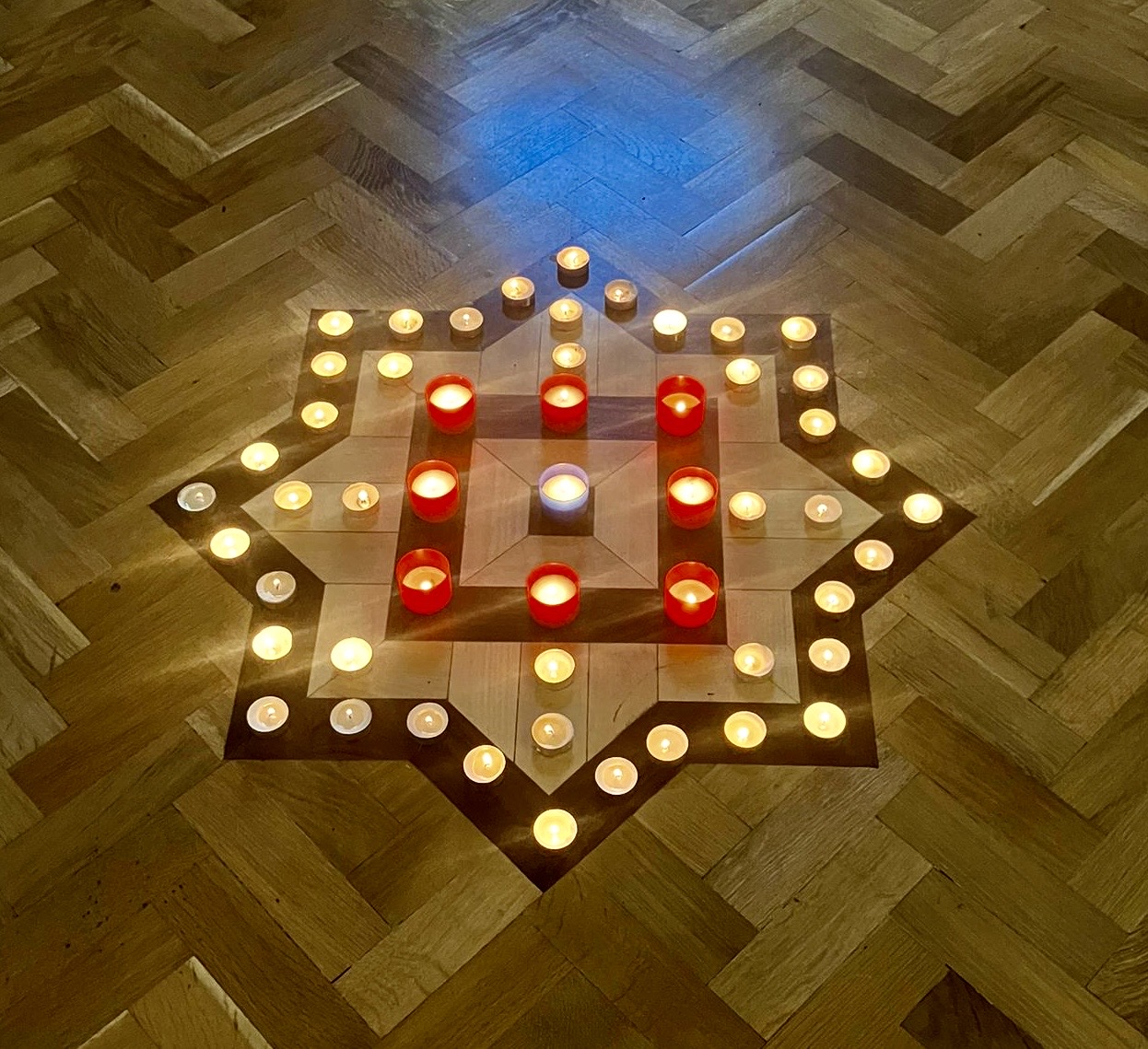
Week of Prayer for Christian Unity 18-25 January 2024
Bishops considered the report on the Irish Inter-Church Meeting of 19-20 October. This marked the 50th anniversary of the Ballymascanlan Talks in 1973, an event that led to the formation of the IICM, the mechanism through which the Irish Episcopal Conference dialogues with other Churches in Ireland.
In addition, bishops also received a report from the Council for Ecumenism on the annual Week of Prayer for Christian Unity which will place 18-15 January 2024, on the theme, ‘You shall love the Lord your God… and your neighbour as yourself’ (Lk 10:27). Resources for the Week of Prayer have been compiled by the Holy See Dicastery for Promoting Christian Unity and ecumenical bodies in Burkina Faso. These resources are being forwarded to dioceses and parishes and they are also available on ctbi.org.uk. Bishops encourage dioceses and parish communities to participate in this Week of Prayer.
Introduction
The parable of the Good Samaritan is one of the best-known passages of Scripture, yet one that never seems to lose its power to challenge indifference to suffering and to inspire solidarity. It is a story about crossing boundaries that calls our attention to the bonds that unite the whole human family.
In choosing this passage of Scripture for the Week of Prayer for Christian Unity, the churches of Burkina Faso have invited us to join them in a process of self-reflection as they consider what it means to love our neighbor amid a security crisis. Communities in the British-Irish context may be less vulnerable to acts of mass violence than in Burkina Faso, but there are still many living with the memory and/or the threat of serious violence, centered on issues of identity and belonging. There are also groups within communities, including people from ethnic minority backgrounds and people seeking asylum, who feel particularly vulnerable to violence or being displaced by the threat of violence.
December has arrived and frantic preparations for the great Festival of Christmas are already in full swing in our consumerist commercial society. Little or no meaningful mention is made of Advent or the real meaning behind Christmas. I will post downloadable resources over the coming days and weeks to assist teachers in making this time a true Christian experience for all.
Why Did God Become Human? Renewing our Understanding of the ‘Reason for the Season’ , is the subject of a talk by Fr Daniel P Horan OFM, PhD, this Saturday, 9 December from 10.30am – 4pm UK time at the Meditatio Centre in London and online.
The theme for this day invites us to reflect on the meaning of the Incarnation, of God’s choice not only to be ‘God For Us,’ but also ‘God With Us’ (Emmanuel) In keeping with the theme of Metanoia: Let our Minds be Remade, this presentation is an opportunity to develop a spirituality of ongoing conversion, especially during the season of Advent.
At a time when it can be difficult to see the light of Christ in our communities and world, a renewed understanding of the Incarnation offers us spiritual inspiration and hope.
Fr Daniel is an American Franciscan friar, Catholic priest, theologian, and author. He is currently the director of the Center for Spirituality and a professor of Philosophy, Religious Studies, and Theology at Saint Mary’s College in Notre Dame, Indiana. He previously held the Duns Scotus Chair of Spirituality at Catholic Theological Union in Chicago.
Some thoughts for Advent ( Priests Association)
Advent invites a reassessment of where our ways are leading us. This annual reminder that the world as we know it will one day end sounds more appropriate in the northern Wintry season, when daylight is short and darkness seems to be winning over the light. But the positive side of this is that a new Spring day is dawning over the horizon when Christ will come again into our lives with the power to save us.
Do you ever watch people at airports, waiting for loved ones to arrive from a flight? They often seem excited, eager for the first appearance of the familiar face, ready with the broad smile of greeting to embrace the returning traveler. We too wait for the Lord’s coming with eagerness, because we long for his presence. The waiting is important because, during our life’s pilgrimage, we are incomplete. As Augustine once said, “You have made us for Yourself, o Lord, and our hearts are restless until they rest in You.” At some deep level of our personhood we are in need, a need that only God can fill.
This is a time to open our hearts and invite the Lord to bring us to completion. We begin Advent, yearning for his coming. Today’s first reading puts this yearning into an image, that “We have all withered like leaves… blown by the wind.” The whirling, withered leaves of autumn are a familiar scene these past few weeks. Isaiah proposes the dead leaves as symbols of all that is dried up and withered in our lives. But he also calls us to look for a better day. God is still in charge of creation, and our personal lives are under his loving care. We pray this Advent, “Come, Lord Jesus,” and make our own the words of the psalm, “Visit this vine and protect it, the vine your right hand has chosen.” It is a central plank of our faith that the Lord never abandons His people.
Back to the people at airports waiting for loved ones to arrive. It is an alert, active waiting – keeping an eye on the time. In today’s gospel Jesus says, “Be on your guard, stay awake.” He wants us to focus on our task here and now. We are to grow more mature in our relationship with others and with him, paying attention to prayer, and living with his message in our hearts. That’s what waiting for him should be like. And while we wait, we can enjoy his gifts, as promised, for as Paul assures us: “You will not be without any of the gifts of the Spirit while you are waiting for our Lord Jesus Christ.”
Joint Christmas 2023 message by the Archbishops of Armagh: “how fragile and precious peace really is”
Christmas Joint Message
‘Peace I leave with you; my peace I give to you, I do not give to you as the world gives. Do not let your hearts be troubled and do not let them be afraid.’ Saint John 14:27 Christmas is traditionally a time of joy and happiness as we celebrate the birth of Jesus Christ, the Saviour of the world. We decorate our homes and Christmas trees with bright shining lights to welcome the Prince of Peace. Yet this year our world has been overshadowed by the darkness of war in the very land where Jesus was born, and also in Ukraine, Sudan and so many other places. The news images that we have witnessed from troubled places around the world have reminded us of just how fragile and precious peace really is. This Christmas we keep all those who are suffering in our thoughts and prayers.
In the Christmas story the angels announcing the birth of Jesus proclaimed, ‘Glory to God in the highest, and on earth peace, good will toward all people’. People of faith are not just called to be peacekeepers, but to be peacemakers – to be instruments of Christ’s peace; to pray and to work constantly for peace, healing and reconciliation between nations, communities, families, and individuals. Jesus said, ‘Blessed are the peacemakers, for they will be called children of God’. Peace is much more than simply the absence of war and fighting. Peace is about recognising that we are all made in the image of God, that we are all God’s children – to be respected, listened to, and cared for – even though we may have very different opinions, aspirations, and dreams.
During 2023, we marked twenty-five years since the historic Belfast/Good Friday Agreement was signed and delivered. This year people from different parts of the community have been reflecting on this significant anniversary, often with mixed emotions. The signing of the Agreement was not the end of the journey to peace on this island but marked simply the first faltering steps down a very long road to a new, brighter, and shared future. Further progress along that road can be made if we show patience and a willingness to listen to one another when we differ and also recognise the need for greater understanding and reconciliation. The transformation that our peace process has helped to achieve on this island is talked about the world over and is often held up as an example of peacebuilding. Yet there is still much work to be done.
May we all continue to work for healing, reconciliation, mutual respect and understanding, as the basis of a lasting peace, here and in our troubled world. May the light of Christ shine in the darkness and may the peace of God which passes all understanding rest upon us all.
Archbishop Eamon Martin is Catholic Archbishop of Armagh, and Archbishop John McDowell is Church of Ireland Archbishop of Armagh.


 RE SOURCE